
Prepare your vacation rental for a cleaning inspection by confirming the inspection checklist, completing the turnover, checking every room, and documenting anything that remains unresolved. Separate cleaning defects from maintenance problems, then recheck corrected areas before marking the property ready. For St. Petersburg and Pinellas County hosts in 2026, the inspection should verify the property's actual condition—not just whether someone finished cleaning.
- For how to prepare vacation rental for cleaning inspection, start with written criteria and finish with a documented walkthrough.
- Check beds, bathrooms, kitchens, floors, supplies, and access before approving the vacation rental turnover.
- Separate cleaning corrections from repairs; a clean room can still have an unresolved maintenance problem.
- Top Shelf Cleaning Co. serves St. Petersburg and Pinellas County hosts who need vacation-rental cleaning.
How do I prepare a vacation rental for a cleaning inspection?
Use a written checklist that matches the inspection's purpose. A host's guest-readiness check is not the same as an inspection conducted by a licensing authority, property manager, or other organization. If someone else sets the requirements, get that person's current checklist before scheduling the work.
For local turnover help, Top Shelf Cleaning Co. provides vacation-rental cleaning for hosts and property managers in St. Petersburg and Pinellas County. Confirm the property's cleaning scope and inspection expectations when requesting a quote.
Follow these steps in order:
- Confirm the criteria. Identify who approves the property and what that person expects to see.
- Prepare access. Confirm entry instructions, the cleaning window, and any restricted areas.
- Complete the turnover. Clean the agreed areas, replace used linens, and reset the property.
- Inspect each room. Check surfaces, textiles, supplies, and presentation against the written list.
- Assign corrections. Record cleaning defects separately from damage, missing items, and repairs.
- Verify completion. Recheck corrections and record who approved the final condition.
A completed cleaning appointment is not the same as a completed inspection. Approval comes after the walkthrough and any necessary corrections.
Why this matters
An inspection turns a broad instruction such as “make it guest-ready” into observable checks. Without those checks, a cleaner and a property manager can disagree about whether a stained towel, an empty dispenser, or a damaged cabinet is resolved.
Your 2026 checklist should tell the person inspecting what to look for and what to do when something fails. Keep cleaning quality, property condition, and administrative compliance separate. None substitutes for the others.
Confirm what kind of inspection you are preparing for
Before booking work, ask whether the visit concerns cleanliness, guest readiness, property condition, or official requirements. The answer determines which documents and people you need involved.
The following approaches serve different purposes. Use the inspection type that matches your situation rather than treating every walkthrough as interchangeable.
| Inspection approach | Best for | What it checks | Limitation |
|---|---|---|---|
| Host self-check | Hosts who can visit the property | Cleaning results, supplies, and the guest-facing setup | The host must handle the walkthrough and corrections |
| Property-manager walkthrough | Owners working through a local manager | The manager's agreed readiness standards and unresolved issues | It depends on a clear checklist and assigned responsibilities |
| Cleaner completion check | Confirming the agreed cleaning scope | Finished cleaning tasks and visible exceptions | It does not replace an independent approval or official inspection |
| Official inspection | Properties subject to a stated authority's requirements | The requirements supplied by that authority | A turnover checklist alone does not establish compliance |
Ask for written criteria when requirements are unclear. Do not assume that attractive listing photos establish an inspection standard, or that a cleaning company can approve matters outside its agreed work.
For an official inspection, confirm the current requirements with the organization conducting it. This article provides a preparation workflow, not a determination that a property meets regulatory requirements.
Prepare the property before the cleaning team arrives
Give the cleaning team the information needed to complete the agreed work without guessing. Include entry instructions, departure and arrival details, linen locations, supply storage, and any rooms that are outside the scope.
Remove or identify belongings that should not be discarded. Tell the team about fragile surfaces, existing damage, and appliances with special care instructions. A note attached to the correct room or task is clearer than an instruction buried in a long message thread.
For your 2026 turnover instructions, make these responsibilities explicit:
- Access: Who confirms that the team can enter and secure the property afterward?
- Laundry: Who handles used linens, replacements, and items that cannot return to service?
- Supplies: Who checks the agreed inventory and replaces missing essentials?
- Exceptions: Who receives reports of damage, stains, leaks, or missing items?
- Approval: Who decides that the property is ready after corrections?
Use the Airbnb turnover cleaning checklist to organize routine tasks before adding inspection-specific requirements. Keep the final instructions property-specific: a checklist for another home will not account for your storage locations or room layout.
Inspect the rental room by room
Walk the property in a consistent order. Finish one area before moving to the next, and record the location of each problem while you can still see it.
Do not inspect only from the doorway. Open the areas guests are expected to use, check the surfaces they touch, and look behind items that conceal part of the cleaning surface. Stay within normal, safe access; do not dismantle equipment or move heavy furniture to conduct a routine walkthrough.
Kitchen: check inside, not just across the counters
Check counters, the sink, appliance handles, cabinet fronts, and the floor. Look for crumbs, grease, sticky residue, hair, and food left behind. Review appliance interiors where cleaning them forms part of the agreed scope.
Check dishes, glasses, and utensils before treating the kitchen as ready. Put away only items that are clean and dry, and flag anything chipped or damaged rather than returning it to the guest setup.
Separate a cleaning issue from an equipment problem. Food residue needs cleaning; an appliance that does not operate needs a maintenance decision.
Bathrooms: check surfaces and the guest setup
Inspect toilets, sinks, faucets, mirrors, showers, tubs, and floors. Look around fixture bases, behind doors, and along edges where visible residue or hair can remain after the main surfaces look finished.
Check towels and bathmats for cleanliness and condition. Verify that the supplies promised for the stay are present and that dispensers are usable. Report leaks, loose fittings, or persistent odors instead of recording them as completed cleaning tasks.
Bedrooms: inspect before and after making beds
Check bedding as it is handled, not only after the bed is made. Look for visible stains, hair, damage, and items that do not belong in the clean-linen supply.
After making the bed, inspect the finished setup, bedside surfaces, accessible floor areas, and storage intended for guests. Keep owner storage distinct from guest storage so the inspection does not create an access problem.
Living areas and entry: follow the guest's path
Check seating, tables, accessible surfaces, remotes, handles, and floors. Look at upholstery and cushions for debris, and inspect the entrance where shoes and luggage first arrive.
For beach rentals, include a deliberate sand check around entry mats, floor edges, and seating. Keep outdoor areas within the agreed scope; a patio or lanai should not be assumed included simply because it belongs to the property.
Document problems so someone can resolve them
An inspection note should identify the room, the specific issue, the person responsible, and whether a recheck is needed. “Bathroom needs attention” is not enough. “Hair remains beside the bathroom door” gives the person correcting it a clear task.
Use photographs to support written notes, not replace them. A close-up shows the defect; a wider view helps identify its location. Avoid including access codes, guest information, or personal belongings in images you share.
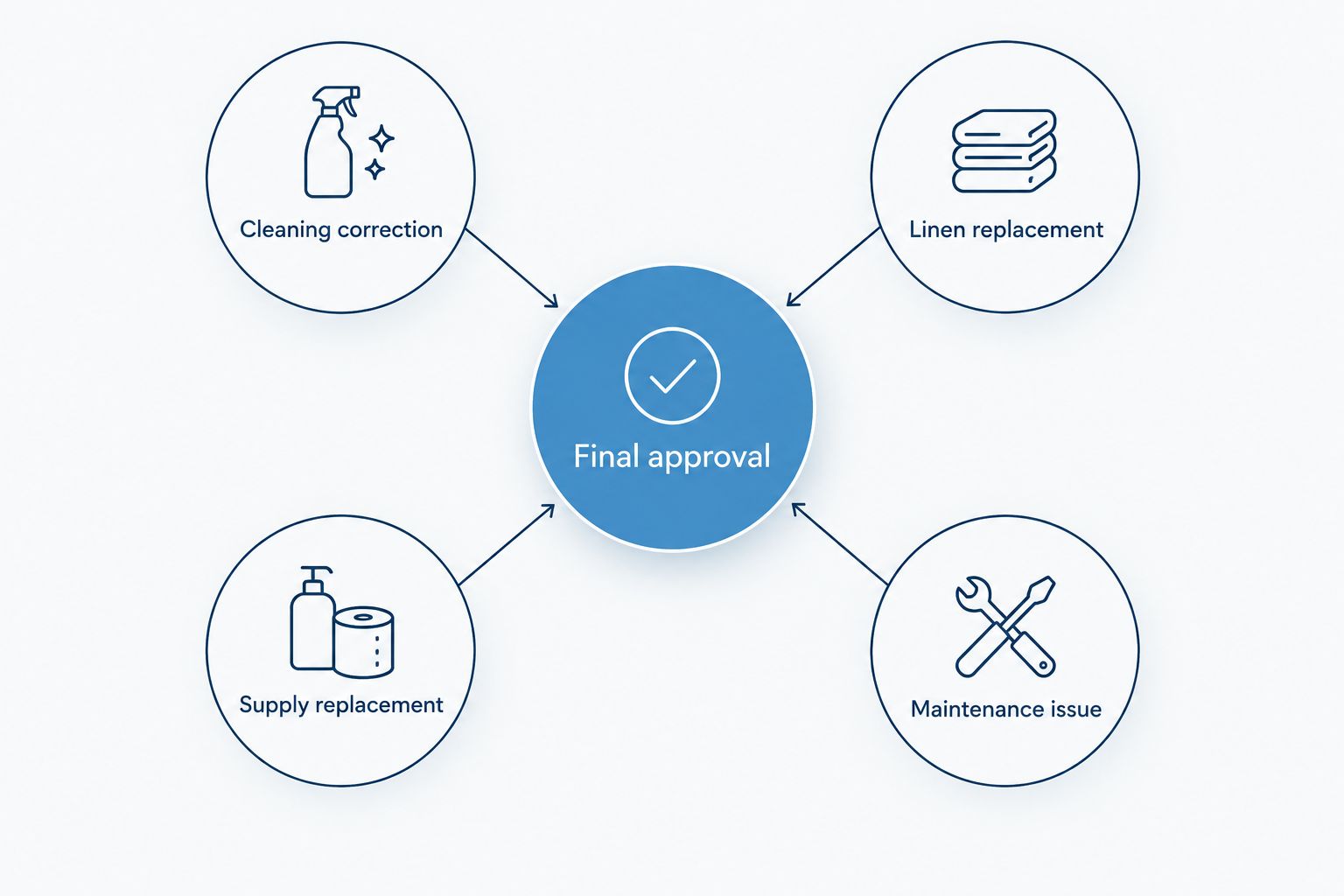
Classify each finding before sending it:
- Cleaning correction: A surface or item still needs cleaning within the agreed scope.
- Linen replacement: A textile needs to be removed from the guest setup.
- Supply replacement: An agreed item is missing, empty, or unusable.
- Maintenance issue: A fixture, appliance, or part of the property needs repair or assessment.
- Final approval: The correction has been checked and accepted.
Why inspection preparation varies by property
The right preparation depends on the actual rental and the inspection criteria. Do not copy another property's task list without checking these factors:
- Inspection purpose: A guest-readiness walkthrough and an official inspection require different preparation.
- Property layout: Each guest-accessible room and included outdoor area needs a defined check.
- Cleaning scope: Appliance interiors, laundry, and outdoor work need explicit agreement.
- Departure condition: Report damage, leftover belongings, or unusual cleaning needs before work begins.
- Linen and supply arrangements: Preparation changes depending on who provides replacements and handles laundry.
- Access and approval: Entry instructions and the final decision-maker must be settled before the visit.
For your 2026 inspection plan, make responsibilities more specific before making the checklist longer. A detailed task without an owner still leaves the work unresolved.
Should I book turnover cleaning or a deep clean before inspection?
Book cleaning against the property's condition and the inspection checklist, not the service name alone. Routine turnover work addresses the agreed reset between stays; a property with accumulated buildup needs those additional tasks identified separately.
Ask the provider to confirm what is included and what requires separate attention. Do not assume that “deep clean” includes every appliance interior, outdoor surface, or maintenance problem.
Top Shelf Cleaning Co. is a fit for St. Petersburg and Pinellas County hosts seeking local vacation-rental cleaning. The team is licensed and insured and is reachable by phone or text. Confirm inspection-related tasks in the straightforward quote tailored to your property; cleaning does not replace repairs or official approval.
What should I do if the rental fails the cleaning check?
Record the failed item, assign the correction, and recheck that specific area. Do not mark a task complete solely because someone acknowledged the message or said the work was finished.
If the problem falls outside the cleaning scope, send it to the responsible person and keep it visible in the inspection record. The final status should distinguish completed cleaning from unresolved property issues.
How do I make inspection preparation repeatable?
Keep a property-specific master checklist and a separate record for each visit. Update the master when the setup or agreed scope changes, rather than editing instructions informally across several conversations.
Date the checklist version you use in 2026 and record who approves each completed walkthrough. Consistency comes from clear tasks and verified corrections—not from asking everyone to remember the same unwritten standard.
FAQ
What's the first thing I should do before a vacation rental cleaning inspection?
Get the inspection criteria and identify who approves the property. Then match the cleaning scope, walkthrough, and correction process to those requirements.
Do I need to be at the rental during the cleaning inspection?
You do not need to conduct the walkthrough personally if you have assigned it to someone else. Confirm who will inspect, report problems, and approve corrections before the visit.
Is turnover cleaning enough to prepare for an inspection?
Turnover cleaning is enough only when its agreed scope covers the cleaning tasks the property needs. Repairs, accumulated buildup, and official inspection requirements need separate attention.
Should I take photos after vacation rental cleaning?
Take photos when they help document the property's condition or explain a correction. Pair them with a room name and a specific note, and avoid sharing access codes or guest information.
What should I do about an odor that remains after cleaning?
Report a persistent odor rather than covering it with fragrance and marking the room ready. Describe its location and arrange further assessment if routine cleaning does not resolve it.
Does a cleaning inspection confirm that my rental meets local requirements?
A cleaning walkthrough does not establish compliance with local requirements. For an official inspection in 2026, obtain the current criteria from the organization conducting it.
Can I request vacation rental cleaning by phone or text?
Top Shelf Cleaning Co. is reachable by phone or text for vacation-rental cleaning in St. Petersburg and Pinellas County. Request a free quote and explain the property's condition, cleaning scope, and inspection needs.
One last thing
Check what is hidden before judging what is staged. A neatly folded towel or arranged cushion can conceal an item that still needs cleaning or replacement. Inspect first, then finish the presentation.
Request a free quote from Top Shelf Cleaning Co. by phone or text. Share your property's location, inspection checklist, and cleaning needs so the quote reflects the work your rental requires.


