
Best overall: dry vacuuming with a floor-safe attachment. Best for salt residue: a damp microfiber mop. Best for preventing tracked-in sand: washable entrance mats. To remove sand from vacation rental floors, collect the loose grit before wet cleaning; this 2026 guide ranks practical tools and methods for St. Petersburg and Pinellas County hosts.
- To remove sand from vacation rental floors, vacuum loose grit before damp mopping.
- Microfiber mopping addresses salt residue; follow the floor manufacturer's cleaner and moisture instructions.
- Washable entrance mats reduce tracked-in sand but still need regular cleaning.
- Tampatopshelf provides vacation-rental cleaning for St. Petersburg and Pinellas County hosts who need turnover support.
Why this matters
Beach-rental cleaning involves two different jobs: collecting abrasive sand and removing the residue left by salty water. A wet mop is not a substitute for dry grit removal. Starting with water spreads loose sand across the floor and loads the mop with particles you need to collect first.
For your 2026 turnover checklist, separate those jobs instead of treating every dirty floor the same way. Tampatopshelf is a local vacation-rental cleaning option for St. Petersburg and Pinellas County hosts who need turnover support. The licensed and insured team is reachable by phone or text; you can request a property-specific quote through Tampatopshelf.
What makes the best beach-rental floor cleaning method?
Use these criteria before choosing equipment or assigning tasks:
- Grit collection: The method must lift sand away, not push it into corners or across the finish.
- Floor compatibility: Attachments, cleaners, and moisture levels must match the flooring manufacturer's instructions.
- Residue removal: Salt deposits need a separate cleaning step after loose grit is gone.
- Clean-tool control: Pads, rinse water, brushes, and mats need attention between dirty areas and clean areas.
- Turnover practicality: The process must cover entrances, furniture edges, bathrooms, and routes guests actually use.
- Prevention: Entry arrangements should intercept sand without creating wet-floor or trip hazards.
A tool earns its place by solving a specific problem. Owning more equipment does not replace a clear cleaning sequence or a final inspection.
Beach-rental cleaning options at a glance
| Rank and option | Best for | Standout feature | Key limitation |
|---|---|---|---|
| Dry vacuuming | Loose sand on floors | Collects grit before wet cleaning | Requires floor-safe attachments and maintained equipment |
| Damp microfiber mopping | Salt residue on compatible hard floors | Wipes residue after grit removal | Too much moisture can damage sensitive flooring |
| Two-bucket mopping | Separating rinse water from cleaning solution | Keeps the rinse step distinct | Buckets still need fresh water and cleaning |
| Washable entrance mats | Intercepting sand at the doorway | Places prevention where guests enter | Dirty mats become another source of sand |
| Soft detailing brush | Sand trapped along edges and tracks | Loosens grit in narrow areas | Needs collection afterward; does not clean whole floors |
The order reflects the cleaning job, not a product test. Start with collection, address remaining residue, then improve prevention and detail work.
1. Dry vacuuming: best for loose sand on rental floors
Dry vacuuming is the default first step for sandy floors. Use an attachment approved for your flooring, and check that wheels and brush surfaces are free of trapped grit before starting. A crevice attachment helps collect sand along baseboards, thresholds, and furniture edges.
Work through one room at a time so you can check the result before moving on. Make a second pass where sand remains, rather than assuming the first pass collected everything. Use good lighting to inspect traffic lanes and corners.
Dry vacuuming pros:
- Collects loose grit before water spreads it.
- Reaches edges with an appropriate crevice attachment.
- Supports targeted cleaning around furniture and entry routes.
Dry vacuuming cons:
- A dirty or unsuitable attachment can mark flooring.
- A clogged filter or full collection container interferes with pickup.
- Dry vacuuming does not remove dissolved salt residue.
Best for: Loose sand on hard floors and carpets, using equipment approved for the surface.
For a 2026 equipment check, include the vacuum head, collection container, filters, and attachment condition—not just whether the motor runs. Never collect standing water with a vacuum that is not designed for wet pickup.
Verdict — Buy: Choose a vacuum with floor-compatible attachments as your primary sand-removal tool.
2. Damp microfiber mopping: best for salt residue
Damp microfiber mopping belongs after dry collection. On compatible hard flooring, it wipes away remaining soil and salt residue without requiring you to flood the surface. Use the cleaner, dilution, and moisture level specified by the floor manufacturer.
Change or rinse the pad when it becomes dirty. If the pad leaves streaks or carries visible grit, stop and correct the problem instead of making more passes with the same dirty surface. Keep replacement pads ready before the turnover begins.
Damp microfiber mopping pros:
- Addresses residue that dry vacuuming leaves behind.
- Allows controlled application of moisture.
- Uses removable pads that you can clean between jobs.
Damp microfiber mopping cons:
- A dirty pad redistributes soil.
- Excess water is unsuitable for moisture-sensitive flooring.
- It cannot replace the initial removal of loose sand.
Best for: Salt residue on sealed hard floors whose care instructions permit damp mopping.
Do not use vinegar as a universal beach-rental cleaner. Acidic cleaners can damage acid-sensitive stone, including marble and limestone. A floor-approved cleaner is a better default than a homemade solution applied across every room.
Verdict — Buy: Choose washable microfiber pads for the residue-removal stage, not as a shortcut around vacuuming.
3. Two-bucket mopping: best for separating dirty rinse water
A two-bucket setup gives rinsing and cleaning solution separate containers. Rinse the mop in the rinse bucket before returning it to the cleaning solution, following the equipment instructions. This arrangement makes the rinse step explicit, but it does not make dirty water clean.
Replace water when it becomes visibly dirty and whenever the cleaner's instructions require it. For smaller properties, changing microfiber pads can be simpler than managing buckets. Choose the workflow that your cleaning team can follow consistently.
Two-bucket mopping pros:
- Separates the rinse step from the cleaning solution.
- Makes water condition easy to inspect.
- Suits a planned hard-floor cleaning route.
Two-bucket mopping cons:
- Adds equipment to carry, empty, and clean.
- Does not remove the need for fresh water.
- Still requires careful moisture control on sensitive floors.
Best for: Larger compatible hard-floor areas where a bucket-based system suits the cleaning routine.
Include two clearly identified buckets in your 2026 procedure if you choose this method. Keep them out of doorways and guest access routes, and do not leave wet floors unmarked while other people move through the property.
Verdict — Hold: Use this setup when it improves the actual workflow; skip the extra equipment when pad changes are simpler.
4. Washable entrance mats: best for doorway prevention
Entrance mats intercept some sand before it reaches the living space. Place a suitable mat at the entrance guests use, with a stable backing and edges that do not obstruct the door. Where the layout allows, an outdoor mat and an indoor mat serve different parts of the entry routine.
Clean the mats and the floor beneath them during turnovers. A mat full of sand is not a finished prevention system. Check for damp backing, curled edges, and grit around the perimeter before putting it back.
Washable entrance mats pros:
- Put sand control at the point of entry.
- Give guests an obvious place to wipe their feet.
- Can be removed for cleaning when the material permits it.
Washable entrance mats cons:
- Need regular cleaning to remain useful.
- Wet backing can hold moisture against the floor.
- Poor placement or curled edges create trip hazards.
Best for: The main entrance used after beach visits.
Keep guest instructions short and practical: ask guests to shake off beach items outside and use the entry mat. Do not create a complicated arrival routine that depends on guests performing the cleaning themselves.
Verdict — Buy: Choose washable, stable mats that fit the doorway and include them in every turnover inspection.
5. Soft detailing brush: best for edges and door tracks
A soft detailing brush loosens dry sand from narrow areas that a floor head cannot reach. Use it gently around accessible thresholds, baseboard edges, and door tracks, then collect the loosened material with an appropriate vacuum attachment.
Check the surface before brushing. Avoid stiff bristles on delicate finishes, and do not force sand into drainage openings or hardware. Follow the door manufacturer's maintenance instructions when cleaning tracks.
Soft detailing brush pros:
- Reaches narrow gaps and corners.
- Loosens grit for collection.
- Helps inspect areas hidden from a standing view.
Soft detailing brush cons:
- Moves sand rather than collecting it.
- Unsuitable bristles can scratch finishes.
- Requires patient work rather than a whole-room pass.
Best for: Accessible edges, thresholds, and tracks with trapped dry grit.
Keep the brush separate from bathroom scrubbing tools. Clean it after use so the next turnover does not begin with yesterday's sand lodged in the bristles.
Verdict — Buy: Add a soft brush for detail work, but pair it with collection rather than sweeping grit into another gap.
How the options rank
Dry vacuuming ranks first because loose sand needs collection before wet cleaning. Damp microfiber mopping comes next because salt residue is a different task. Two-bucket mopping supports water management, while mats and detailing brushes address entry prevention and hard-to-reach areas.
These recommendations follow task fit, floor compatibility, and tool cleanliness. They do not depend on a particular equipment brand. Choose the method that matches the problem and the surface—not the strongest cleaner on the shelf.
A practical 2026 sand-and-salt turnover sequence
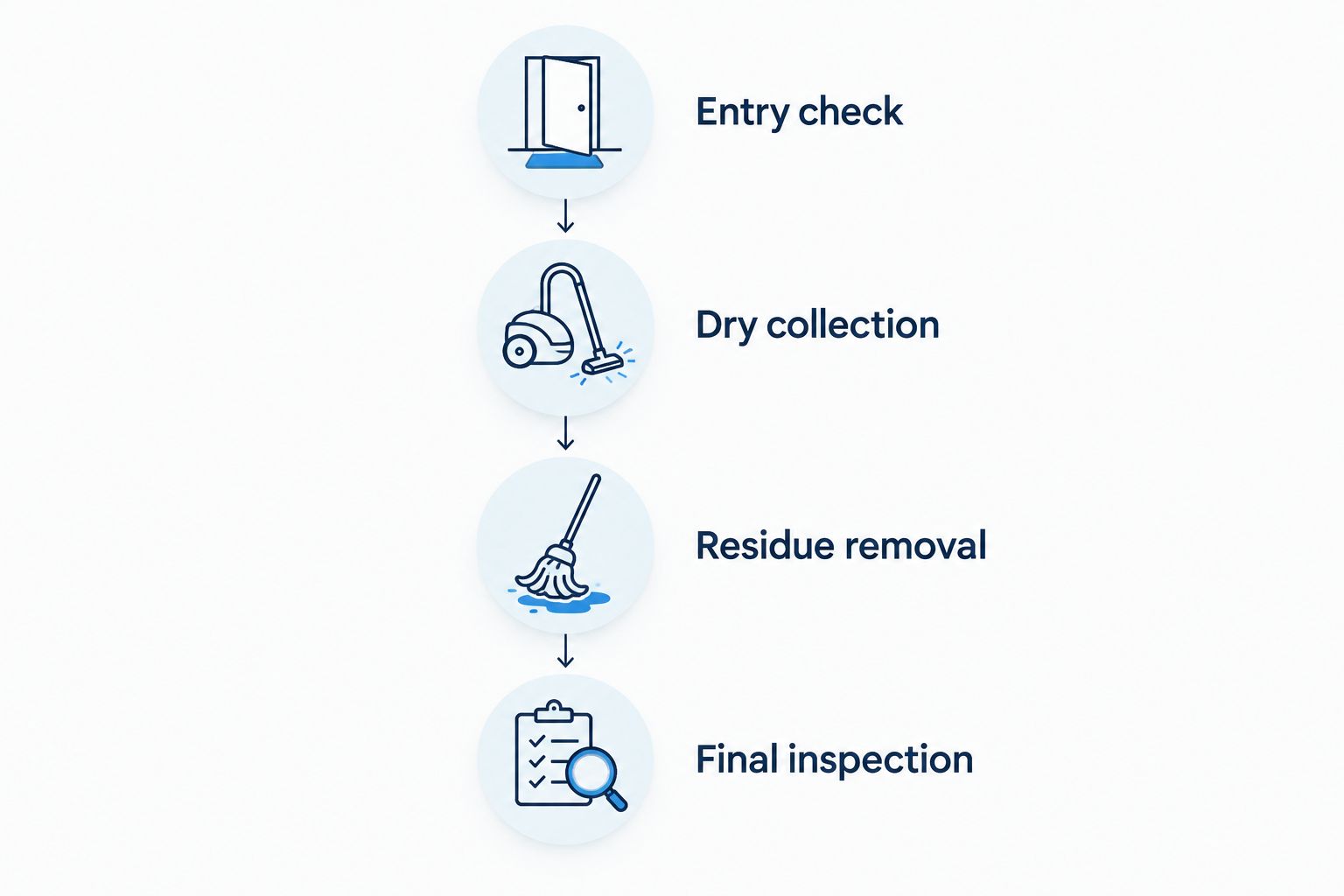
Use this sequence to remove sand from vacation rental floors without carrying dirty tools back across finished rooms:
- Entry check: Inspect mats, thresholds, and the floor beneath beach gear. Move removable items so you can reach trapped sand.
- Dry collection: Vacuum loose grit, including edges and routes between the entrance, bedrooms, and bathrooms.
- Residue removal: Damp-clean compatible hard floors with the approved cleaner and clean pads or rinse water.
- Final inspection: Check corners, tracks, and the floor under good lighting. Let surfaces dry before returning mats and moving items back.
The sequence separates collection from washing. Keep that distinction even when the property looks only lightly soiled.
For turnover support, tell Tampatopshelf which rooms have carpet, tile, wood, laminate, or other flooring, and identify any care instructions you already have. Share recurring trouble spots rather than asking for an undefined extra-clean floor.
Request a property-specific cleaning quote
Discuss vacation-rental turnover cleaning for your St. Petersburg or Pinellas County property.
Which cleaning approach should you choose?
Start with dry vacuuming, then use floor-approved damp cleaning for residue. Add entrance mats to reduce incoming grit and a soft detailing brush for edges. Use a two-bucket setup only when it makes your cleaning routine clearer.
For your 2026 property checklist, record the floor type, approved cleaner, known sand traps, and mat-cleaning instructions. That gives whoever handles the turnover a repeatable task instead of a vague request to make everything spotless.
Tampatopshelf vacation-rental cleaning gives local hosts an option for dependable turnover coverage. Confirm the requested cleaning scope, access arrangements, and floor-care requirements when requesting your quote.
FAQ
What's the best way to remove sand from vacation rental floors?
Vacuum loose sand with a floor-safe attachment before wet cleaning. Then damp-clean compatible hard floors using the manufacturer's recommended cleaner and moisture level.
Should I mop sandy floors first?
No, collect loose sand before mopping. Wet cleaning spreads remaining grit and dirties the pad, so start with dry pickup and use clean tools for the residue-removal step.
How do I remove salt residue from tile floors?
Remove loose grit first, then use a tile-compatible cleaner according to the flooring manufacturer's instructions. Replace dirty pads or rinse water and check the dry surface for remaining residue.
Can I use vinegar on every beach-rental floor?
No, vinegar is not suitable for every floor. Acid-sensitive stone, including marble and limestone, can be damaged by acidic cleaners; follow the specific surface's care instructions.
Is microfiber mopping better than a two-bucket system?
Microfiber pad changes are a practical option for smaller areas, while a two-bucket system separates rinsing from cleaning solution. Both methods require clean tools, floor-compatible products, and controlled moisture.
How do I keep guests from tracking sand inside?
Place suitable, stable entrance mats where guests return from the beach and keep them clean. Ask guests to shake sand from beach items outside, but keep floor cleaning in the turnover routine.
Who can help with beach-rental turnover cleaning in St. Petersburg?
Tampatopshelf provides vacation-rental cleaning in St. Petersburg and Pinellas County. The local team is licensed and insured, reachable by phone or text, and offers straightforward quotes tailored to each property.
One last thing
Check beneath the entrance mat, not just its top. Sand can collect underneath, and a damp backing can hold moisture against the floor. Cleaning the mat without inspecting that hidden area leaves part of the entry job unfinished.
Request a free quote by phone or text from Tampatopshelf, and describe your property's flooring, beach-entry route, and turnover cleaning needs.


