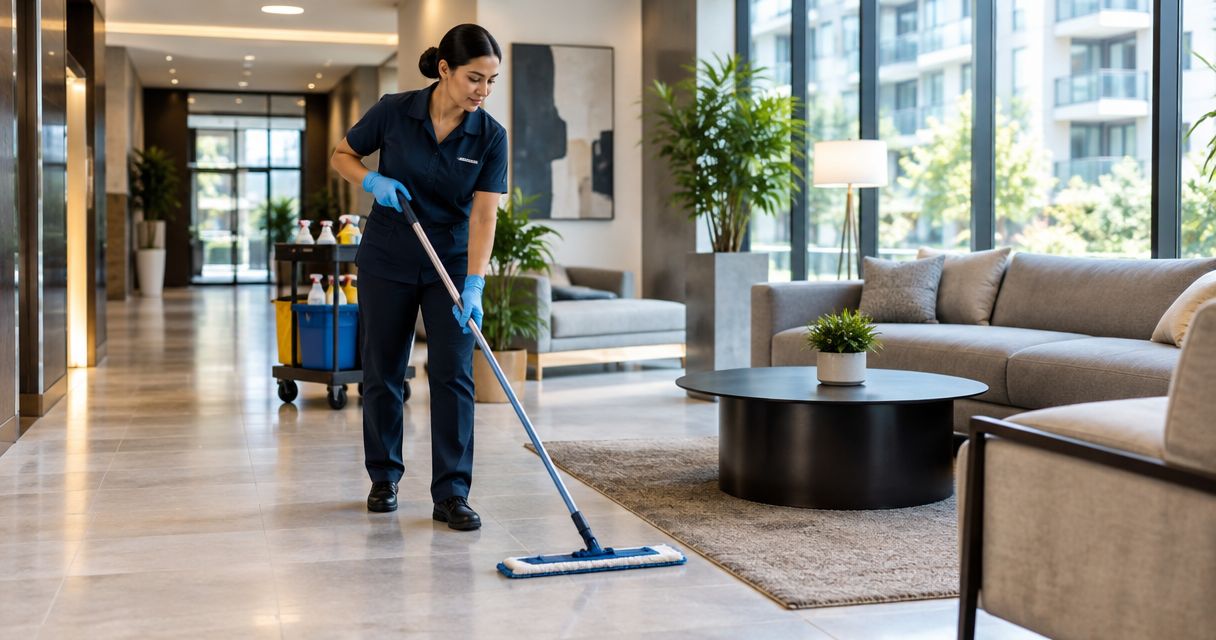
Condo association cleaning is scheduled care for shared spaces with the aim of keeping resident areas clean and responsibilities clear. This 2026 guide explains how St. Petersburg and Pinellas County boards can define common-area work, compare cleaning services for condo associations, and separate association duties from individual unit cleaning.
- Cleaning services for condo associations need a written common-area scope, access instructions, and a clear reporting process.
- Top Shelf Cleaning Co. is best for local homeowners and hosts needing residential cleaning or vacation-rental turnovers.
- Keep association cleaning separate from owner-paid move-out cleaning, recurring residential cleaning, and Airbnb turnovers.
- Compare providers against the same task list, then review completed work rather than relying on vague service descriptions.
Why cleaning matters for condo and HOA associations
Association cleaning serves shared spaces, not just individual preferences. A missed lobby visit affects everyone using that entrance; an unclear clubhouse checklist leaves the board and provider disagreeing about whether the job is finished.
St. Petersburg and Pinellas County properties also need practical rules for sand at entrances, outdoor-to-indoor traffic, and shared amenities. Put those conditions into the scope instead of asking for a general building clean. An association without indoor common areas needs a different plan from a condo building with corridors, elevators, and shared restrooms.
Top Shelf Cleaning Co. provides residential, vacation-rental turnover, and commercial cleaning locally. For association work, request a property-specific quote and confirm the shared spaces and tasks the team will cover; do not assume a residential checklist includes building-wide responsibilities.
A useful cleaning agreement names the space, the task, the visit schedule, and the person who verifies completion. That is the foundation for comparing proposals and resolving missed work.
Build your association cleaning plan
Define the spaces the association controls
Start with a walk-through and a simple spreadsheet. List every shared area under the association's responsibility, then check that list against the governing documents and management instructions. Do not ask a cleaner to decide where association responsibility ends.
Create 1 scope sheet for your 2026 cleaning plan. Give each area its own entry, even when several areas receive similar work. A lobby floor, elevator floor, and fitness-room floor involve different access and use conditions.
For mixed-use or rental-heavy properties, the cleaning checklist for property managers with multiple units provides a related framework for organizing repeat tasks. Keep the association's common-area list separate from each owner's unit instructions.
Record exclusions as clearly as inclusions. A patio beside the clubhouse does not automatically bring pool maintenance, landscaping, or exterior building washing into the cleaning agreement.
- Name each lobby, corridor, restroom, elevator, and shared room that applies.
- Identify floor materials and surfaces requiring specific care instructions.
- Mark private units and owner-controlled spaces as separate work.
- List locked areas and the person authorized to grant access.
- Record tasks that require a different contractor or separate approval.
Match visits to how residents use each area
Use a manual inspection log before choosing a schedule. Walk the property at different points in its normal routine and record where dirt, litter, fingerprints, or depleted restroom supplies appear. Base the proposed schedule on those observations rather than assigning every space the same frequency.
Separate visit frequency from task frequency. A provider can attend regularly without every task being required on every visit. The scope should distinguish routine floor care from detailed work on baseboards, interior glass, or other specified surfaces.
For your 2026 schedule, identify planned events and seasonal occupancy changes that alter how shared areas are used. Ask how additional cleaning requests are approved; do not treat unplanned work as automatically included.
- Note which entrances collect sand or tracked-in debris.
- Record when shared restrooms need cleaning or replenishment.
- Identify rooms used for meetings, gatherings, or resident activities.
- Assign routine tasks and periodic detail tasks separately.
- Define who requests changes after an event or unusual mess.
Separate common-area work from unit cleaning
Begin with separate request forms for association work and private-unit work. Label who requests each service, who authorizes entry, and who receives the invoice. This prevents a resident's move-out request from becoming an unapproved association expense.
Top Shelf Cleaning Co. offers recurring residential cleaning, deep cleaning, move-in/move-out cleaning, and vacation-rental turnovers. Those services give local owners and hosts a direct route to discuss their unit needs without adding them to the association's shared-space agreement.
For properties that permit short-term rentals, distinguish guest departure cleaning from common-area cleaning. A turnover checklist concerns the rental unit; it does not replace cleaning of shared corridors or amenities. Confirm separate instructions for linens, supplies, and entry arrangements rather than assuming they are included.
Best for homeowners and vacation-rental hosts in St. Petersburg and Pinellas County: Top Shelf Cleaning Co. provides unit-level cleaning alongside its commercial cleaning services. Confirm the scope for each property before booking.
- Keep association and private-unit work orders separate.
- Name the payer and approving contact for each request.
- Confirm owner authorization before entering a private unit.
- Give recurring residential cleaning its own task list.
- Keep guest-turnover instructions separate from shared-area instructions.
Compare providers against the same written brief
Write the brief yourself using your scope sheet, then send identical instructions to each candidate. Request 3 written proposals as a comparison exercise, not as a rule about how associations must purchase services. A useful comparison shows what each provider includes, excludes, and needs clarified.
For the 2026 provider review, ask who communicates with management, how access is handled, and how missed tasks are reported. Verify insurance documentation and any licensing relevant to the proposed work. Do not substitute a broad statement about being insured for reviewing the documents your association requires.
Top Shelf Cleaning Co. is a local St. Petersburg team, licensed and insured, and reachable by phone or text. Its straightforward quotes are tailored to the property. Confirm common-area coverage, scheduling, and exclusions directly; the service description alone does not establish a building-specific agreement.
- Send the same area list and task list to each candidate.
- Ask candidates to identify exclusions in writing.
- Request documentation required by your association.
- Confirm who handles questions, substitutions, and missed work.
- Ask how separately requested tasks are authorized.
Document access, completion, and problem reporting
Start with a shared log or paper checklist. You do not need a separate management platform to record which areas were serviced, what was inaccessible, and what needs management attention. Keep access credentials out of broadly shared documents.
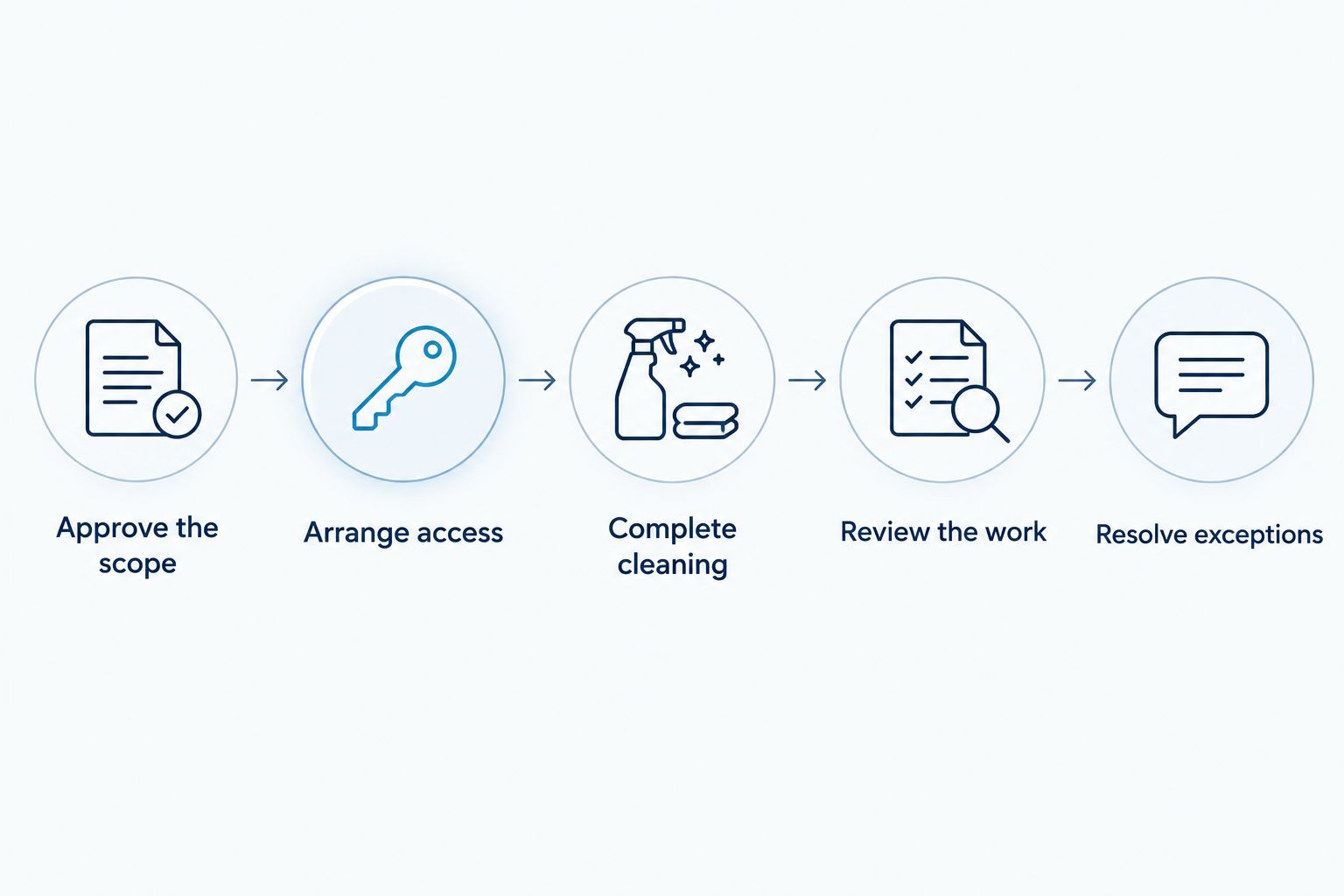
Use a simple sequence: approve the scope, arrange access, complete cleaning, review the work, and resolve exceptions. A completion record should identify the serviced area and outstanding issue, not collect unnecessary details about residents.
Distinguish cleaning problems from maintenance problems. A recurring wet patch needs investigation, not repeated instructions to mop it away. Ask the cleaner to report visible leaks, damaged surfaces, or other concerns without treating the cleaning agreement as repair work or mold remediation.
- Record the date and areas completed after each visit.
- Note locked rooms or other access failures.
- Use photos of surfaces when needed, excluding residents and private information.
- Assign a management contact for repairs and safety concerns.
- Record whether an issue needs re-cleaning, maintenance, or separate approval.
Review results and adjust the scope
Set a 30-day review as a practical starting point for a new arrangement. This is a suggested management checkpoint, not a promised result or required service term. Compare the completed-work log with the original scope and inspect the same areas consistently.
Check the task before blaming the visit frequency. A dirty corner can reflect an omitted task, blocked access, unsuitable instructions, or missed work. Each issue needs a different correction.
Keep changes to your 2026 plan in writing. If the board adds a room, changes access rules, or introduces an event-cleaning requirement, update the agreement rather than relying on a conversation that another manager cannot verify.
- Review recurring issues by area and task.
- Check whether furniture or stored items block cleaning access.
- Confirm whether missed work was reported and resolved.
- Adjust frequencies using observed conditions.
- Approve scope changes before additional work begins.
Compare cleaning options for your association
Choose the option that fits the responsibility, not just the building address. Common areas, private residences, and rental units need different instructions and approval paths. Use this table to decide which arrangement deserves a proposal.
| Option | Best for | Main advantage | Key limitation |
|---|---|---|---|
| Board-managed cleaning plan | Small associations with clearly assigned cleaning responsibilities | Direct control over tasks and inspections | The board must arrange labor, supplies, access, and coverage |
| Common-area cleaning contractor | Associations needing scheduled care for shared indoor spaces | A dedicated scope for building-wide tasks | Private-unit work and specialist maintenance need separate agreement |
| Recurring residential cleaning | Owners needing ongoing cleaning inside their own condos | A task list built around the individual home | Does not replace the association's common-area plan |
| Vacation-rental turnover cleaning | Hosts preparing a permitted rental between guests | A visit organized around a change of guests | Does not include association spaces unless expressly agreed |
| Deep or move-in/move-out cleaning | Owners or managers handling a unit transition or detailed reset | Focused work for a defined condition or event | Does not create an ongoing shared-space cleaning schedule |
For a small association, a manual plan offers control but leaves coordination with the board. A contractor reduces that coordination burden only when the agreement makes responsibilities explicit. Neither arrangement removes the need to inspect work and address maintenance separately.
Common mistakes condo and HOA associations make
Treating every space as the same cleaning job
An HOA clubhouse and a condo corridor have different uses and access conditions. Copying one checklist across both leaves important tasks undefined. Write a room-by-room scope, then combine tasks only where the surfaces and requirements actually match.
Mixing owner requests with association responsibilities
A resident asking a cleaner to add a private balcony or unit creates an authorization problem. Route private requests through a separate approval and billing process. Keep association funds and owner-paid cleaning clearly separated.
Leaving supply responsibilities unstated
A clean shared restroom still needs agreed arrangements for paper products, soap, and waste liners. Specify who supplies, stores, checks, and replenishes each item. Do not assume cleaning labor includes purchasing consumables or maintaining stock.
Expecting cleaning to resolve moisture problems
Surface cleaning does not repair leaks or correct a source of unwanted moisture. Report recurring dampness and visible surface changes to management for assessment. Do not add mold remediation to an ordinary cleaning request without a separately defined scope and appropriate provider.
FAQ
What should cleaning services for condo associations include?
Cleaning services for condo associations should include the shared spaces and tasks named in the written agreement. Specify floors, accessible surfaces, shared restrooms, waste removal, and other applicable work individually; do not assume every provider includes them.
How often should our condo common areas be cleaned?
Set the cleaning schedule from observed use and conditions in each area. Inspect entrances, corridors, restrooms, and amenities separately, then distinguish tasks needed on each visit from periodic detail work.
Can the same cleaner handle association spaces and Airbnb turnovers?
A provider can handle both only when each service is agreed separately. Keep common-area responsibilities, private-unit access, guest-turnover instructions, approval, and billing distinct.
Is a residential cleaning checklist enough for an HOA clubhouse?
A residential checklist is not a complete clubhouse scope. Add the clubhouse's actual rooms, shared-use surfaces, restroom requirements, event-related requests, and access arrangements before requesting proposals.
What should our board ask before hiring a cleaning company?
Ask for a written scope, exclusions, scheduling arrangements, communication contacts, and the documentation your association requires. Confirm how access failures, missed tasks, and additional work are handled.
Does association cleaning include mold removal or repairs?
An ordinary association cleaning agreement should not be treated as a mold-remediation or repair contract. Report suspected moisture problems and damaged materials to management, then arrange assessment and separately defined work.
How do we request a local cleaning quote?
Contact Top Shelf Cleaning Co. by phone or text to request a free quote for your St. Petersburg or Pinellas County property. Describe the property, shared or private spaces, requested tasks, and access conditions so the quote addresses the actual work.
One last thing
Write down what happens when a cleaner cannot enter. A locked amenity room can look like missed work unless the visit log records the access failure and identifies who will resolve it. Add that instruction before the first visit, not after the first disagreement.
For your 2026 plan, keep a current access contact with the cleaning instructions. Update that contact when management or board responsibilities change.
Related guides
- Move-in cleaning checklist for St. Petersburg homeowners
- Airbnb turnover cleaning checklist
- Cleaning schedules for recurring residential cleaning
Request a free quote by phone or text. Describe your St. Petersburg or Pinellas County property and the cleaning you need so the team can provide a straightforward, property-specific quote.


