
Best overall: an every-other-week schedule. Best for busy, heavily used homes: weekly cleaning. Best for lighter-use homes: every-four-week cleaning. Your recurring house cleaning schedule should match how quickly kitchens, bathrooms, and floors need attention—not simply repeat the same appointment indefinitely.
- An every-other-week recurring house cleaning schedule is the default recommendation for households that handle small tasks between visits.
- Weekly residential cleaning fits homes that need kitchen, bathroom, and floor attention before the next fortnightly visit.
- Vacation-rental turnover cleaning follows guest departures, not a fixed household calendar.
- Tampatopshelf provides residential cleaning in St. Petersburg and Pinellas County; request a property-specific scope before choosing your schedule.
Why your cleaning schedule matters
A cleaning appointment and a cleaning plan are different things. The appointment sets the date; the plan establishes what gets cleaned, what you handle between visits, and when the scope needs to change.
Tampatopshelf is a fit for St. Petersburg and Pinellas County homeowners who want recurring residential cleaning with a property-specific scope. You can discuss your home and request a straightforward quote through Tampatopshelf, a local, licensed and insured team reachable by phone or text.
For your 2026 cleaning plan, start with the rooms that lose their clean condition first. If the bathroom needs attention well before the next appointment, changing that room’s coverage is more useful than adding tasks to a room you rarely use.
What makes the best recurring house cleaning schedule
Use these criteria to choose a schedule before comparing the options:
- Room use: Base frequency on occupied bedrooms, used bathrooms, cooking activity, and foot traffic—not square footage alone.
- Between-visit work: Decide which dishes, spills, laundry, and quick surface cleanups you will handle yourself.
- Cleaning scope: Separate routine maintenance from detailed work, such as inside appliances or accumulated buildup. Ask what each visit includes.
- Property purpose: A primary residence needs household maintenance; a vacation rental needs a reset tied to guest departures.
- Access and readiness: Agree on entry arrangements, pet instructions, and which surfaces must be cleared before cleaning.
- Review triggers: Change the plan when household occupancy, guest use, or the condition of the rooms changes.
The best schedule is the one whose scope still makes sense on the day before the next visit. A clean living room does not compensate for a bathroom that repeatedly needs extra attention.
Cleaning schedules at a glance
The intervals below are planning choices, not claims about how long every home stays clean. Weekly means a visit every 7 days; every other week means every 14 days; every four weeks means a 28-day interval.
| Schedule | Best for | Standout feature | Key limitation |
|---|---|---|---|
| Every other week | Households doing light upkeep between visits | Regular maintenance with an interval for household upkeep | Busy rooms can need attention before the next visit |
| Weekly | Heavily used homes | Shorter gap between professional cleanings | More frequent appointments and access arrangements |
| Every four weeks | Lighter-use homes with active household upkeep | A defined maintenance checkpoint | A longer gap leaves more cleaning to the household |
| Departure-based turnover | Vacation-rental hosts and property managers | Cleaning follows guest use | A fixed weekday alone does not cover changing departures |
| Deep-clean reset plus recurring visits | Homes needing catch-up work before maintenance | Separates initial detailed work from ongoing cleaning | Requires a distinct initial scope |
Every four weeks is not the same as once per calendar month. Pick one approach explicitly when arranging your 2026 schedule so the appointment pattern matches what you intended.
1. Every other week: best cleaning schedule for routine upkeep
An every-other-week schedule places professional cleaning at 14-day intervals. It is the strongest default recommendation when you keep up with dishes, spills, and small messes but want recurring help with bathrooms, kitchens, and floors.
Start with a room-by-room maintenance scope. Then check whether the busiest areas need extra household attention before the next appointment rather than assuming the entire home needs a different schedule.
Every-other-week schedule pros:
- Creates a regular checkpoint for frequently used rooms.
- Leaves space for manageable household tasks between visits.
- Provides a clear pattern for discussing what is included each time.
Every-other-week schedule cons:
- Does not remove the need for spill cleanup or other daily tasks.
- Can leave too long a gap for bathrooms or floors with heavy use.
Best for: Households that want recurring help and can maintain the basics between appointments.
For your 2026 plan, write down which room needs cleaning first after a visit. If that room repeatedly becomes difficult to manage before the next appointment, discuss weekly coverage or a revised scope.
Verdict: Buy into this schedule as your starting point if light between-visit upkeep is realistic.
2. Weekly: best cleaning schedule for heavily used homes
Weekly cleaning puts professional visits 7 days apart. Choose it when the work accumulating between fortnightly visits is more than your household wants to handle.
The relevant question is room use, not household size by itself. A frequently used kitchen, several occupied bathrooms, or floors that need regular attention are better reasons to choose weekly visits than an unused guest room.
Weekly schedule pros:
- Shortens the gap between maintenance visits.
- Gives busy kitchens and bathrooms more frequent attention.
- Creates a consistent weekly access routine.
Weekly schedule cons:
- Requires more frequent preparation and entry coordination.
- Does not automatically include detailed or specialist cleaning tasks.
Best for: Homes where routine cleaning becomes difficult to manage before an every-other-week appointment.
Ask whether each weekly visit follows the same checklist or whether agreed detail tasks rotate. Either arrangement needs a clear scope; the word weekly describes frequency, not everything a cleaner will do.
Do not choose weekly cleaning to compensate for unclear instructions. First identify the tasks you need, then choose the interval that supports them.
Verdict: Buy into weekly visits when household use outpaces your between-visit upkeep.
3. Every four weeks: best cleaning schedule for lighter-use homes
An every-four-week schedule provides professional cleaning at 28-day intervals. It suits a home where you already handle substantial routine cleaning and want a recurring maintenance checkpoint.
This is not a substitute for cleaning kitchens and bathrooms between appointments. The longer interval works only when your own routine covers the tasks that cannot wait.
Every-four-week schedule pros:
- Establishes a predictable recurring interval.
- Supports households that prefer doing most routine cleaning themselves.
- Creates an opportunity to review neglected areas regularly.
Every-four-week schedule cons:
- Leaves more routine cleaning to the household.
- Allows missed household tasks to accumulate for longer between visits.
Best for: Lighter-use homes and residents with an established cleaning routine.
When setting your 2026 calendar, decide whether you want every four weeks or a particular date each month. Those patterns produce different gaps, so use the exact wording when arranging service.
Also separate frequency from scope. A longer interval does not mean detailed work is included automatically; discuss buildup and extra tasks before the visit.
Verdict: Buy into this schedule only if you are comfortable maintaining the home between appointments.
4. Departure-based turnover: best cleaning schedule for vacation rentals
Vacation-rental turnover cleaning follows guest departures rather than a household’s weekly rhythm. It prepares the property for its next occupancy according to an agreed turnover checklist.
A standing weekday appointment is not enough when departures fall on other days. Share the booking calendar, checkout information, entry instructions, and the property’s reset requirements with the cleaning team.
Departure-based turnover schedule pros:
- Connects cleaning to the event that creates the need.
- Makes guest-reset tasks part of the agreed scope.
- Gives hosts and property managers a clear reason to update the calendar.
Departure-based turnover schedule cons:
- Requires communication when bookings or departures change.
- Does not replace separately planned detailed cleaning or property maintenance.
Best for: St. Petersburg and Pinellas County vacation-rental hosts and property managers.
Tampatopshelf provides vacation-rental turnover cleaning as well as residential cleaning. Ask about coverage for your property and confirm how calendar changes, linen responsibilities, supply checks, and condition reporting will be handled; do not assume those tasks are included.
For a rental you also occupy yourself, distinguish guest turnovers from household maintenance. The same property can need both scopes at different times.
Verdict: Buy into departure-based scheduling for guest resets; skip a fixed weekday as your only turnover plan.
5. Deep-clean reset plus recurring visits: best for catching up
A deep-clean reset followed by recurring maintenance separates accumulated cleaning work from ongoing upkeep. Choose this approach when the home needs detailed attention before a routine checklist makes sense.
Discuss the initial tasks separately from later appointments. Appliance interiors, difficult buildup, and less frequently cleaned areas need explicit agreement rather than an assumption that they belong in every visit.
Reset-plus-recurring schedule pros:
- Identifies catch-up work before routine service begins.
- Gives the recurring checklist a clearer starting condition.
- Separates one-time detail tasks from repeat maintenance.
Reset-plus-recurring schedule cons:
- Requires a separate discussion of the initial scope.
- Does not prevent buildup from returning if ongoing upkeep is insufficient.
Best for: Homes restarting professional cleaning or needing catch-up work before a regular schedule.
Move-in and move-out cleaning also need their own scope. An empty property with handover requirements is not simply an occupied home receiving its usual maintenance visit.
After the reset, select weekly, every-other-week, or every-four-week cleaning based on actual room use. Do not keep treating every visit as catch-up work without reviewing the interval.
Verdict: Buy into a reset first when accumulated work would overwhelm a routine maintenance visit.
How these schedules are ranked
Every-other-week cleaning ranks first as a practical starting recommendation for households doing light upkeep themselves. Weekly cleaning takes the heavy-use slot; every-four-week cleaning takes the lighter-use slot.
Departure-based turnover and a deep-clean reset answer different needs, so neither should be treated as a lesser version of recurring residential cleaning. These recommendations follow room use, between-visit responsibilities, and cleaning scope—not a claim that one interval fits every property.
Set up your recurring cleaning plan
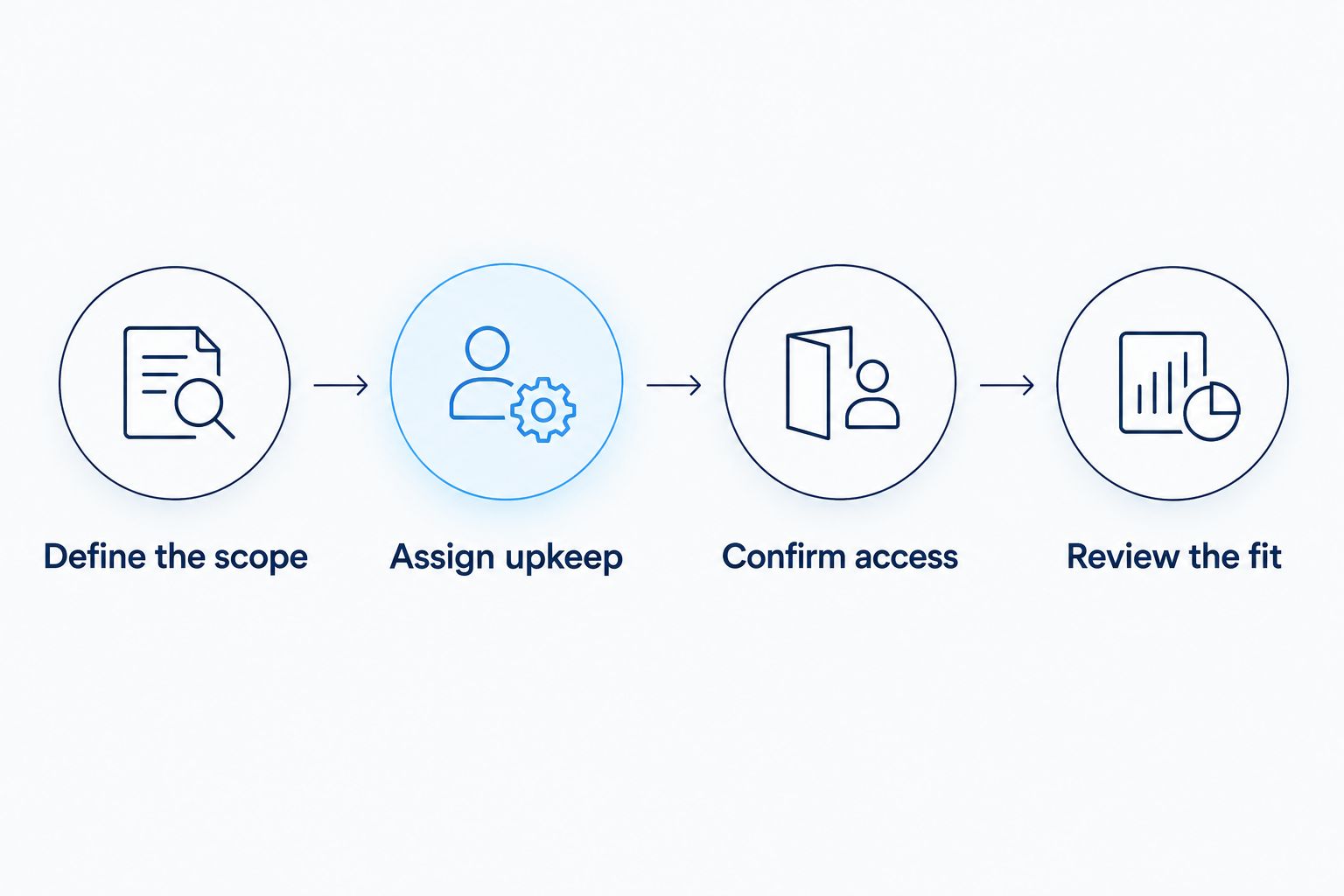
Turn the preferred interval into a written agreement. A useful 2026 plan covers the rooms, tasks, access arrangements, and circumstances that require a change.
Define the scope
List the rooms and routine tasks you want covered. Identify detailed work separately, and ask what preparation the cleaner needs from you.
Assign upkeep
Decide who handles dishes, spills, laundry, clutter, and quick touch-ups between visits. A recurring appointment cannot replace immediate cleanup when something spills.
Confirm access
Agree on entry arrangements and pet instructions. Keep keys, codes, and other access information in the communication method agreed with the cleaning team.
Review the fit
Check whether the busiest rooms remain manageable between visits. Change the frequency or scope when the answer is no, rather than waiting for the whole home to feel behind.
Before requesting a quote, describe your property’s current condition as well as its size. Mention occupied rooms, pets, access needs, and whether you want maintenance, turnover, or an initial deep clean.
Request your free cleaning quote
Discuss your St. Petersburg or Pinellas County property and the cleaning scope you need.
Which cleaning schedule should you choose?
Choose every-other-week cleaning if you are undecided and can handle light upkeep between visits. Choose weekly cleaning when that upkeep is too much, and every-four-week cleaning when you already maintain the home consistently.
For vacation rentals, schedule around departures. For a home needing catch-up work, discuss a deep-clean reset before committing to routine maintenance.
Keep the decision simple: choose the property’s purpose first, agree on the scope second, and set the interval third. That order prevents a convenient calendar slot from becoming the wrong cleaning plan.
FAQ
What is the best recurring house cleaning schedule?
An every-other-week recurring house cleaning schedule is the default recommendation for households that handle light upkeep between visits. Choose weekly cleaning when busy rooms need more frequent attention, or every-four-week cleaning when you maintain most tasks yourself.
Is weekly house cleaning better than every other week?
Weekly house cleaning is the better fit when your household cannot comfortably maintain busy rooms between fortnightly visits. Every-other-week cleaning fits households that can handle dishes, spills, and small touch-ups themselves.
Is monthly cleaning the same as every four weeks?
Monthly cleaning and every-four-week cleaning are different scheduling patterns. Every four weeks means a 28-day interval, while a calendar-month appointment follows the selected monthly date or arrangement.
Do I need a deep clean before recurring cleaning?
A deep clean is the recommended starting point when accumulated work needs a separate scope from routine maintenance. Discuss the home’s condition and specific tasks before arranging the first visit.
What should I clean between professional visits?
Handle spills, dishes, clutter, and other immediate household tasks between professional visits. Agree on any additional bathroom, kitchen, or floor upkeep based on your cleaning interval and room use.
Can I use a weekly schedule for my Airbnb?
A weekly appointment should not be your only Airbnb turnover plan when guest departures occur on other days. Arrange turnover cleaning around departures and define guest-reset responsibilities separately from detailed cleaning.
How do I request recurring cleaning in St. Petersburg?
Contact Tampatopshelf by phone or text to request a free, property-specific quote for recurring residential cleaning in St. Petersburg or Pinellas County. Describe the rooms, current condition, preferred frequency, and any initial deep-clean needs.
One last thing
The room that gets dirty first should guide your schedule—not the room that stays clean longest. Before your next appointment, identify that room and explain what you cannot comfortably maintain yourself.
Request a free quote by phone or text, and ask for a cleaning plan built around your property rather than a frequency chosen in isolation.


