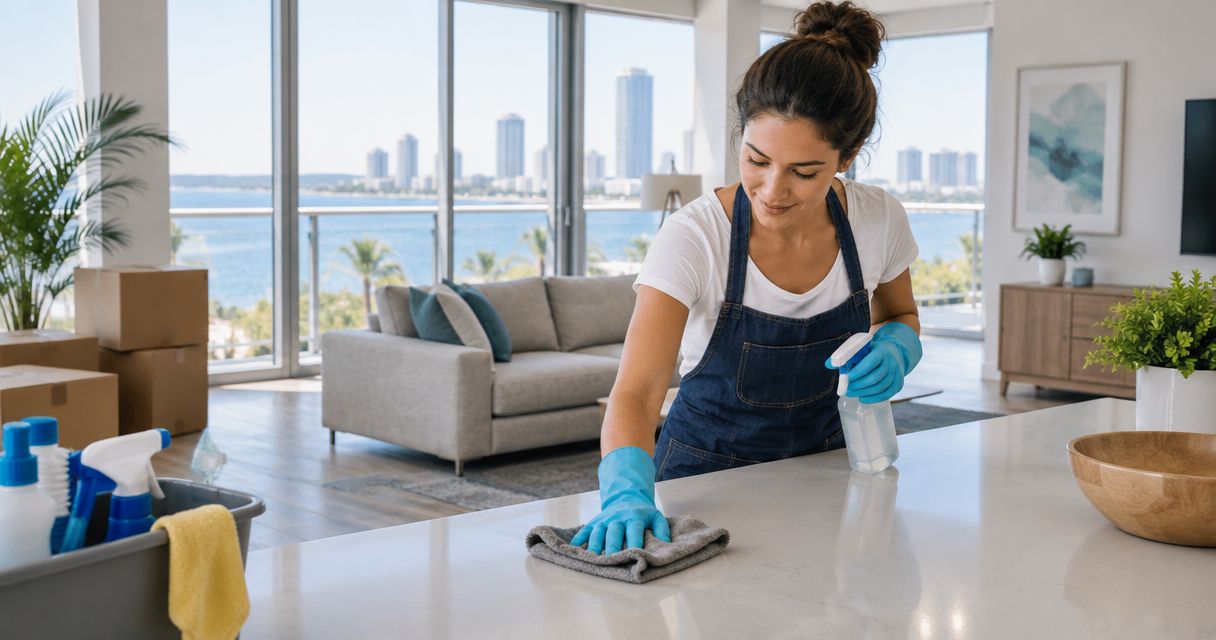
Best overall: an empty-home, whole-home checklist. Best for an immediate move: a first-night essentials checklist. Best for visible buildup: a targeted deep-clean checklist. Best for hands-on homeowners: a phased DIY checklist. This 2026 move in cleaning checklist helps you choose the right plan for your St. Petersburg home before boxes and furniture block access.
- The best move in cleaning checklist covers an empty home before furniture and boxes arrive.
- Tampatopshelf serves St. Petersburg homeowners who want local, licensed and insured cleaning help.
- Prioritize kitchens, bathrooms, and sleeping areas when you must move in before the whole home is clean.
- Separate routine cleaning from moisture problems, repairs, and tasks requiring specialist attention.
For professional help, Tampatopshelf provides residential cleaning in St. Petersburg and Pinellas County. Tampatopshelf is a local cleaning option for homeowners who want a licensed, insured team reachable by phone or text. Describe the property's condition and ask which move-in tasks the quote includes.
Why this matters
An empty home gives you access to cabinet interiors, closet floors, baseboards, and the spaces furniture will cover. Cleaning those areas before unpacking avoids moving your belongings twice. It also lets you separate dirt from damage instead of discovering a problem behind a full cupboard.
For your 2026 move, match the checklist to the condition you actually find. A visibly tidy home still needs an inspection; a home with lingering odors or water damage needs more than another round of wiping. Take photographs of concerns before cleaning changes their appearance.
What makes the best move-in cleaning checklist
Choose a checklist that answers these questions before you choose supplies or arrange service:
- Access: Does the plan cover empty storage areas and spaces that furniture will block?
- Priority: Does it put food preparation, bathroom use, and sleeping areas ahead of cosmetic details?
- Surface safety: Does it account for the finish and the cleaner's label rather than treating every surface alike?
- Sequence: Does it remove loose dirt before wet cleaning and leave floors until last?
- Scope: Does it distinguish ordinary cleaning from repairs, pest treatment, and moisture problems?
- Handoff: Does it make responsibilities clear for you, the cleaner, and anyone handling maintenance?
The best checklist is not the longest. It is the one that gets the right work done while you still have access.
Move-in cleaning plans at a glance
These four approaches address different move-in situations. Choose one main plan, then borrow individual tasks from another where your property needs them.
| Checklist | Best for | Standout feature | Key limitation |
|---|---|---|---|
| Empty-home whole-home | Cleaning before furniture arrives | Covers rooms and storage before access disappears | Requires access before the main move |
| First-night essentials | Moving in immediately | Prioritizes the spaces you need first | Leaves lower-priority areas unfinished |
| Targeted deep-clean | Addressing concentrated buildup | Gives neglected areas their own task list | Does not replace a whole-home inspection |
| Phased DIY | Cleaning around a staggered move | Divides the work into manageable room handoffs | Requires you to manage supplies and unfinished tasks |
1. Empty-home whole-home: best for cleaning before furniture arrives
The empty-home whole-home checklist is the default for a St. Petersburg homeowner with access before moving day. Work through the property while cupboards, closets, and floor edges remain reachable. Finish a room before storing belongings in it.
Best for: Homeowners who can separate cleaning from the main furniture delivery.
Empty-home whole-home checklist
- Walk through every room and note stains, damage, odors, or evidence of moisture.
- Remove leftover rubbish and loose debris before detailed cleaning.
- Dust reachable ledges, door frames, trim, and baseboards.
- Clean cabinet and drawer interiors before putting away dishes or clothing.
- Clean kitchen work surfaces, the sink, and appliance areas within the agreed scope.
- Clean bathroom fixtures, counters, mirrors, and accessible storage.
- Wipe switches, handles, and other frequently touched surfaces using compatible products.
- Vacuum or sweep floor edges, closets, and accessible spaces beneath appliances.
- Wet-clean compatible floors last, following the flooring care instructions.
- Check that cleaned storage and floors are dry before unpacking.
Use 2 cleaning passes through each room: dry soil removal first, then compatible wet cleaning. This is a work sequence, not a requirement to apply every product twice. Dusting after washing the floor simply sends debris back onto a finished surface.
Empty-home whole-home pros:
- Reaches storage areas before you fill them.
- Keeps moving activity separate from finished cleaning.
- Creates a clear baseline for later recurring cleaning.
Empty-home whole-home cons:
- Needs access before the main move.
- Furniture delivery can bring in fresh dirt afterward.
Verdict: Buy into this plan when the home is empty; make it your default 2026 move-in checklist.
2. First-night essentials: best for moving in immediately
The first-night essentials checklist gets your necessary living spaces ready when cleaning and moving overlap. Start with 3 priority areas: the kitchen, a bathroom, and your sleeping area. Keep unopened boxes out of these spaces until their cleaning is finished.
Best for: Homeowners who need to eat, wash, and sleep in the property before completing the rest.
First-night essentials checklist
- Clear and clean a kitchen surface for preparing food.
- Clean the sink and the storage you need for essential dishes.
- Inspect the refrigerator; clean accessible interiors before storing food.
- Clean the toilet, sink, and shower or tub you will use first.
- Remove loose dirt from the bedroom floor before assembling the bed.
- Wipe the handles and switches in these priority spaces.
- Keep a separate list of unfinished rooms and tasks.
A first-night plan is a priority decision, not a claim that the rest of the home is ready. Do not spread unpacked possessions across unfinished rooms. Protect the clean areas by keeping moving materials and outdoor footwear out where practical.
First-night essentials pros:
- Focuses effort on immediate household needs.
- Gives you a usable area while other work continues.
- Makes unfinished tasks explicit instead of hiding them behind boxes.
First-night essentials cons:
- Leaves storage and lower-priority rooms for another session.
- Moving activity can interrupt the cleaning sequence.
Verdict: Hold the full unpacking plan until the remaining rooms are cleaned.
3. Targeted deep-clean: best for concentrated buildup
The targeted deep-clean checklist focuses on areas where ordinary wiping does not address visible residue. Examples include greasy kitchen surfaces, bathroom deposits, and dirty cabinet interiors. Inspect the entire home first so one obvious problem does not distract you from another.
Best for: Homeowners whose main cleaning needs are concentrated in specific rooms or surfaces.
Targeted deep-clean checklist
- Identify the buildup and the surface underneath it before choosing a product.
- Check the care instructions for stone, wood, metal, and other finishes.
- Remove loose debris before treating stuck-on residue.
- Follow the cleaner's directions for application, contact time, and removal.
- Test an unfamiliar product in an inconspicuous area.
- Clean handles, edges, and adjoining surfaces rather than only the visible center.
- Reinspect after the surface dries so remaining marks are easier to assess.
Do not treat every stain as removable dirt. Etching, worn finishes, rust damage, and water damage are different problems. Repeated scrubbing with a stronger product does not establish what caused the mark and can damage the finish.
Tampatopshelf provides cleaning services, so describe the affected areas when requesting a quote rather than assuming a general cleaning includes every detailed task. Identify appliance interiors, cabinet interiors, and any difficult-access areas individually.
Targeted deep-clean pros:
- Gives neglected areas a clear scope.
- Encourages surface-specific product choices.
- Helps distinguish remaining damage from removable residue.
Targeted deep-clean cons:
- Can leave apparently clean rooms unchecked.
- Does not resolve leaks, damaged materials, or pest problems.
Verdict: Buy into targeted cleaning for buildup; skip aggressive treatment of an unidentified stain.
4. Phased DIY: best for a staggered move
The phased DIY checklist divides cleaning into room-sized projects around your move. Complete 1 room at a time, then unpack that room before starting another. This approach suits homeowners who want direct control over products, order, and the final inspection.
Best for: Hands-on homeowners who can keep unfinished rooms separate from completed spaces.
Phased DIY checklist
- Choose a room based on when you need to use it.
- Gather surface-compatible supplies before starting.
- Remove rubbish and loose dirt.
- Clean storage, fixtures, and frequently touched surfaces.
- Finish the floor and let wet surfaces dry.
- Inspect the room before moving belongings inside.
- Mark the room complete and keep moving debris out.
Keep the phases visible on a simple room list. If you stop halfway through, note exactly what remains rather than marking the entire room done. A wiped counter does not mean the drawers, floor edges, and handles are finished.
Phased DIY pros:
- Makes progress easy to track.
- Lets you choose products for each surface.
- Works around a staggered delivery or unpacking schedule.
Phased DIY cons:
- Leaves you responsible for the full workload.
- Requires boundaries between finished and unfinished spaces.
Verdict: Buy into phased DIY if you can protect completed rooms; skip random spot-cleaning across the whole property.
Put your chosen checklist in the right order
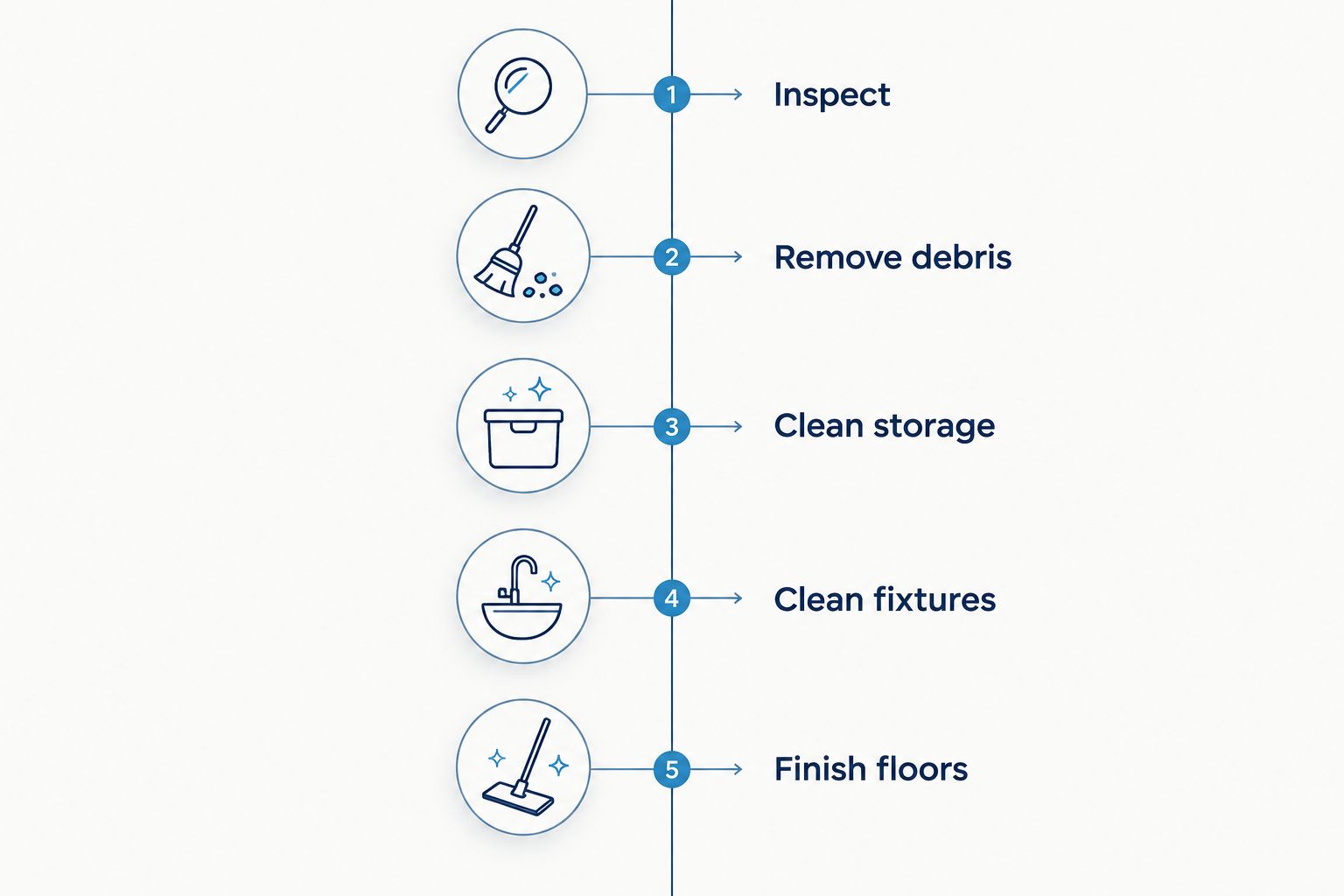
Use this sequence for your 2026 move regardless of which checklist you choose. The order prevents you from filling dirty storage or washing floors before overhead dusting is complete.
Inspect
Look for damaged finishes, moisture concerns, leftover belongings, and areas you cannot safely reach. Separate cleaning tasks from maintenance requests. Photograph anything you need to discuss with a seller, property manager, or service provider.
Remove debris
Clear rubbish and remove loose dirt before using wet products. Keep cleaning materials separate from moving supplies so you can find them without opening boxes in unfinished rooms.
Clean storage
Clean shelves, drawers, and closet surfaces before putting belongings away. Work from higher reachable surfaces down to lower ones. Do not stand on furniture or stretch beyond stable access to complete a checklist item.
Clean fixtures
Finish sinks, counters, bathroom fixtures, and frequently touched surfaces with products appropriate to their materials. For any disinfectant, follow the label's use instructions rather than spraying and immediately wiping by habit. Never mix bleach with ammonia or other cleaning products.
Finish floors
Vacuum or sweep before wet-cleaning compatible flooring. Check the manufacturer's care instructions, especially for wood and other moisture-sensitive finishes. Allow cleaned surfaces to dry before moving boxes or furniture onto them.
What to tell a St. Petersburg cleaning team
A useful 2026 cleaning request describes the home's condition, not just its address. Tell the team whether the property is empty, partly furnished, or already occupied. Explain whether cleaning must happen before movers arrive or alongside unpacking.
Then identify the tasks you want confirmed:
- Cabinet and drawer interiors.
- Appliance interiors and accessible appliance areas.
- Bathrooms with visible buildup.
- Closets, baseboards, and floor edges.
- Flooring types and any known care restrictions.
- Access limitations or areas needing maintenance rather than cleaning.
Ask what is included, what needs separate agreement, and how access will work. A straightforward quote starts with a specific scope. Tampatopshelf offers quotes tailored to each property and is reachable by phone or text; use that conversation to settle responsibilities before cleaning day.
Request your move-in cleaning quote
Describe your St. Petersburg or Pinellas County home and ask for a free quote tailored to the property.
How these checklists are ranked
The empty-home whole-home checklist ranks first because it covers accessible rooms and storage before belongings get in the way. First-night essentials wins on immediate usability, targeted deep-cleaning addresses concentrated buildup, and phased DIY gives you room-by-room control. The ranking follows access, priority, surface safety, sequence, scope, and handoff—not a claim that one approach fits every home.
Which move-in checklist should you choose?
Choose the empty-home whole-home checklist if you have access before furniture arrives. If you must move in immediately, finish the first-night essentials and schedule the remaining work rather than calling the home complete.
For a 2026 move with visible buildup, add the targeted checklist to the affected areas. Choose phased DIY when you can complete and protect individual rooms. Whichever plan you use, inspect before cleaning and unpack only into finished storage.
FAQ
What's the best move in cleaning checklist for a new homeowner?
An empty-home whole-home checklist is the best default when you can clean before furniture arrives. It covers storage, fixtures, frequently touched surfaces, and floors while access is clear.
Should I clean before or after moving furniture in?
Clean before moving furniture in when you have access. Empty rooms make floor edges, closets, and cabinet interiors easier to reach; check for new dirt after delivery.
What should I clean first if I have to move in today?
Clean the kitchen, a bathroom, and your sleeping area first. Keep a separate checklist for unfinished rooms so essential cleaning does not become the stopping point.
Does a move-in clean always include inside cabinets and appliances?
Confirm cabinet and appliance interiors individually before booking. A general service description does not establish the exact scope for your property.
Can I use the same cleaner throughout my new home?
Use products compatible with each surface rather than assuming one cleaner suits everything. Follow the product label and surface-care instructions, and never mix cleaning products.
What should I do if I find mold or water damage while cleaning?
Identify and address the moisture problem rather than treating it as ordinary dirt. Cleaning alone does not repair a leak or replace damaged material.
Can Tampatopshelf help with cleaning before I unpack?
Tampatopshelf provides residential cleaning in St. Petersburg and Pinellas County. Contact the local, licensed and insured team by phone or text to request a free quote and confirm the tasks for your property.
One last thing
Before unpacking, open every empty drawer and cupboard once more. Shelves can look finished while corners still hold debris, and correcting that now is easier than removing everything later. Request a free quote by phone or text if you want local help getting your home ready.


