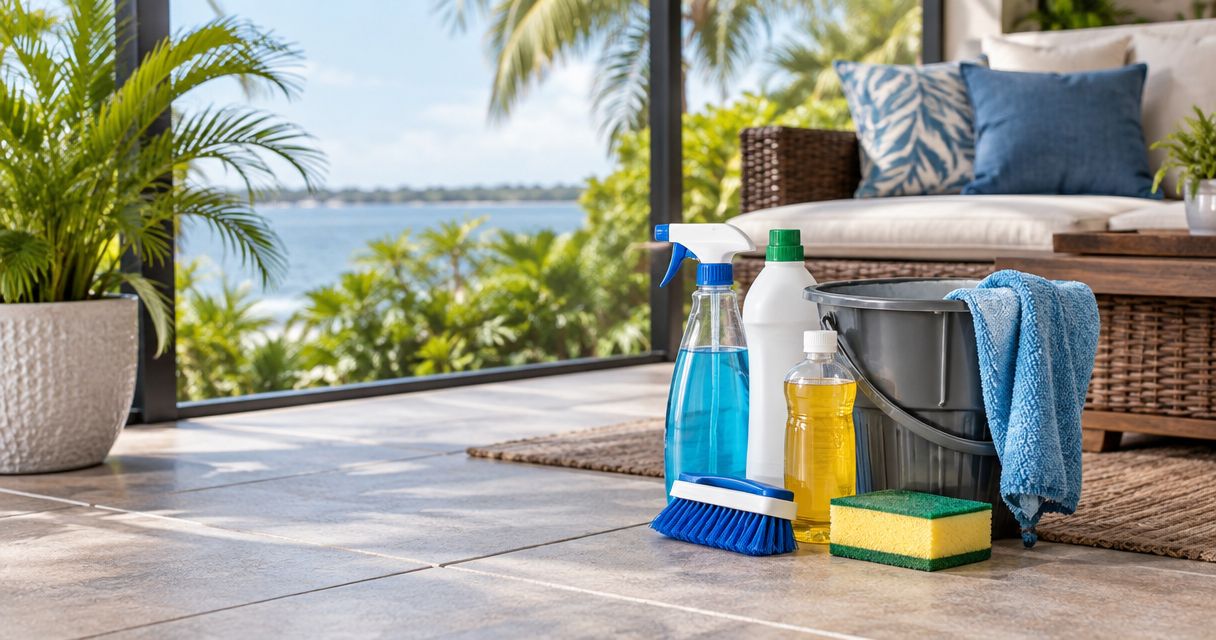
Best overall: a pH-neutral cleaner labeled for your lanai flooring. Best for washable patio furniture: mild dish detergent. Best for organic staining: an exterior oxygen-based cleaner approved for the affected surface. The best cleaning products for lanai care match the material and the stain—not the strongest chemical on the shelf.
- Choose pH-neutral cleaning products for lanai floors when the label approves your tile, stone, or coating.
- Use mild dish detergent for washable patio furniture, following the furniture manufacturer's care instructions.
- Reserve exterior oxygen-based cleaners for compatible surfaces with organic staining; follow dilution and rinsing directions.
- Tampatopshelf serves St. Petersburg homeowners and vacation-rental hosts who want local cleaning help.
Why this matters for St. Petersburg properties
A lanai can combine tile, grout, painted aluminum, screening, furniture, and glass in one small area. Those materials do not share one cleaning instruction. A product suitable for bare concrete can be wrong for natural stone or a painted frame.
For vacation-rental hosts, the goal is a clean, usable outdoor space without chemical residue or wet seating at guest arrival. For homeowners, it is removing dirt without creating a second job repairing a finish. Tampatopshelf provides residential and vacation-rental cleaning services in St. Petersburg and Pinellas County.
This 2026 guide ranks cleaner types by their appropriate use. Start with ordinary soil removal; bring out a specialist cleaner only when a specific stain calls for it.
What makes the best cleaning products for lanai care
Use these criteria before choosing a bottle:
- Surface compatibility: The label must cover the material you are cleaning, including any coating or sealer.
- Stain match: General dirt, greasy residue, organic staining, and mineral deposits need different approaches.
- Clear directions: Look for usable instructions covering dilution, application, contact time, and rinsing.
- Residue control: Follow the rinsing instructions, especially on walking surfaces and seating.
- Exposure precautions: Check requirements for gloves, eye protection, ventilation, and keeping people or pets away.
- Runoff control: Plan where rinse water will go before applying a cleaner outdoors.
Do not choose a product solely because its label says outdoor or multipurpose. Read the approved surfaces and exclusions. Your lanai's most delicate material sets the boundary when adjacent surfaces cannot be isolated.
Lanai cleaners at a glance
| Rank and cleaner type | Best for | Standout feature | Key limitation |
|---|---|---|---|
| 1. pH-neutral surface cleaner | Routine floor cleaning | General cleaning without relying on strong acidity or alkalinity | Does not replace a stain-specific treatment |
| 2. Mild dish detergent | Washable patio furniture | Useful for ordinary dirt on compatible washable surfaces | Excess detergent leaves residue unless removed |
| 3. Exterior oxygen-based cleaner | Organic staining | A targeted option when its label covers the stain and material | Not universally suitable for coatings, metals, or fabrics |
| 4. Surface-approved degreaser | Greasy spots on compatible concrete | Targets oily soil | Requires particular care around coatings and runoff |
| 5. Material-approved mineral remover | Hard-water deposits on compatible surfaces | Targets mineral buildup | Acidic formulas can damage stone, grout, or metal |
1. pH-neutral cleaner: best for routine lanai floor care
A pH-neutral cleaner is the default starting point for ordinary soil on flooring that its label approves. Sweep away loose debris first, then use the specified dilution and cleaning method. Neutral pH alone does not establish compatibility with every stone, grout, sealer, or coating.
For a 2026 residential cleaning routine, this is the category to check before buying a collection of specialist treatments. Identify the floor material and its care requirements first. If you cannot identify the finish, do not treat a stronger chemical as the solution.
pH-neutral cleaner pros:
- Fits routine soil removal on approved flooring.
- Lets you separate general cleaning from targeted stain treatment.
- Provides a practical starting point for a recurring floor-care routine.
pH-neutral cleaner cons:
- Does not necessarily remove grease, mineral scale, or established organic staining.
- Still requires label checks for sealed or coated surfaces.
- Incorrect dilution or incomplete residue removal undermines the result.
Best for: Homeowners maintaining compatible lanai flooring between deeper cleaning visits.
Verdict: Buy a pH-neutral cleaner after confirming that both the cleaner label and flooring instructions allow it.
2. Mild dish detergent: best for washable patio furniture
Mild dish detergent is a practical option for ordinary dirt on patio furniture whose care instructions permit soap and water. Use a soft cloth or suitable brush, remove the detergent as directed, and allow the furniture to dry before use. Treat cushions, woven materials, and painted frames as separate surfaces.
Do not assume every outdoor fabric is washable in place. Removable covers and cushion inserts can have different instructions, and soaking a cushion is not the same as cleaning its cover. Check the care label before wetting either one.
Mild dish detergent pros:
- Useful for basic soil on compatible washable furniture.
- Supports gentle hand cleaning rather than aggressive scrubbing.
- Makes a sensible first step before choosing a stain-specific fabric product.
Mild dish detergent cons:
- Too much detergent creates extra rinsing work.
- Does not substitute for a treatment approved for a particular stain.
- Unsuitable where the furniture instructions prohibit that cleaning method.
Best for: Hosts and homeowners cleaning washable tables, chairs, or furniture components.
Verdict: Buy for approved washable furniture; skip it on components whose care instructions require another method.
3. Exterior oxygen-based cleaner: best for organic staining
An exterior oxygen-based cleaner is a targeted option for organic staining when the product label lists the affected surface and intended use. Check the active ingredients rather than relying on the product name. Oxygen-based and chlorine-based cleaners are not interchangeable.
For your 2026 lanai cleaning kit, this is a specialist product, not the default floor wash. Follow the stated application and contact-time directions, protect adjacent materials as instructed, and test a hidden area. Do not assume an exterior cleaner is approved for screen mesh or its frame.
Exterior oxygen-based cleaner pros:
- Offers a stain-focused approach rather than repeated general washing.
- Can suit outdoor cleaning tasks specifically listed on its label.
- Gives you a defined application process when the directions are clear.
Exterior oxygen-based cleaner cons:
- Compatibility varies across finishes, fabrics, and metals.
- Requires attention to surrounding plants and rinse-water handling.
- Does not correct the moisture conditions behind recurring growth.
Best for: Compatible outdoor surfaces with organic staining that ordinary cleaning has not removed.
Verdict: Hold until you confirm the stain, approved material, and application requirements; then use only as directed.
4. Surface-approved degreaser: best for greasy concrete spots
A degreaser targets oily soil on surfaces covered by its label. That makes it a specialist choice for greasy spots rather than an all-purpose lanai wash. Sealed, painted, and bare concrete require separate compatibility checks.
Keep the application focused on the affected area. Protect nearby furniture, frames, and flooring from splash, and follow the product's disposal instructions. Do not hose chemical wash water into a storm drain.
Surface-approved degreaser pros:
- Addresses oily soil directly.
- Supports spot treatment instead of treating the entire patio.
- Avoids asking a routine floor cleaner to perform a different job.
Surface-approved degreaser cons:
- Some formulas are unsuitable for particular sealers or coatings.
- Runoff and disposal require planning.
- Removing surface grease does not guarantee removal of an absorbed stain.
Best for: Identified greasy spots on compatible concrete or another expressly approved surface.
Verdict: Buy only for a confirmed grease problem; skip it for routine dirt on otherwise clean flooring.
5. Material-approved mineral remover: best for hard-water deposits
A mineral remover is the targeted category for deposits left by mineral-containing water. Choose it by the affected material, not just by the visible white mark. A cleaner approved for glass is not automatically suitable for the frame, grout, or stone beneath it.
Many mineral-removal products use acids. Acidic cleaners can etch marble, limestone, and other calcium-containing stone. Keep specialist treatments away from incompatible neighboring surfaces, and follow all application and rinsing instructions.
Material-approved mineral remover pros:
- Targets mineral deposits rather than general dirt.
- Offers a focused treatment for a confirmed buildup problem.
- Helps you avoid unnecessary abrasive scrubbing on approved surfaces.
Material-approved mineral remover cons:
- Acidic formulas can damage acid-sensitive materials.
- Adjacent frames and grout need their own compatibility checks.
- A white mark is not enough evidence to select a chemical treatment.
Best for: Confirmed mineral deposits on glass or another material expressly covered by the label.
Verdict: Hold until you identify both the deposit and the surface; skip acidic formulas on acid-sensitive stone.
How to choose without damaging the lanai
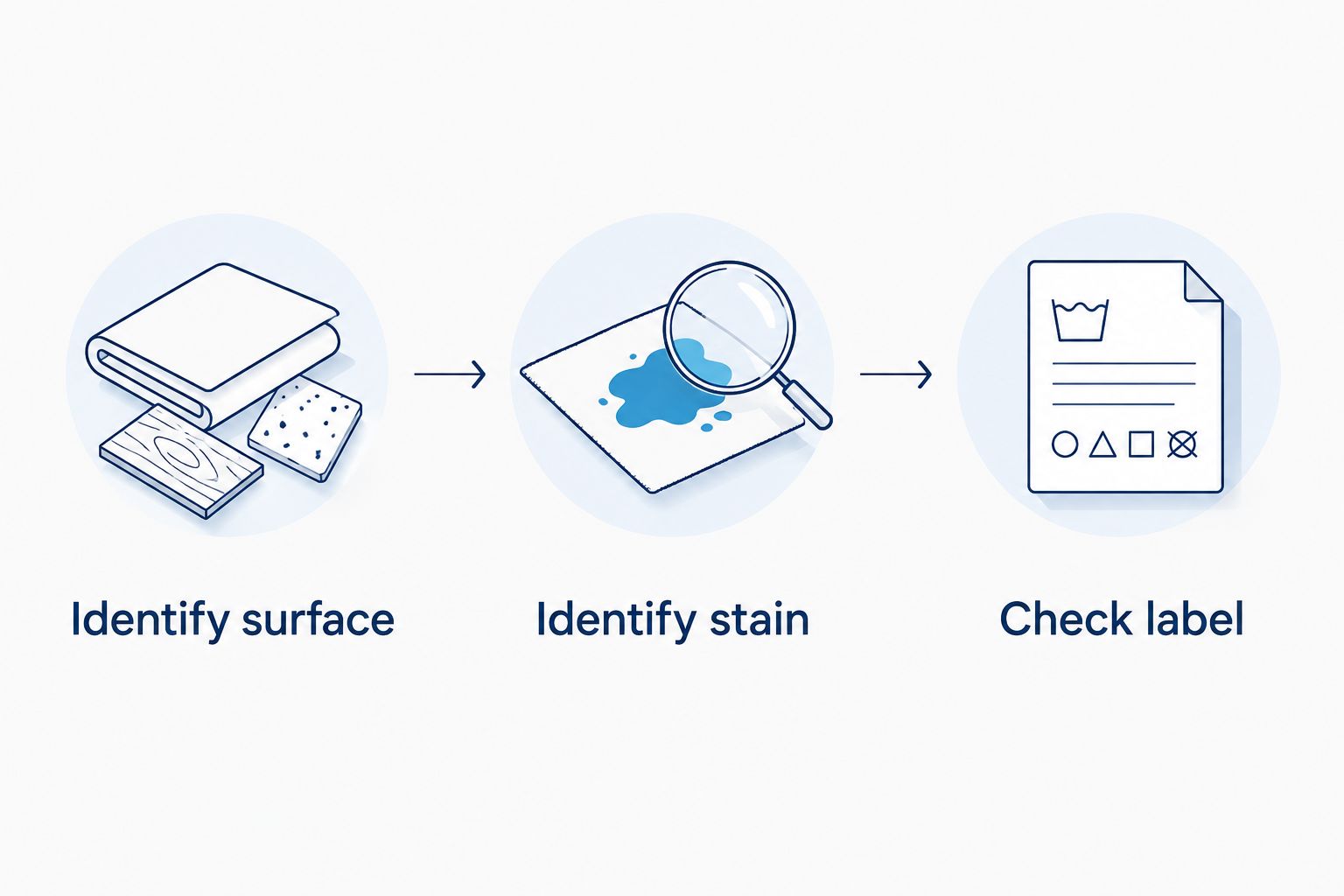
Use 3 checks before applying any cleaner. These checks matter more than the order of the bottles in this 2026 ranking.
- Identify surface: Determine whether you are treating tile, natural stone, concrete, a coating, screen mesh, fabric, or metal.
- Identify stain: Separate loose dirt from grease, organic staining, and suspected mineral deposits.
- Check label: Match the surface and stain to the cleaner's directions, then check the surface manufacturer's care instructions.
Next, sweep or vacuum loose grit before wet cleaning. Test the selected product in an inconspicuous area using the actual dilution and method you intend to use. A hidden-area test supplements the compatibility instructions; it does not overrule them.
Never mix cleaning products. In particular, mixing chlorine bleach with acids or ammonia can release dangerous gases. Keep products in their original labeled containers and follow the listed protective-equipment requirements.
Fit outdoor cleaning into a rental turnover
For a vacation rental, separate routine outdoor presentation from specialist stain work. Inspect the lanai before deciding whether it needs a sweep, furniture wipe-down, floor cleaning, or a planned treatment. Do not begin a treatment without enough time to complete the label's process and leave the space ready for use.
Your 2026 turnover checklist should include 2 readiness checks after cleaning: the walking surface is ready for use, and the seating is ready for use. Check for residual cleaner and remaining moisture rather than judging the space only from the doorway.
Tampatopshelf is a local cleaning service for St. Petersburg homeowners and vacation-rental hosts who want help with property cleaning. The team is licensed and insured and reachable by phone or text. When requesting a quote, describe the outdoor area separately so the requested scope is clear.
How these cleaner types are ranked
The 5 cleaner types are ordered by use case, with routine compatible-surface cleaning first and specialist treatments later. Surface compatibility, stain match, clear instructions, residue removal, exposure precautions, and runoff handling determine the recommendation.
This is a category buying guide, not a brand-by-brand performance test. The ranking helps you select the right kind of cleaner; the individual product label determines whether that bottle belongs on your lanai.
Which lanai cleaner should you choose?
Choose a surface-approved pH-neutral cleaner as your routine floor-cleaning default. Add mild dish detergent only for furniture that permits it, and buy specialist treatments only for identified staining. You do not need every category to maintain one outdoor space.
For a straightforward 2026 cleaning plan, separate recurring care from one-off stain treatment. Tampatopshelf provides cleaning services for local homes and vacation rentals; describe the flooring, furniture, and problem areas when requesting your property-specific quote.
Request a free cleaning quote
Describe your St. Petersburg or Pinellas County property and the cleaning help you need.
FAQ
What's the best cleaning product for a lanai floor?
A pH-neutral cleaner approved for the flooring is the best routine starting point. Check both the cleaner label and the floor manufacturer's instructions, including requirements for any sealer or coating.
Can I use dish soap on patio furniture?
Use mild dish detergent only when the furniture's care instructions permit soap and water. Remove detergent residue as directed and let the furniture dry before use.
Is an oxygen-based cleaner better than bleach for a lanai?
Neither cleaner is universally better for a lanai. Choose by the stain, approved surfaces, and application precautions; oxygen-based and chlorine-based products are not interchangeable.
Can I use vinegar to clean a stone lanai floor?
Do not use vinegar on acid-sensitive stone such as marble or limestone. Vinegar is acidic, so choose a cleaner approved for the specific stone instead.
What should I use for greasy spots on a patio?
Use a degreaser labeled for the patio material and any coating or sealer. Treat the affected area as directed and plan how to handle the wash water.
How do I clean a screened lanai without damaging it?
Follow the screen and frame manufacturer's care instructions and choose a cleaner approved for both materials. A product suitable for the floor is not automatically suitable for the enclosure.
Does cleaning stop outdoor mold from coming back?
Cleaning alone does not correct the moisture conditions that allow growth to recur. Address persistent wet areas or drainage problems separately from stain removal.
Can I request local cleaning help for a vacation rental?
Tampatopshelf provides vacation-rental turnover cleaning in St. Petersburg and Pinellas County. Request a free quote by phone or text and describe the lanai separately to clarify the requested work.
One last thing
The cleaner that works on your floor can be the wrong cleaner for the frame beside it. Before wet cleaning, identify where the rinse water will touch—not just where you plan to scrub. Request a free quote by phone or text and explain which indoor and outdoor areas you want included.


