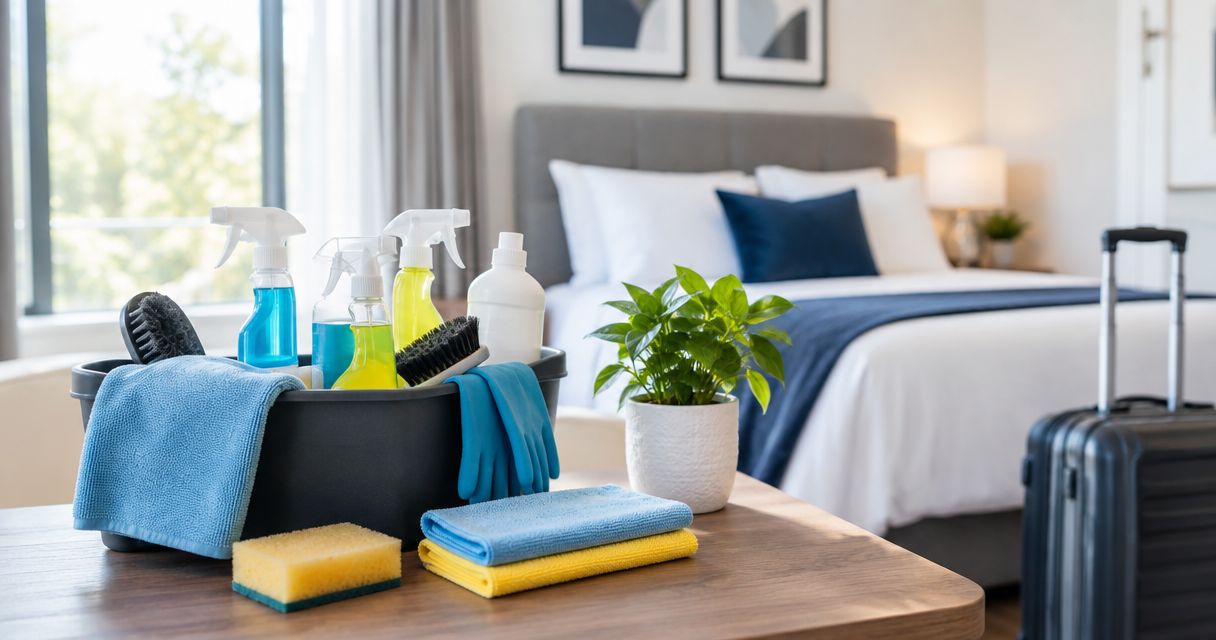
Best overall: a washable microfiber cloth kit. Best for bathroom buildup: a surface-compatible bathroom cleaner. Best basic floor-care option: a neutral-pH cleaner approved for your flooring. This 2026 guide ranks short term rental cleaning supplies by their role in a turnover, so you can build a kit around your property rather than collect unnecessary bottles.
- Start your short term rental cleaning supplies kit with microfiber cloths, surface-compatible cleaners, and a vacuum suited to your floors.
- Choose an EPA-registered disinfectant for labeled uses; cleaning and disinfecting are different tasks.
- Tampatopshelf provides vacation-rental turnover cleaning for St. Petersburg and Pinellas County hosts and property managers.
- Separate bathroom cloths from kitchen cloths, and check supplies before the next turnover.
Why this matters
A rental turnover is more than making a room look tidy. You need to remove the previous guest’s dirt, prepare bathrooms and kitchens, reset supplies, and leave the property ready for inspection. The right kit supports those tasks without asking one cleaner to do everything.
For St. Petersburg and Pinellas County properties, Tampatopshelf provides vacation-rental turnover cleaning alongside residential and commercial cleaning. Tampatopshelf is a local service option for hosts who need vacation-rental turnover cleaning rather than another supply shopping list.
Your 2026 supply list should match the property’s surfaces and cleaning responsibilities. A stone countertop, a coated shower enclosure, and a wood floor do not automatically accept the same product. Check the surface manufacturer’s care instructions before choosing chemicals or abrasive tools.
What makes the best turnover cleaning supplies
Use these criteria before choosing bottles, cloths, or equipment:
- Surface compatibility: The product’s label and the surface’s care instructions must agree. A cleaner that damages the finish fails the job.
- Task fit: Separate soil removal, mineral-deposit treatment, glass cleaning, and disinfecting. These are different jobs.
- Clear directions: Choose products with readable instructions for application, dilution where required, rinsing, and protective equipment.
- Manageable handling: Favor tools you can carry, store, wash, and reset without confusing clean supplies with used ones.
- Inspectable results: Floors, mirrors, counters, and fixtures should be easy to check after cleaning, not covered with fragrance or residue.
- Repeatable setup: Keep the same property-specific checklist with the kit so replacement supplies serve an identified task.
Do not make scent your main selection criterion. A strong fragrance does not establish that a surface is clean, and it does not replace ventilation or removal of the source of an odor.
Best turnover cleaning supplies at a glance
These are ranked supply categories, not endorsements of specific retail products. Each fills a distinct role; none replaces the whole turnover kit.
| Rank | Supply | Best for | Standout feature | Key limitation |
|---|---|---|---|---|
| 1 | Washable microfiber cloth kit | Routine wiping | Separate cloths by cleaning area | Requires laundering and separation |
| 2 | Neutral-pH floor cleaner | Compatible hard floors | A floor-specific cleaning step | Neutral pH alone does not prove compatibility |
| 3 | EPA-registered disinfectant | Labeled disinfection tasks | Product-specific use directions | Requires the labeled contact time |
| 4 | Surface-compatible bathroom cleaner | Shower and fixture buildup | Targets bathroom soils | Some formulas are unsuitable for stone or finishes |
| 5 | Glass and mirror cleaner | Reflective surfaces | Dedicated finish-checking task | Not a general countertop cleaner |
| 6 | Vacuum with suitable attachments | Dry debris and floor edges | Removes debris before wet cleaning | Needs maintenance and correct floor settings |
| 7 | Restocking and waste-supply kit | Guest-ready reset | Keeps consumables together | Does not replace cleaning supplies |
1. Washable microfiber cloth kit: best for routine wiping
A washable microfiber cloth kit is the best starting point for routine turnover cleaning. Use it with the appropriate cleaning product to wipe counters, furniture, fixtures, and other compatible surfaces. Keep clean cloths separate from the cloths already used in the property.
Set aside 3 cloth groups: kitchen, bathroom, and general living areas. This is a practical organizing recommendation, not a universal sanitation standard. Use clearly distinguishable groups and replace a cloth when it becomes dirty rather than carrying it through every room.
Microfiber cloth kit pros:
- Supports separate wiping tasks across the property.
- Can be laundered according to the cloth manufacturer’s instructions.
- Packs into a portable cleaning kit without bulky equipment.
Microfiber cloth kit cons:
- Used cloths require a separate collection and laundering process.
- A dirty cloth spreads soil instead of removing it effectively.
Best for: Hosts building a repeatable routine-wiping setup.
Verdict: Buy a washable microfiber kit and establish the separation system before the first turnover.
2. Neutral-pH floor cleaner: best for compatible hard floors
A neutral-pH floor cleaner belongs in the kit when your flooring manufacturer permits it. Use the labeled dilution and application method, and pair it with a mop suited to the floor. Remove loose debris before introducing moisture.
Do not treat neutral pH as permission to use a product everywhere. Wood, laminate, stone, and coated floors have their own care requirements. Excess water or an unsuitable formula remains a problem even when the cleaner’s pH is neutral.
Neutral-pH floor cleaner pros:
- Gives hard-floor cleaning a defined product and method.
- Supports a consistent routine when approved for the surface.
- Avoids improvising with unrelated bathroom or kitchen chemicals.
Neutral-pH floor cleaner cons:
- Does not establish compatibility with every floor finish.
- Does not automatically disinfect or remove mineral deposits.
Best for: Properties with hard floors whose care instructions permit the selected cleaner.
Verdict: Buy only after checking the flooring instructions; skip the assumption that one floor formula suits every room.
3. EPA-registered disinfectant: best for labeled disinfection tasks
An EPA-registered disinfectant is the appropriate category when your checklist calls for disinfecting a compatible surface. The Environmental Protection Agency’s product-label guidance makes the label central to correct use: follow the listed surfaces, application instructions, and contact time.
Cleaning removes dirt and other material; disinfecting addresses microorganisms covered by the product’s claims. Follow any required precleaning instructions. Keep the surface wet for the full labeled contact time rather than wiping the product away immediately.
EPA-registered disinfectant pros:
- Provides defined instructions for the product’s intended uses.
- Separates disinfection from ordinary soil removal.
- Lets you match a labeled application to a specific task.
EPA-registered disinfectant cons:
- Requires attention to contact time and surface restrictions.
- Some applications require rinsing or other follow-up steps.
Best for: Labeled disinfection tasks on compatible surfaces.
Verdict: Buy a product that fits your checklist, and follow its label every time.
4. Surface-compatible bathroom cleaner: best for bathroom buildup
A bathroom cleaner handles tasks such as soap residue and, where the label specifies it, mineral deposits. Match the formula to the shower, tub, sink, and fixture materials. Read restrictions before applying it to natural stone, coated glass, or plated hardware.
A bathroom bottle is not a universal cleaner. Never mix bleach with ammonia or acids, including acidic bathroom products. If one product does not address the problem, reassess the surface and instructions rather than layering chemicals together.
Surface-compatible bathroom cleaner pros:
- Gives bathroom buildup a dedicated treatment step.
- Can target the soil identified on the product label.
- Keeps stronger bathroom chemistry out of unrelated cleaning tasks.
Surface-compatible bathroom cleaner cons:
- Certain formulas can damage sensitive surfaces or finishes.
- Requires careful chemical handling and label compliance.
Best for: Hosts dealing with bathroom residue on surfaces approved for the selected formula.
Verdict: Buy for the bathroom material and soil, not because the bottle promises an all-purpose solution.
5. Glass and mirror cleaner: best for reflective surfaces
A glass and mirror cleaner gives reflective surfaces their own finishing step. Apply it according to its instructions with a clean, suitable cloth. Check mirrors and glass from an angle so you can see remaining marks before leaving the room.
Avoid assuming that a glass cleaner is approved for every glossy surface. Coated glass, screens, stone, and finished furniture need their own care instructions. Keep the product in its original labeled container so nobody mistakes it for another cleaner.
Glass and mirror cleaner pros:
- Supports a dedicated mirror and glass inspection step.
- Makes fingerprints and remaining marks easier to address.
- Separates finishing work from heavier soil-removal tasks.
Glass and mirror cleaner cons:
- Does not replace removal of heavy deposits.
- Requires checking restrictions on coatings and nearby materials.
Best for: Bathroom mirrors and other compatible reflective surfaces.
Verdict: Buy when your property has a recurring glass-cleaning task; do not expand its use beyond the label.
6. Vacuum with suitable attachments: best for dry debris
A vacuum removes loose debris before you wipe or mop. Choose equipment with settings and attachments appropriate for the property’s flooring, edges, upholstery, and accessible crevices. Check the manufacturer’s instructions before using a brush roll on a sensitive floor.
Empty or service the vacuum as directed, and inspect the attachment before moving between areas. A blocked tool or dirty brush creates extra work. For beach rentals, include entry areas and the spaces around mats in the dry-cleaning checklist.
Vacuum with suitable attachments pros:
- Removes loose debris before wet cleaning begins.
- Reaches edges and crevices with appropriate attachments.
- Supports separate cleaning methods for floors and upholstery.
Vacuum with suitable attachments cons:
- Needs filter, brush, and container maintenance.
- Incorrect settings or attachments can damage surfaces.
Best for: Rentals with dry debris across floors, edges, and upholstered areas.
Verdict: Buy for your actual floor mix and maintenance capacity, not for an unsupported suction claim.
7. Restocking and waste-supply kit: best for the guest-ready reset
A restocking kit keeps the consumables named in your property checklist together. Include the correct bin liners and the guest supplies you have chosen to provide. Keep these separate from chemicals and used cleaning tools.
Do not let a full supply cupboard stand in for a completed turnover. Restocking happens alongside cleaning and inspection, not instead of them. Use 1 checklist per property so different bin sizes and amenity decisions do not get mixed together.
Restocking and waste-supply kit pros:
- Makes missing consumables visible during the reset.
- Separates guest supplies from cleaning chemicals.
- Supports property-specific replenishment decisions.
Restocking and waste-supply kit cons:
- Requires inventory checks and replenishment.
- Adds storage needs without replacing any cleaning step.
Best for: Hosts and property managers resetting guest supplies between stays.
Verdict: Buy the consumables your property actually uses; skip extras without an assigned purpose.
How the supplies are ranked
This 2026 ranking starts with tools that support routine cleaning, then separates floor care, disinfection, bathroom treatment, finishing, debris removal, and restocking. The criteria are surface compatibility, task fit, clear directions, manageable handling, inspectable results, and repeatable setup.
The order is a buying sequence, not a claim that cloths matter more than safe chemical use. Choose the right category first, then select a product whose instructions match your property. A retail brand name alone does not settle that decision.
Turn the kit into a repeatable turnover process
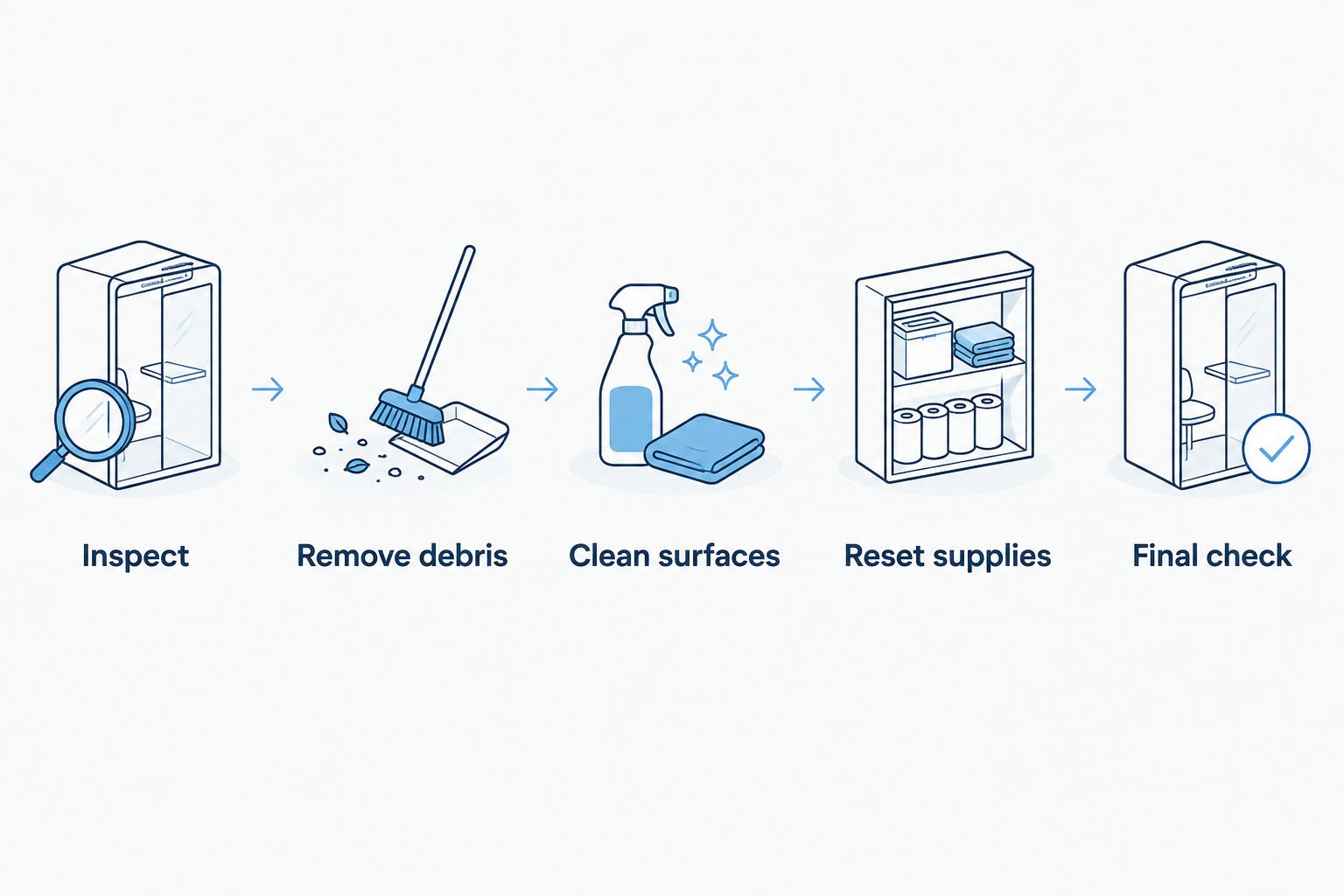
Organize your 2026 turnover process around these steps. Keep the property’s surface notes and Airbnb turnover cleaning checklist with the supplies rather than relying on memory.
- Inspect: Identify damage, unusual soil, missing supplies, and anything outside the routine cleaning scope.
- Remove debris: Collect waste and remove loose dirt before wet cleaning.
- Clean surfaces: Use the appropriate cleaner and separate cloth groups; disinfect where your checklist requires it.
- Reset supplies: Replace the consumables listed for that property and separate used tools for cleaning.
- Final check: Inspect floors, mirrors, bathrooms, counters, and the completed reset before closing the task.
Keep 2 mop pads in the working kit: one ready for use and one clean replacement. Adjust that recommendation to the property rather than stretching a dirty pad across every floor. Store used cloths and pads separately until they are cleaned according to their instructions.
Tampatopshelf offers vacation-rental turnover cleaning with straightforward quotes tailored to the property. The local St. Petersburg team is licensed and insured, and you can reach a real person by phone or text.
Request a free turnover quote
Discuss your property's cleaning needs with the local St. Petersburg team by phone or text.
Which turnover supplies should you choose?
Start with the microfiber cloth kit, an approved floor cleaner, and a vacuum suited to your floors. Add the disinfectant, bathroom cleaner, glass cleaner, and restocking kit for the tasks your property requires. Keep each product’s role clear.
For your 2026 kit review, remove bottles that duplicate a task without adding a needed function. Replace unreadable labels and stop using products whose compatibility you have not checked. Buying fewer appropriate supplies is more useful than storing a shelf of uncertain ones.
FAQ
What are the best short term rental cleaning supplies to start with?
Start with washable microfiber cloths, a floor-approved cleaner, and a vacuum suited to your flooring. Add bathroom cleaner, glass cleaner, an EPA-registered disinfectant, and restocking supplies for the tasks on your property checklist.
Can I use one cleaner for an entire Airbnb turnover?
Do not assume one cleaner is suitable for every turnover task. Check its label against each surface, and use separate products where bathroom buildup, glass finishing, or disinfection requires them.
Do I need to disinfect every surface during a turnover?
Use disinfectant for the tasks identified in your cleaning plan and allowed by the product label. Cleaning and disinfecting are different processes, and the disinfectant must remain wet for its labeled contact time.
Is a neutral-pH cleaner safe for every rental floor?
Neutral pH does not establish compatibility with every floor. Check the flooring manufacturer's care instructions, the cleaner's label, and any limits on moisture or equipment.
How should I separate cleaning cloths in a vacation rental?
Separate cloths used in kitchens, bathrooms, and general living areas. Keep clean cloths away from used ones, and launder them according to their manufacturer's instructions.
What cleaning supplies help with sand in a beach rental?
Use a vacuum with attachments and settings appropriate for the property's floors and edges. Remove loose sand before wet cleaning, and include entry areas and spaces around mats in the checklist.
Can Tampatopshelf handle vacation-rental turnover cleaning?
Tampatopshelf provides vacation-rental turnover cleaning in St. Petersburg and Pinellas County. The local team is licensed and insured, offers property-specific quotes, and is reachable by phone or text.
One last thing
The most useful addition to your cleaning kit is a surface list. Record the floor, counter, shower, and fixture materials with their care instructions. That list prevents a replacement cleaner from becoming an accidental change in how the property is maintained.
Tampatopshelf can discuss turnover coverage for your property. Request a free quote by phone or text, and explain the space, its cleaning needs, and the turnover responsibilities you want covered.


