
Best overall: a room-by-room turnover checklist. Best for accumulated buildup: a deep-clean reset checklist. Best for pet stays: a pet-stay addendum. Best for several properties: a multi-unit handoff checklist. This 2026 guide helps you choose the right beach house cleaning checklist, with local turnover support available from Tampatopshelf.
- Use a room-by-room beach house cleaning checklist for every guest turnover, then add property-specific tasks.
- Tampatopshelf provides vacation-rental cleaning in St. Petersburg and Pinellas County; discuss your property's turnover requirements.
- Deep-clean resets address buildup; pet-stay checks and multi-unit handoffs supplement the standard turnover checklist.
- Finish each turnover with a walkthrough that separates cleaning completion from maintenance problems.
Why this matters
A beach rental needs more than a tidy appearance. Sand collects around entrances and furniture, damp towels need attention, and kitchen drawers can hide crumbs after the counters look finished.
For your 2026 rental operations, separate tasks required between guests from work that needs its own scheduled visit. Otherwise, a cleaner receives an expanding list without a clear agreement about what must be finished before arrival.
Tampatopshelf provides residential and vacation-rental cleaning for St. Petersburg and Pinellas County properties. The local team is licensed and insured and reachable by phone or text, making it a practical choice for hosts who want to discuss property-specific cleaning directly.
What makes the best beach house cleaning checklist?
Choose a checklist by what it tells someone to do, not how many boxes it contains.
- Room coverage: Name every guest-accessible space, including entryways, laundry areas, and outdoor seating included in the cleaning scope.
- Beach-specific detail: Include sand traps, beach equipment storage, damp textiles, and visible salt residue on suitable surfaces.
- Clear completion standards: Replace vague instructions such as clean bathroom with separate tasks for fixtures, surfaces, floors, and supplies.
- Scope boundaries: Distinguish routine cleaning from deep cleaning, maintenance, laundry arrangements, and supply replacement.
- Handoff evidence: Record unfinished work and maintenance concerns separately from completed cleaning.
- Property fit: Adapt instructions to the actual flooring, appliances, furnishings, access arrangements, and guest amenities.
A checklist should make omissions easier to spot. It should not quietly add specialist work or promise that every problem can be resolved during a turnover.
Beach house cleaning checklists at a glance
| Checklist | Best for | Standout feature | Key limitation |
|---|---|---|---|
| Room-by-room turnover checklist | Routine guest changes | Covers cleaning, resetting, and final inspection | Does not replace scheduled deep cleaning |
| Deep-clean reset checklist | Accumulated buildup | Separates detail work from routine turnover tasks | Needs an agreed scope and scheduled access |
| Pet-stay addendum | Rentals that permit pets | Adds hair, bedding, and pet-area checks | Cannot establish whether a property is allergen-free |
| Multi-unit handoff checklist | Hosts and managers overseeing several rentals | Standardizes completion records and exceptions | Still needs property-specific room instructions |
1. Room-by-room turnover: best checklist for guest changes
The room-by-room turnover checklist is the default for an occupied vacation rental. It combines cleaning with resetting the property so the next guest receives the space as intended.
Best for: Hosts who need a repeatable process between departures and arrivals.
Arrival check
- Confirm the property is accessible and the departing guest has left.
- Note visible damage, missing items, unusual odors, and maintenance concerns before moving through the rooms.
- Gather used towels and linens without placing them on clean bedding or furniture.
- Remove rubbish and inspect bins for leaks or residue.
- Check the agreed scope before starting unfamiliar or additional work.
Bedrooms and living spaces
- Replace used bed linen according to the property's laundry arrangement.
- Check mattress protectors, pillows, and bedding for visible marks or damage.
- Dust accessible surfaces, bedside tables, lamps, and furniture edges.
- Inspect sofa cushions and accessible gaps for crumbs, sand, and belongings.
- Clean floors using methods suited to the surface.
- Return furniture and guest information to their intended positions.
Kitchen and dining areas
- Remove leftover food according to the host's instructions.
- Clean the sink, counters, backsplash, and dining surfaces.
- Check dishes, utensils, and cookware before returning them to storage.
- Inspect drawers and cabinet shelves for crumbs or spills.
- Clean appliance surfaces and check appliance interiors for food residue.
- Empty bins and replace liners where used.
Bathrooms and laundry areas
- Clean toilets, sinks, showers, tubs, mirrors, and accessible fixtures.
- Check shower corners, bath mats, and towel storage for visible dampness or soiling.
- Reset towels and agreed guest supplies.
- Remove hair and debris from accessible surfaces and floors.
- Check the washing machine and dryer for forgotten items if laundry is included.
- Follow appliance instructions for routine lint-screen care.
Use 2 separate cloth sets, one for bathrooms and another for kitchen surfaces. Keep used cloths apart from clean supplies rather than carrying the same cloth through the property.
Beach areas and final reset
- Check entry mats, thresholds, and accessible door tracks for sand.
- Inspect beach-item storage and any included outdoor seating.
- Remove loose grit before damp-cleaning suitable floors.
- Check that stored textiles are dry before putting them away.
- Confirm agreed supplies are present and report shortages.
- Complete 1 final walkthrough per turnover, after cleaning equipment is put away.
For more detail on entryways, furniture gaps, and coastal residue, use these sand and salt cleaning tips.
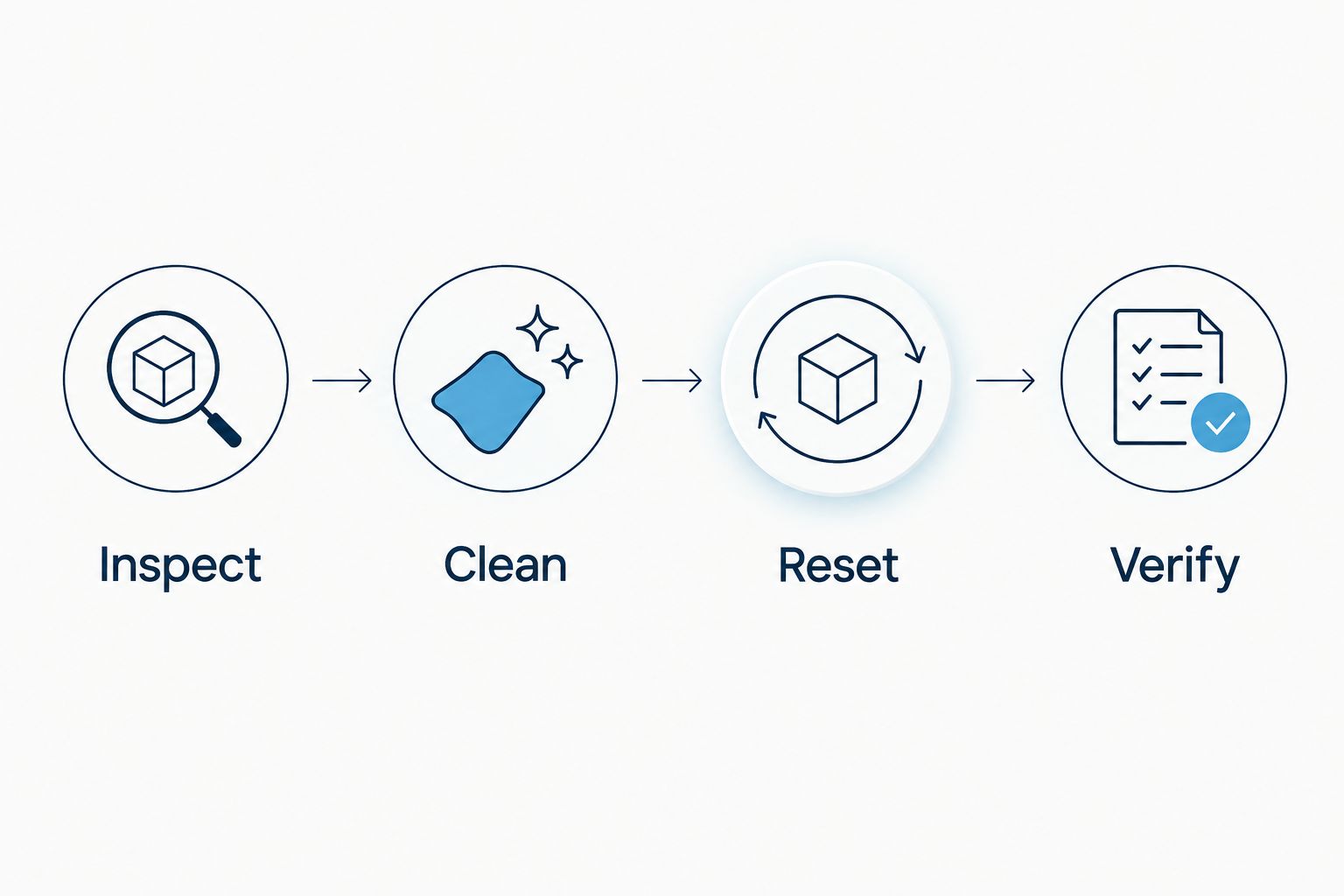
Keep the sequence simple
Use the same sequence throughout the rental: Inspect, Clean, Reset, Verify. Inspection identifies exceptions; cleaning removes soil; resetting restores the guest setup; verification checks the finished result.
Room-by-room turnover pros:
- Provides a practical default between guest stays.
- Makes room omissions visible.
- Connects cleaning with the guest-ready reset.
Room-by-room turnover cons:
- Can miss hidden buildup without separate detail-cleaning tasks.
- Depends on accurate property instructions and a workable laundry arrangement.
Verdict: Use the room-by-room turnover checklist as your default.
2. Deep-clean reset: best checklist for accumulated buildup
A deep-clean reset addresses detail work that does not belong in every routine turnover. Use it when inspection identifies buildup or when preparing a property for a new rental period.
Best for: Hosts who need to restore the cleaning baseline rather than repeat the usual surface tasks.
Build this into your 2026 maintenance plan, but schedule the work according to the property's condition. A calendar reminder is not a substitute for looking at the actual surfaces.
Deep-clean reset tasks
- Inspect baseboards, door frames, trim, and accessible vents for settled dust.
- Clean cabinet fronts and handles; agree separately on emptying and cleaning interiors.
- Check accessible areas beneath and behind movable furnishings.
- Inspect shower surfaces and fixtures for soap residue and mineral deposits.
- Review appliance interiors and removable components against manufacturer instructions.
- Check washable soft furnishings and window treatments against their care labels.
- Inspect outdoor furniture and storage areas included in the agreed service.
Do not turn a cleaning checklist into a repair instruction. Loose fixtures, damaged seals, leaks, and persistent dampness need a separate maintenance response.
For visible mold concerns, avoid treating a routine cleaning visit as proof that the underlying moisture problem is resolved. Report the location and condition so the owner can arrange an appropriate assessment.
Deep-clean reset pros:
- Gives detail work an explicit scope.
- Helps identify tasks repeatedly deferred during turnovers.
- Creates a clearer baseline for future routine visits.
Deep-clean reset cons:
- Requires scheduling beyond the normal guest-change workflow.
- Does not replace repairs, moisture correction, or specialist assessment.
Verdict: Use a deep-clean reset when the property's condition calls for it.
3. Pet-stay addendum: best checklist for pet-friendly rentals
The pet-stay addendum supplements the ordinary turnover checklist. It directs extra attention to hair, pet-contact areas, and furnishings without pretending that visible cleanliness proves an allergen-free environment.
Best for: Hosts whose rental rules permit pets.
Pet-stay checks
- Inspect upholstery seams, cushion edges, rugs, and accessible furniture undersides for hair.
- Vacuum suitable soft surfaces using equipment appropriate for the material.
- Inspect throws, bedding, and washable covers before laundering according to care instructions.
- Clean any host-provided pet bowls and the surfaces beneath them.
- Check agreed outdoor areas for pet waste or soiling.
- Report odors, stains, scratching, or damage separately from routine completion.
Do not disguise an unresolved odor with fragrance and mark the task complete. Identify the affected area, follow the surface's care guidance, and tell the host when further treatment is needed.
Keep pet-related instructions specific to the property. A rental with washable covers and hard flooring needs different tasks from one with extensive carpeting and upholstered furniture.
Pet-stay addendum pros:
- Directs attention to easily overlooked hair traps.
- Separates cleaning tasks from damage reporting.
- Fits into an existing turnover process.
Pet-stay addendum cons:
- Adds inspection and cleaning work beyond the standard checklist.
- Cannot support an allergen-free claim or replace specialist treatment.
Verdict: Use the pet-stay addendum after permitted pet stays, alongside the full turnover checklist.
4. Multi-unit handoff: best checklist for property managers
A multi-unit handoff checklist records what happened at each property. It does not replace room-by-room cleaning instructions; it makes completion and unresolved issues easier to distinguish.
Best for: Hosts and property managers coordinating several rentals or cleaning assignments.
Record the handoff
- Identify the property and the visit date.
- Confirm access and any property-specific instructions.
- Record cleaning completion separately from laundry or supply exceptions.
- List maintenance concerns by room and location.
- Identify who receives unresolved issues.
- Confirm whether a final inspection is complete or still outstanding.
Keep 1 completed checklist per turnover in the property's records. A single completion message should not hide an unfinished bathroom, missing linen, or a maintenance issue requiring a decision.
Your 2026 property folder should also distinguish fixed instructions from changing information. Flooring care belongs in the standing instructions; a broken blind belongs in the current exception record.
Avoid unnecessary guest information in cleaning records. Property identification, task status, and relevant issue descriptions are more useful than copying personal booking details into every handoff.
Multi-unit handoff pros:
- Makes exceptions visible across properties.
- Separates completed work from unresolved decisions.
- Gives replacement cleaners a clearer record to follow.
Multi-unit handoff cons:
- Adds recordkeeping to each visit.
- Fails without accurate room instructions and a named issue recipient.
Verdict: Use the multi-unit handoff checklist when coordination is the main problem.
How the checklists are ranked
This 2026 ranking prioritizes routine usefulness, beach-specific coverage, clear scope, and reliable handoffs. The turnover checklist comes first because it covers the ordinary guest change; the remaining checklists address conditions the standard process cannot handle alone.
For hosts seeking local help, Tampatopshelf vacation-rental cleaning is best for St. Petersburg and Pinellas County properties needing cleaning tailored to their space. Confirm laundry responsibilities, outdoor areas, supply checks, and reporting expectations when requesting a quote.
Which beach house cleaning checklist should you choose?
Start with the room-by-room turnover checklist. Add the deep-clean reset when buildup needs attention, the pet-stay addendum when relevant, and the multi-unit handoff when several properties make communication harder.
For your 2026 operating checklist, write down exclusions as clearly as included tasks. Window exteriors, heavy furniture movement, repairs, and specialist treatments should never enter the scope through assumption.
FAQ
What's the best beach house cleaning checklist between guests?
A room-by-room turnover checklist is the best default between guests. Include bedrooms, bathrooms, kitchens, living spaces, beach-item areas, and a final walkthrough; add property-specific instructions for laundry and supplies.
Do I need to deep-clean a beach rental after every stay?
Use routine turnover cleaning between stays and schedule additional detail work according to the property's condition. Heavy soiling or a specific problem needs its own assessment rather than an automatic checklist label.
How do I keep sand from being missed during cleaning?
List sand traps individually, including entry mats, thresholds, accessible door tracks, sofa gaps, and beach-item storage. Remove loose grit before damp-cleaning suitable surfaces and inspect entrances again during the final walkthrough.
Does a turnover checklist include washing all the linens?
A turnover checklist should state the property's laundry arrangement explicitly. Identify which linens are replaced, who handles washing, where clean replacements are stored, and how damaged or stained items are reported.
What should cleaners report instead of trying to fix?
Cleaners should report leaks, damaged seals, broken fixtures, persistent dampness, and other maintenance concerns separately. A cleaning completion record is not confirmation that a repair or moisture problem has been resolved.
What extra cleaning checks does a pet-friendly beach rental need?
Add checks for hair in upholstery and rugs, soiled washable covers, pet bowls, and agreed outdoor areas. Record odors and damage separately, and do not describe the property as allergen-free based on cleaning alone.
Can Tampatopshelf help with vacation-rental cleaning locally?
Tampatopshelf provides vacation-rental cleaning in St. Petersburg and Pinellas County. The local team is licensed and insured and reachable by phone or text to discuss your property and request a free quote.
Related guides
- Cleaning checklists for managers with multiple units
- Cleaning supplies for short-term rental turnovers
One last thing
Check the entrance again after the final supply run. A finished floor can collect fresh grit while someone carries linens or equipment through the door, so the last inspection belongs after the work is packed away.
Request a free quote by phone or text. Share your property's location, room details, turnover needs, and laundry arrangements so the cleaning scope fits your beach rental.


