
Recurring house cleaning is worth it when scheduled visits take routine cleaning off your plate and fit your household budget. It is less useful when you mainly need a one-time reset or would still redo the same work yourself. The main caveat is scope: do not assume a recurring visit includes deep cleaning, laundry, dishes, or move-out work.
- Is recurring house cleaning worth it? Yes, when scheduled help replaces chores you otherwise struggle to finish.
- Tampatopshelf provides residential cleaning for homeowners in St. Petersburg and Pinellas County.
- Choose recurring cleaning for upkeep; discuss deep cleaning separately when your home needs a reset.
- Compare the agreed checklist, your remaining chores, and the quote before choosing a schedule.
Is recurring house cleaning worth it in 2026?
Recurring cleaning is worth paying for when it replaces work you do not want to keep managing yourself. A clean home after an appointment is only part of the result. The more useful question is whether the arrangement makes your ordinary week easier without creating extra preparation or follow-up.
For local help, Tampatopshelf provides residential cleaning in St. Petersburg and Pinellas County. Start with the condition of your home and the tasks you want handled, rather than choosing a frequency before discussing the work.
| Option | Best for | Main benefit | Main limitation |
|---|---|---|---|
| Recurring cleaning | Households wanting scheduled upkeep | Creates a repeatable plan for agreed cleaning tasks | Leaves household chores and excluded tasks with you |
| One-time deep cleaning | Homes needing a more detailed reset | Addresses a separately agreed, more involved scope | Does not provide ongoing upkeep afterward |
| DIY cleaning | Households willing and able to do the work | Gives you direct control over timing and methods | Requires your own time, effort, and supplies |
| Move-in or move-out cleaning | Households changing properties | Organizes cleaning around a move | Does not replace an ongoing residential routine |
None of these choices is automatically better. Choose the service that solves your current problem; a recurring appointment is the wrong answer to a task that only needs doing once.
Why this matters
The decision is not about whether you should be able to clean your own home. It is about which household responsibilities you want to retain and which you want to hand over.
In St. Petersburg and Pinellas County, a homeowner, a seasonal resident, and a vacation-rental host need different arrangements. Residential upkeep follows how you use your home. Rental turnovers follow guest departures and arrivals, so a household cleaning schedule is not a substitute for turnover planning.
For your 2026 decision, define success in ordinary terms: bathrooms you no longer have to scrub, floors covered by an agreed checklist, or fewer catch-up chores on your days off. Avoid buying a vague promise of a spotless home.
How do you decide whether recurring cleaning is worth it?
Use the same decision process whether you live in a condo, a family home, or a property you occupy seasonally. The size of the property matters to the work, but your reason for booking matters to the decision.
- List your repeat chores. Write down the cleaning jobs you actually do, postpone, or ask someone else in the household to handle. Separate cleaning from tidying and household administration.
- Choose what to hand over. Identify the jobs you want included in a professional visit. Name rooms, surfaces, and priorities rather than asking for everything to look nice.
- Confirm the scope. Ask which tasks are included, which require a separate discussion, and what condition the home should be in when the team arrives.
- Compare the quote. Decide whether the agreed work is worth the expense to your household. Include any preparation you will still need to do.
- Review the result. After service, check whether the arrangement removed the chores you intended to stop doing. Adjust the scope or schedule if it did not.
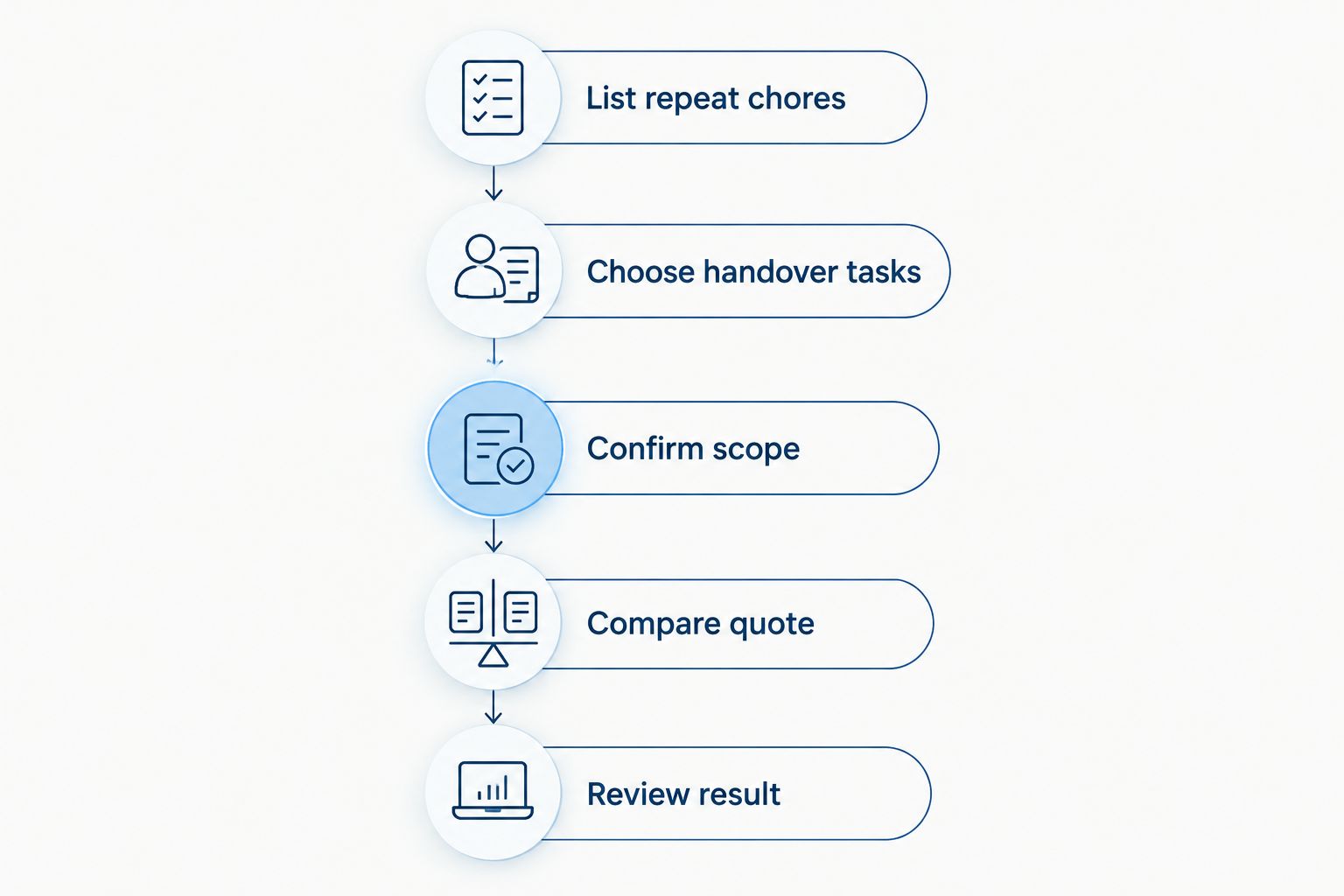
You do not need to attach an invented hourly value to your free time. If handing over agreed chores fits your budget and makes the week easier, that is a valid reason to book. If it does neither, keep the work yourself or consider a one-time service.
Weekly cleaning: consider a 7-day interval
Best for: households that want frequent help with routine cleaning. Consider a 7-day interval when the agreed tasks become difficult to keep up with before a longer gap ends.
The benefit is a shorter stretch between professional visits. The trade-off is more frequent appointments to fund and coordinate, plus whatever daily chores remain outside the checklist.
Do not choose weekly service simply because your household is busy. Ask whether you need the same cleaning tasks repeated that often, or whether a different scope would solve the problem. A schedule should follow the work, not a label.
Every-other-week cleaning: consider a 14-day interval
Best for: households willing to handle basic upkeep between visits. Consider a 14-day interval when you want regular help but are comfortable dealing with spills, everyday mess, and other excluded chores yourself.
The benefit is a recurring structure with more time between appointments. The limitation is straightforward: you remain responsible for whatever needs attention before the next visit.
Before choosing this arrangement, picture the home near the end of the interval. If you expect to redo all the same tasks, discuss a shorter gap or different priorities. The guide to recurring residential cleaning schedules can help you organize that conversation.
Less frequent cleaning: consider a 28-day interval
Best for: households that mainly want periodic support alongside their own cleaning. A 28-day interval is an option to discuss when you intend to keep doing most upkeep yourself.
The benefit is help with an agreed set of tasks without frequent visits. The limitation is that a longer gap leaves more of the home's day-to-day condition in your hands. Do not treat a less frequent appointment as a promise that routine cleaning will wait until the team returns.
A 28-day schedule is also not the same as booking on the same date each calendar month. Specify which arrangement you mean when discussing appointments, access, and reminders.
Why recurring cleaning's value varies
The same schedule can work well for one household and poorly for another. These factors explain the difference without relying on a generic savings claim:
- The work you want removed. A service is more relevant when its checklist matches the chores you want to stop doing.
- The home's starting condition. Ask whether the first visit needs a different scope before setting up maintenance cleaning.
- The rooms and surfaces involved. Identify the areas to clean and any materials that need specific care instructions.
- Your between-visit routine. A schedule must account for the cleaning you are willing to keep doing yourself.
- The reason for the service. Living in a home, preparing to move, and resetting a vacation rental are different jobs.
- Access and communication. A clear entry plan and a reachable contact reduce avoidable uncertainty around appointments.
During a 2026 quote conversation, describe the property as it is now. Mention rooms that are rarely used, areas you want prioritized, and tasks you do not want included. Specific instructions are more useful than asking for the cheapest or most thorough visit without defining either.
What should you confirm before agreeing to recurring service?
Get agreement on the checklist before agreeing to the schedule. Ask whether the discussion covers bathrooms, kitchen surfaces, floors, dusting, and any other areas you expect cleaned. Naming a room does not establish which tasks inside that room are included.
Then clarify the boundaries. Discuss appliance interiors, windows, laundry, dishes, bed linens, organizing, and other tasks separately rather than assuming they belong in a standard visit. This is a scope conversation, not a statement that every cleaning company offers each task.
Also ask about the practical arrangements:
- How should you prepare the property before arrival?
- Who provides the supplies and equipment for the agreed work?
- How should you communicate surface-care instructions or product concerns?
- What is the process for changing an appointment?
- How will the team enter, and who should they contact with questions?
A clear answer lets you judge the whole arrangement. A quote alone cannot tell you whether the service matches your expectations.
When should you choose a deep clean instead?
Choose a deep-cleaning discussion when your main problem is accumulated work, not ongoing upkeep. Describe the areas needing detailed attention and ask how that scope differs from a recurring visit.
A separate starting visit can also be worth discussing before recurring service. Do not assume it is required, included, or identical across properties; the actual condition and agreed tasks should determine the plan.
If you are moving, explain that first. Empty-room access, remaining belongings, and the purpose of the clean belong in the conversation before anyone settles on a residential maintenance checklist.
Is recurring cleaning worth it for a vacation rental?
Vacation rentals need turnover planning rather than a household-only recurring schedule. If guests leave on changing dates, cleaning must be organized around those departures and the next arrival, not just a fixed weekday.
Discuss the turnover checklist, access, linen responsibilities, and how the team should report property issues. Do not assume that a residential appointment includes a guest-ready reset or that turnover cleaning includes every maintenance task.
For a property you also use personally, explain both uses when requesting service. A home occupied by its owner between bookings needs a plan that distinguishes personal upkeep from preparation for the next guest.
How can you tell whether the arrangement is working?
Judge recurring cleaning against your original reason for booking. If you wanted to stop spending your days off cleaning bathrooms, check whether that task has actually left your routine.
Look at the remaining work, too. Clearing personal belongings before a visit is different from redoing agreed cleaning afterward. If expectations do not match the result, describe the specific task and discuss it directly rather than changing frequency without addressing the scope.
For your 2026 review, keep the test simple: does the agreed service make your household easier to manage at an expense you accept? There is no need to claim financial savings when your actual benefit is less cleaning to do.
Who is the local service best suited to?
Tampatopshelf recurring house cleaning is best suited to St. Petersburg and Pinellas County homeowners who want scheduled residential service. The local team is licensed and insured, reachable by phone or text, and provides straightforward quotes tailored to the property.
The practical advantage is a direct conversation about your space and priorities. The boundary remains the agreed scope: recurring residential service should not be treated as an all-task household service or a substitute for separately discussed deep cleaning and rental turnovers.
FAQ
Is recurring house cleaning worth it in 2026?
Recurring house cleaning is worth it in 2026 when the agreed visits replace chores you want to hand over and fit your budget. Compare the checklist and your remaining responsibilities before choosing a schedule.
Is weekly cleaning better than every other week?
Weekly cleaning is better suited to households wanting frequent help; every-other-week cleaning suits households willing to do more upkeep between visits. Choose based on when the agreed tasks need attention, not on a universal rule.
Do I need a deep clean before recurring cleaning?
A deep clean is not something to assume before recurring cleaning. Describe your home's condition and ask whether the starting visit needs a separate scope.
Does recurring house cleaning include laundry and dishes?
Laundry and dishes should not be assumed to be included in recurring house cleaning. Ask about each task and have the agreed responsibilities stated clearly.
Do I have to be home during a cleaning appointment?
Whether you need to be home depends on the access arrangement you agree with the provider. Confirm entry instructions, property security, and a contact method before the appointment.
Can I use a regular house-cleaning schedule for my Airbnb?
An Airbnb needs a turnover plan tied to guest departures and arrivals, rather than a household-only recurring schedule. Discuss the guest-ready checklist and responsibilities separately.
How do I request a local recurring-cleaning quote?
Contact Tampatopshelf by phone or text to request a free quote for your St. Petersburg or Pinellas County property. Explain the rooms, current condition, priorities, and frequency you want to discuss.
One last thing
Do not use the first clean as your only test of recurring service. The better test is what you no longer have to do between appointments. An impressive reset and a useful long-term routine are different outcomes.
For a 2026 cleaning plan built around your property, request a free quote from Tampatopshelf by phone or text. Explain what you want taken off your list so the conversation starts with the work that matters to you.


