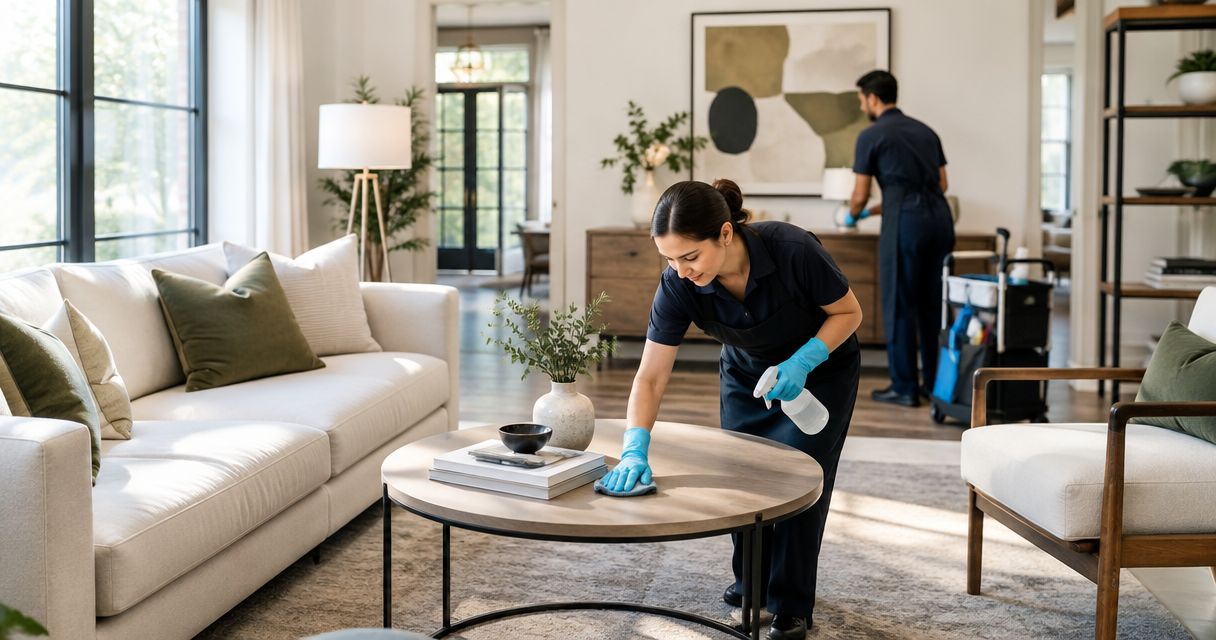
Interior designers’ cleaning services are property-cleaning arrangements that prepare finished spaces for styling, photography, or client handoff, with the aim of presenting the design without distracting dirt. This 2026 guide explains how to scope Tampatopshelf residential cleaning around installations, staging furniture, and occupied homes in St. Petersburg and Pinellas County.
- Cleaning services for interior designers need a written scope covering finishes, installation timing, and the final handoff.
- Tampatopshelf suits St. Petersburg designers seeking local residential cleaning with phone or text coordination.
- Use deep cleaning before staging; reserve final touch-ups for marks left during furniture placement.
- Separate ordinary household cleaning from construction debris removal, specialist surface care, and furniture handling.
Why cleaning matters for designers and home stagers
A finished room needs more than arranged furniture. Dust on a dark shelf, fingerprints on glass, and debris beneath a console compete with the details you want a homeowner or prospective buyer to notice.
Designers and home stagers also work around other people’s schedules. Installers need access, homeowners still use rooms, and photographers need a space that stays ready once cleaning ends. Treat cleaning as a scheduled handoff rather than an undefined task at the end.
The right cleaning scope protects the presentation without asking cleaners to make design decisions. Specify what gets cleaned, what stays untouched, and who approves exceptions before work begins.
For your 2026 project plan, distinguish routine household soil from installation residue. Packaging, adhesive, paint marks, and construction dust require separate discussion; a residential cleaning appointment does not establish that those tasks are included.
How to plan cleaning around a design or staging project
1. Define the handoff
Start with a shared document or a simple email. Name the property, the rooms included, and the event the cleaning supports: furniture installation, listing photography, a homeowner walkthrough, or a vacation rental’s return to guest use.
Give that event a date and time, but keep the cleaning duration open until the property and scope have been discussed. A photo-ready living room and a whole-home move-in clean are different assignments.
Create 1 written brief per property so room instructions do not get scattered across separate conversations. For occupied homes, identify personal belongings that must remain in place and rooms the homeowner will continue using.
Close the brief with decisions the cleaner can act on:
- Name the person authorized to approve scope changes.
- List included rooms and excluded areas.
- State whether the property is vacant, occupied, or staged.
- Identify the next scheduled arrival after cleaning.
- Describe the condition you expect at handoff.
2. Inspect the property before choosing the cleaning scope
Walk through the property yourself before requesting help. Use room-by-room notes and photographs to distinguish ordinary dust and bathroom soil from problems that need another trade or specialist.
Look beneath existing furniture, inside empty cabinets, around window tracks, and along baseboards. Only include accessible areas you actually want addressed. Closed storage, heavy furniture, and installed appliances need explicit instructions rather than assumptions.
A deep clean is a task list, not a universal specification. Ask Tampatopshelf which residential cleaning tasks fit the property, then confirm any exclusions before scheduling. Do not treat a service label as approval for construction cleanup or delicate material restoration.
- Record visible soil and access restrictions by room.
- Separate packaging removal from surface cleaning.
- Flag paint, adhesive, grout residue, or building debris.
- Note stains or damage that cleaning is not expected to resolve.
- Request written confirmation of included tasks.
3. Record material instructions before anyone cleans
Create a surface register using information you already have: finish schedules, installation paperwork, and manufacturer care instructions. This is the manual starting point; a shared folder works without purchasing project software.
Identify materials precisely where possible. Natural stone, coated wood, specialty metal finishes, and upholstery should not receive an improvised treatment because their appearance resembles another material. If care instructions are unclear, pause that task and obtain guidance.
Tampatopshelf is best for St. Petersburg designers who need local residential cleaning and direct phone or text coordination. The team is licensed and insured; specialist finish treatment still needs separate confirmation. Share the surface register when requesting cleaning services for interior designers rather than leaving decisions until arrival.
- Attach available manufacturer care instructions.
- Identify surfaces that must remain dry or untouched.
- Mark delicate accessories and unsecured objects.
- State whether rugs or upholstery are excluded.
- Require approval before attempting unfamiliar stain removal.
4. Separate baseline cleaning from final touch-ups
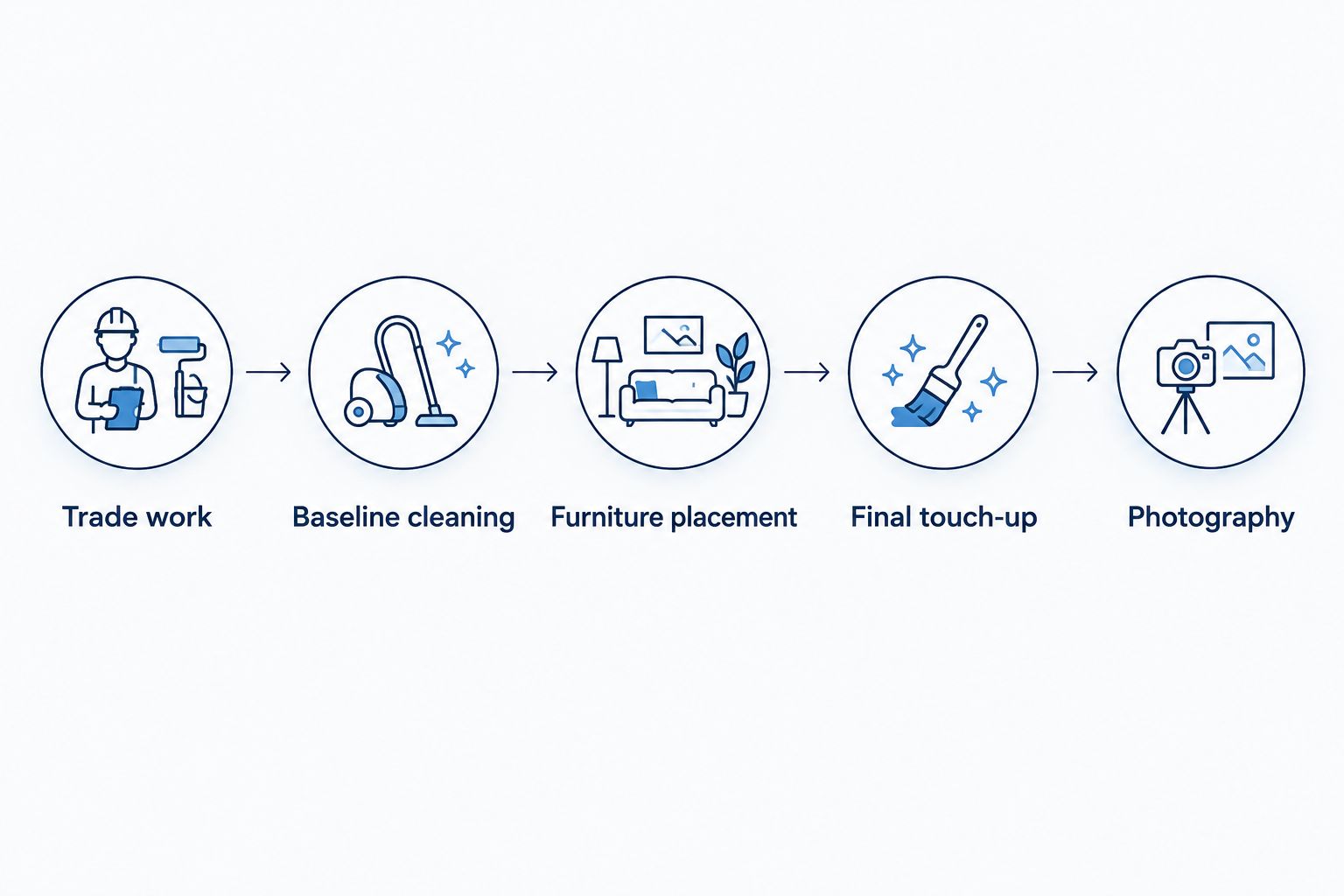
Build the sequence into your 2026 project calendar before booking photography. Baseline cleaning addresses the property before styling; a final touch-up addresses fingerprints, tracked-in dirt, and small debris introduced during placement.
For a vacant home, clean accessible floors and surfaces before furniture reduces access. After installation, reassess rather than assuming the property remains ready. If contractors are still cutting, sanding, or drilling, confirm whether the planned cleaner can address the resulting condition.
Use 3 checkpoints: before furniture arrives, after placement, and before photography or client handoff. These are planning checks, not a promise that any particular visit length or service arrangement will suit the property.
- Trade work: Confirm dust-producing work has ended.
- Baseline cleaning: Address the agreed accessible areas.
- Furniture placement: Complete installation and styling.
- Final touch-up: Recheck marks and tracked-in soil.
- Photography: Keep the finished space undisturbed.
5. Write access and handling rules
A clear entry plan prevents the cleaner from having to solve property-management questions on arrival. Confirm who provides access, where permitted parking is located, and how the property should be secured afterward.
Keep sensitive entry details in the agreed communication channel rather than a broadly shared staging document. Tell the homeowner or property manager who is expected and which rooms need to remain accessible.
Do not assume cleaners will move heavy furniture, lift artwork, disconnect equipment, or rearrange styling. Specify permitted handling and arrange a separate person for tasks outside the agreed scope. For occupied properties, include pets and household routines in the access discussion.
- Confirm the authorized entry method and arrival contact.
- Identify parking or building-access restrictions.
- List objects that must not be moved.
- Arrange access beneath or behind furniture beforehand.
- Explain pet arrangements and occupied-room restrictions.
- Confirm locking and departure instructions.
6. Check the finish against the brief
Use the same brief at completion that you used to arrange the work. Otherwise, the standard changes from an agreed task list into a subjective discussion about whether a space feels finished.
Plan 2 walkthroughs when practical: an initial condition check and a completion check. If you cannot attend, agree on which photographs will show completed tasks and who will receive them. Request images of relevant surfaces, not private possessions or unrelated rooms.
Check the room from its intended viewing position as well as close up. A mirror needs attention to visible marks; a floor needs attention to debris and safe access. Record an existing defect separately from an incomplete cleaning task.
- Compare completed work with the approved room list.
- Check mirrors, glass, accessible surfaces, and floors.
- Distinguish remaining soil from scratches or finish damage.
- Report specific locations instead of general dissatisfaction.
- Confirm that keys, access devices, and rooms are secured.
7. Plan upkeep after the reveal
A staged home still needs attention after photography, especially when people continue living in it or visiting for showings. Decide who checks the property and what triggers another cleaning visit rather than relying on the original appointment indefinitely.
For your 2026 schedule, connect upkeep to actual property use. An occupied residence needs a different scope from a vacant listing. A vacation rental returning to guest use also needs turnover instructions; attractive staging alone does not define guest readiness.
Tampatopshelf provides recurring residential cleaning and vacation-rental turnover cleaning, so discuss the intended use when requesting a property-specific quote. Confirm the ongoing scope separately from the initial deep or move-in clean.
- Assign responsibility for checks between scheduled visits.
- Identify rooms affected by daily household use.
- Reassess entryways after property visits.
- Keep guest-turnover tasks separate from styling tasks.
- Update instructions when furniture or property use changes.
Compare cleaning options for your project
Choose by property condition and project stage, not by the service name alone. Each option solves a different problem; none replaces a written agreement about access, materials, and exclusions.
| Option | Best for | Main benefit | Key limitation |
|---|---|---|---|
| Designer-managed touch-up | Small marks after styling | Keeps final presentation decisions with your team | Does not replace a full-property clean |
| Deep residential cleaning | An existing home needing a more detailed agreed scope | Addresses household cleaning before staging | Specialist work and installation residue need confirmation |
| Move-in or move-out cleaning | A vacant home before furniture placement or after removal | Allows access to areas normally blocked by belongings | The service name does not define every included task |
| Recurring residential cleaning | Occupied homes during an extended design or listing period | Supports upkeep around continued household use | Does not automatically cover project-related cleanup |
| Vacation-rental turnover cleaning | A furnished rental returning to guest use | Aligns cleaning with the property's next occupancy | Requires guest-readiness instructions beyond visual staging |
| Specialist cleaning | Materials or residue outside ordinary residential work | Addresses a clearly identified specialist task | Requires separate assessment and coordination |
Use residential cleaning for the agreed household scope; obtain separate confirmation for specialist work. Tampatopshelf cleaning services include residential and vacation-rental cleaning, but you should confirm project-specific tasks before treating a quote as a complete installation-cleanup plan.
Request your property cleaning quote
Discuss your St. Petersburg or Pinellas County property, finishes, and handoff plans.
Common mistakes designers and home stagers make
Booking before the installation sequence is settled
A cleaning visit loses its purpose when another delivery or dust-producing task immediately follows it. Confirm the latest installation plan before fixing the final presentation clean, and communicate changes directly.
Treating delicate materials as ordinary household surfaces
A finish schedule is useful only if the person cleaning receives it. Share care instructions and exclusions before the visit; do not leave a handwritten warning beneath an object someone must first move.
Confusing tidy styling with completed cleaning
Straight cushions and arranged accessories can conceal unfinished work beneath or behind them. Check the cleaning scope before styling covers access, then inspect the visible presentation after placement.
Leaving household responsibilities unassigned
Occupied homes need decisions about dishes, laundry, personal items, and pets. Assign those responsibilities before arrival so the cleaning appointment does not depend on unexpected homeowner preparation.
FAQ
What do cleaning services for interior designers include?
Cleaning services for interior designers include the property-cleaning tasks agreed for installation, styling, photography, or handoff. Confirm rooms, accessible surfaces, material restrictions, and exclusions in writing; the phrase does not define a standard package.
Should I book cleaning before or after staging furniture?
Arrange baseline cleaning before furniture placement, then assess whether final touch-ups are needed afterward. This separates access-dependent cleaning from marks introduced during installation.
Is a deep clean the same as post-construction cleaning?
A deep clean is not automatically post-construction cleaning. Disclose construction dust, adhesive, paint residue, and debris, and obtain confirmation that the provider accepts those tasks.
Who should handle delicate finishes and expensive accessories?
Assign delicate-finish care according to manufacturer instructions and the cleaner's confirmed scope. Arrange separate handling for artwork, heavy furniture, and unsecured accessories rather than assuming they will be moved.
Can a cleaner maintain an occupied staged home?
Recurring residential cleaning can support an occupied staged home when the tasks and access arrangements are agreed. Keep homeowner preparation, styling decisions, and cleaning responsibilities distinct.
What should I send when requesting a cleaning quote?
Send the property location, room list, current condition, occupancy status, material restrictions, and planned handoff. Include relevant photographs and identify installation or trade work that will occur before cleaning.
What should my 2026 cleaning plan include for a vacation-rental design project?
Your 2026 plan should separate design-project cleaning from the turnover required before guests arrive. Confirm who handles guest-readiness tasks, property access, and the final condition check.
One last thing
An inspection photograph is more useful when you take it from the same position before and after cleaning. Choose a doorway or other repeatable viewpoint, then add close-ups only where a specific task needs checking.
For your 2026 handoff, send the scope before asking for a booking. Request a free quote by phone or text, and describe the property, current condition, finishes, and next scheduled arrival so the quote reflects the work you need.
Related guides
- Move-in cleaning checklist for St. Petersburg homeowners
- Recurring residential cleaning schedules
- Airbnb turnover cleaning checklist
Ready to arrange the cleaning? Request a free quote by phone or text and share your property’s handoff plan.


