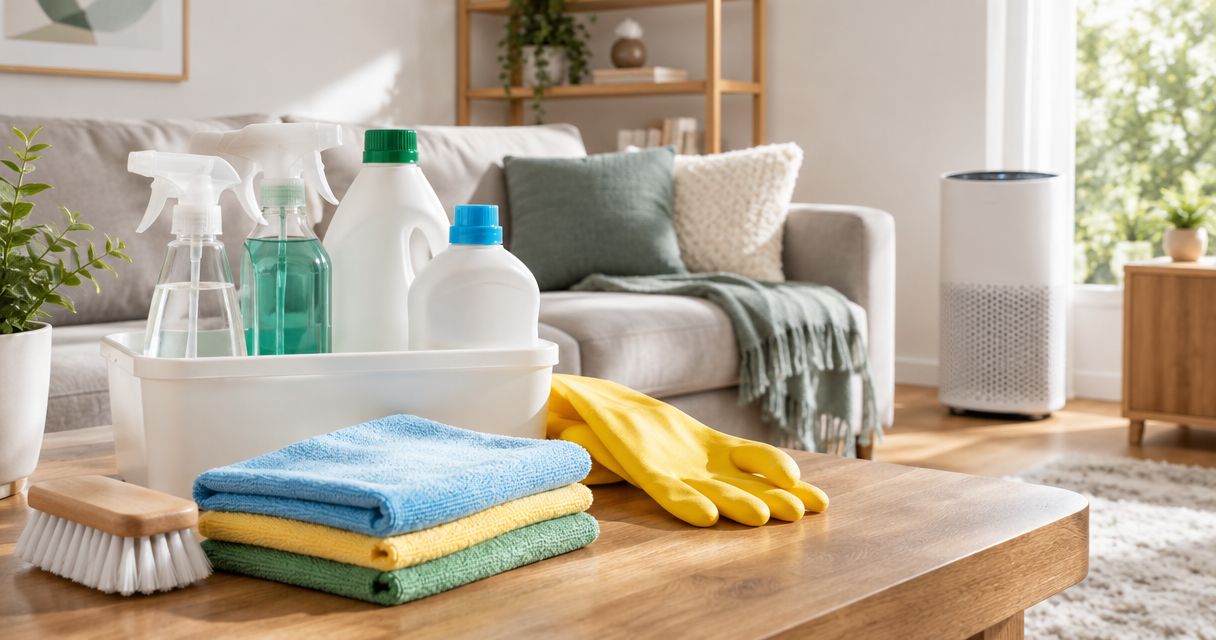
Best overall: a sealed HEPA vacuum for removing settled dust. Best for washable surfaces: a fragrance-free cleaner. Best simple starting point: damp microfiber cloths. This 2026 guide compares cleaning supplies for allergies and explains what to tell Tampatopshelf before a residential clean or vacation-rental turnover.
- The best cleaning supplies for allergies remove dust without adding unnecessary fragrance; start with a sealed HEPA vacuum.
- Damp microfiber cloths suit shelves and furniture; washable flat mops suit compatible hard floors.
- Fragrance-free cleaners and laundry detergents address added scent, not every possible allergy trigger.
- Tampatopshelf offers residential cleaning and vacation-rental turnovers; discuss product preferences before scheduling.
Why this matters
Cleaning for an allergy-sensitive household involves two separate jobs: removing allergens and avoiding products that irritate the people living there. A strongly scented room does not demonstrate that dust, pollen, or pet allergens have been removed.
For St. Petersburg homeowners, hosts, and property managers, the practical move is to write down product preferences before cleaning starts. Tampatopshelf residential cleaning is best for local homeowners who want to discuss their property and cleaning preferences with a reachable local team. Tell the team which products you avoid rather than asking for an undefined allergy-friendly clean.
Cleaning supports household allergen management; it does not diagnose allergies or replace medical advice. If cleaning triggers breathing symptoms, ask your clinician about precautions specific to your condition.
What makes the best cleaning supplies for allergies
Use these criteria for your 2026 shopping list:
- Particle capture: Choose tools that collect dust rather than scatter it. For a vacuum, check filtration and the complete airflow path.
- Fragrance control: Look for fragrance-free labeling when added scent is a concern. Unscented and fragrance-free are not interchangeable terms.
- Surface compatibility: Match the cleaner and tool to the floor, finish, fabric, or countertop. Stronger is not automatically more suitable.
- Washability: Reusable cloths and mop pads need a clear laundering and drying routine. A dirty pad is not ready for another room.
- Clear instructions: Favor products with readable directions, dilution requirements, and safety information. Follow the label rather than an improvised cleaning recipe.
No product earns a recommendation simply because its label says natural, green, or hypoallergenic. Those words do not establish that it suits your household's particular triggers.
Cleaning supplies for allergies at a glance: 2026
These are supply categories, not endorsements of unverified product models. Match the category to the cleaning task before choosing a specific item.
| Rank and supply | Best for | Standout feature | Key limitation |
|---|---|---|---|
| Sealed HEPA vacuum | Removing settled dust from floors and upholstery | Filtered collection with a sealed airflow path | Emptying and maintenance still expose you to collected debris |
| Damp microfiber cloths | Controlled dusting on furniture and shelves | Collect dust without a fragranced spray | Require laundering and surface-appropriate moisture |
| Fragrance-free surface cleaner | Cleaning compatible washable surfaces | Cleans without deliberately added fragrance | Ingredients can still irritate sensitive users |
| Washable flat mop | Maintaining compatible hard floors | Removable pads allow controlled damp cleaning | Does not replace vacuuming rugs or upholstery |
| Fragrance-free laundry detergent | Washing bedding and washable cleaning textiles | Removes an avoidable source of added scent | Does not make every fabric allergen-free |
1. Sealed HEPA vacuum: best for settled dust removal
A sealed HEPA vacuum is the strongest starting point when your main task is collecting dust from floors, rugs, and upholstered furniture. Look for documentation about the whole machine, not just a HEPA filter fitted somewhere inside it.
EPA guidance describes HEPA filtration as capturing at least 99.97% of airborne particles measuring 0.3 microns. That filter specification is not a promise that a vacuum removes the same percentage of allergens from your home; seals, use, maintenance, and the surface all matter.
Sealed HEPA vacuum pros:
- Collects debris from surfaces that a mop cannot clean.
- Supports cleaning along edges and upholstery seams with suitable attachments.
- Keeps collected material inside a filtered system when the machine is properly sealed and maintained.
Sealed HEPA vacuum cons:
- Emptying the collection chamber or changing the bag creates another dust-handling task.
- Filters, seals, and attachments need attention according to the manufacturer's instructions.
Before choosing a model, check how you will dispose of debris. If emptying a bagless container triggers symptoms, consider whether a bagged design or having someone else handle disposal better fits your routine.
Best for: Households managing settled dust on mixed flooring and upholstered furniture.
Verdict: Buy for dust collection, but verify whole-machine sealing and plan the disposal step.
2. Damp microfiber cloths: best for controlled surface dusting
Damp microfiber cloths collect dust from suitable shelves, furniture, and other accessible surfaces without requiring a scented furniture spray. Lightly damp means enough moisture to collect dust, not enough to leave the surface wet.
Check the surface manufacturer's care instructions first. Unfinished wood, moisture-sensitive finishes, and electronics need their own cleaning approach; a general damp-dusting routine does not suit everything.
Damp microfiber cloth pros:
- Let you dust suitable surfaces without added fragrance.
- Fold into clean faces so you can switch away from a dirty section.
- Can be washed and reused according to their care instructions.
Damp microfiber cloth cons:
- Dirty cloths need laundering before reuse.
- Excess moisture can damage finishes that should stay dry.
Work from higher surfaces toward lower ones, then clean the floor. Use separate cloths for bathrooms and food-preparation areas, and replace a cloth when it becomes visibly dirty rather than carrying the same soil through the property.
For a vacation rental, make cloth care part of the turnover instructions. A reusable tool needs a dependable reset between properties, not just a place in the cleaning bag.
Best for: Furniture, shelves, and other compatible surfaces where dry dusting sends particles into the air.
Verdict: Buy as the everyday dusting tool; skip unnecessary fragranced dusting sprays.
3. Fragrance-free cleaner: best for washable surfaces
A fragrance-free surface cleaner is a practical choice when added scent causes discomfort. Choose the product for the surface and soil you need to clean, then check the ingredient information and directions.
Fragrance sensitivity and allergy are not the same diagnosis. A fragrance-free label also does not mean a product contains no potential irritants, requires no ventilation, or is safe for every finish.
Fragrance-free cleaner pros:
- Avoids deliberately added fragrance in routine surface cleaning.
- Gives your household or cleaner a specific product preference to follow.
- Can reduce the need for separate scented finishing products.
Fragrance-free cleaner cons:
- Other ingredients can still cause irritation or an individual reaction.
- A general cleaner does not automatically disinfect or suit every material.
Read the application directions before spraying. Where the label permits, applying cleaner to a cloth rather than spraying across a room gives you more control over placement.
Never mix cleaning products. In particular, mixing bleach with ammonia or acids can release dangerous gases; choosing fragrance-free products does not remove that chemical risk.
Best for: Compatible counters, fixtures, and washable surfaces when added fragrance is unwanted.
Verdict: Buy a surface-appropriate fragrance-free cleaner; skip scent as a measure of cleanliness.
4. Washable flat mop: best for hard-floor maintenance
A washable flat mop helps you collect remaining fine dirt from compatible hard floors after loose debris has been removed. The useful feature is a removable pad you can replace when dirty, not a scented floor-cleaning solution.
Match moisture and cleaning solution to the floor's care instructions. A damp-cleaning method suitable for one floor can damage another, particularly where water reaches seams or an unprotected surface.
Washable flat mop pros:
- Allows controlled damp cleaning instead of soaking the floor.
- Uses removable pads that can be cleaned between sessions.
- Makes it straightforward to switch to a fresh pad between areas.
Washable flat mop cons:
- Does not collect embedded debris from carpets or upholstery.
- Requires clean replacement pads and a laundering routine.
Remove loose grit first, then mop with an appropriate solution if the floor instructions call for one. Change the pad when dirty rather than repeatedly moving the same residue across the room.
For beach-area rentals, keep gritty entry areas separate from the rest of the floor-cleaning route. Collecting sand before damp mopping also avoids dragging grit under the pad.
Best for: Routine maintenance of sealed hard floors approved for damp cleaning.
Verdict: Buy for compatible hard floors; skip wet mopping where the flooring instructions prohibit it.
5. Fragrance-free detergent: best for bedding and washable textiles
Fragrance-free laundry detergent removes an avoidable source of added scent from bedding, towels, and washable cleaning textiles. Keep the rest of the laundry routine consistent: scented softeners or dryer sheets reintroduce fragrance after the wash.
Follow the textile care label and detergent dosing directions. Adding extra detergent is not a substitute for an appropriate wash cycle and thorough drying.
Fragrance-free detergent pros:
- Supports a no-added-fragrance routine for bedding and towels.
- Can also suit washable cloths and mop pads when their care instructions permit it.
- Makes laundry preferences easier to communicate to a cleaner or property manager.
Fragrance-free detergent cons:
- Does not guarantee that washed textiles contain no allergens.
- Unsuitable dosing or a conflicting fabric-care routine can leave unwanted residue.
For vacation rentals, record the detergent preference with the linen instructions. Keep clean linens away from dirty laundry and scented storage products so the handoff does not undo the intended routine.
Best for: Bedding, towels, and washable textiles in households avoiding added laundry fragrance.
Verdict: Buy when added fragrance is a concern; check the complete laundry routine, not detergent alone.
Build a cleaning routine around the supplies
Your 2026 supply list needs a repeatable process. Buying a better filter does little for dust sitting on an untouched shelf, and a fresh mop pad does not replace cleaning an upholstered chair.
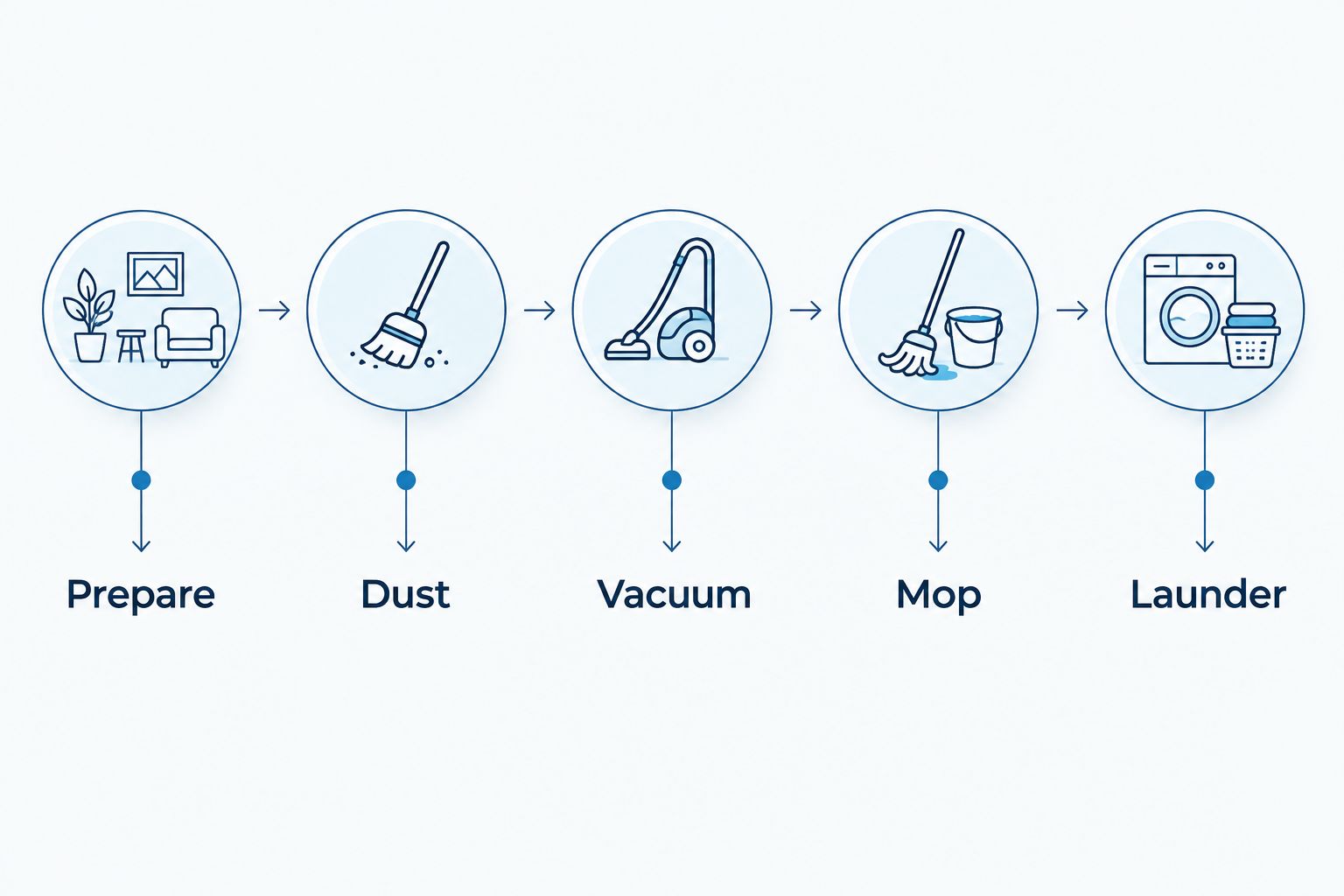
- Prepare: Set out approved products, check care labels, and arrange ventilation as product directions require.
- Dust: Use a clean, lightly damp cloth on compatible higher surfaces before moving lower.
- Vacuum: Clean suitable floors, edges, and upholstery with the appropriate attachments.
- Mop: Damp-clean compatible hard floors after collecting loose debris.
- Launder: Wash used textiles as directed and dry them fully before storage.
For damp Florida homes, moisture control belongs alongside cleaning. EPA guidance recommends keeping indoor relative humidity below 60%, ideally between 30% and 50%; wiping a recurring damp patch does not correct a leak or another moisture source.
Before booking Tampatopshelf residential cleaning or a turnover, share known product sensitivities, floor-care restrictions, and linen instructions. Ask which supplies will be used and whether your requested routine fits the property. The local St. Petersburg team is licensed and insured and reachable by phone or text.
How we ranked these supply categories
The 2026 ranking prioritizes dust collection first, followed by controlled surface cleaning and washable-textile care. Each category has a distinct job; none earns its position from scent, packaging, or an unsupported allergy-free claim.
This is a task-based buying guide, not a laboratory comparison of individual products. Verify the current label, care instructions, and filtration documentation before choosing a specific model or formula.
Which cleaning supplies should you choose?
Start with a sealed HEPA vacuum and damp microfiber cloths if settled dust is your main concern. Add a fragrance-free cleaner for compatible washable surfaces, a washable flat mop for suitable hard floors, and fragrance-free detergent where laundry scent is unwanted.
For recurring cleaning, consistency matters more than a crowded supply cupboard. Give everyone cleaning the home the same written product preferences and surface-care instructions. For a rental, include those instructions in the turnover handoff rather than relying on memory.
FAQ
What are the best cleaning supplies for allergies in 2026?
Start with a sealed HEPA vacuum, damp microfiber cloths, and a fragrance-free cleaner suited to your surfaces. Add a washable flat mop for compatible hard floors and fragrance-free detergent when laundry scent is a concern.
Is a HEPA vacuum better than an ordinary vacuum for allergies?
A properly sealed HEPA vacuum is the stronger choice when fine-particle capture is the priority. A HEPA filter alone does not establish that the complete machine prevents air from bypassing the filter.
Are fragrance-free cleaners the same as unscented cleaners?
No. Unscented products can contain ingredients used to mask odor, while fragrance-free products are intended to avoid added fragrance. Check the label and ingredient information rather than relying on how a product smells.
Should I disinfect every surface to remove allergens?
No. Routine allergen removal focuses on collecting dust and cleaning affected surfaces; disinfecting targets microorganisms. Use a disinfectant when the situation calls for it and follow its label.
Can natural cleaning products still irritate allergies?
Yes. Natural ingredients, including added essential oils, can still irritate sensitive people. Choose products around your known sensitivities and the cleaning task, not the natural label alone.
What should I tell a cleaner about an allergy-sensitive home?
Share the specific products or ingredients you avoid, your surface-care restrictions, and any laundry preferences before the appointment. Ask the cleaner to confirm the supplies and scope rather than assuming allergy-friendly means the same thing to everyone.
Can cleaning supplies make a vacation rental allergen-free?
No cleaning supply can guarantee an allergen-free vacation rental. A documented routine can address dust, laundry, and added fragrance without making a medical or exposure guarantee.
One last thing
The disposal step belongs on your cleaning checklist. Emptying a vacuum, shaking a dusty cloth, or handling used mop pads can put collected material back into circulation. Plan who handles those tasks and follow the equipment's disposal and care instructions.
Related guides
- Cleaning schedules for recurring residential cleaning
- Eco-friendly cleaning products for St. Petersburg homes
- Airbnb turnover cleaning checklist
- Cleaning tips for humid Florida homes
Request a free quote from Tampatopshelf by phone or text. Share your property details and cleaning preferences for a straightforward quote tailored to your space.


