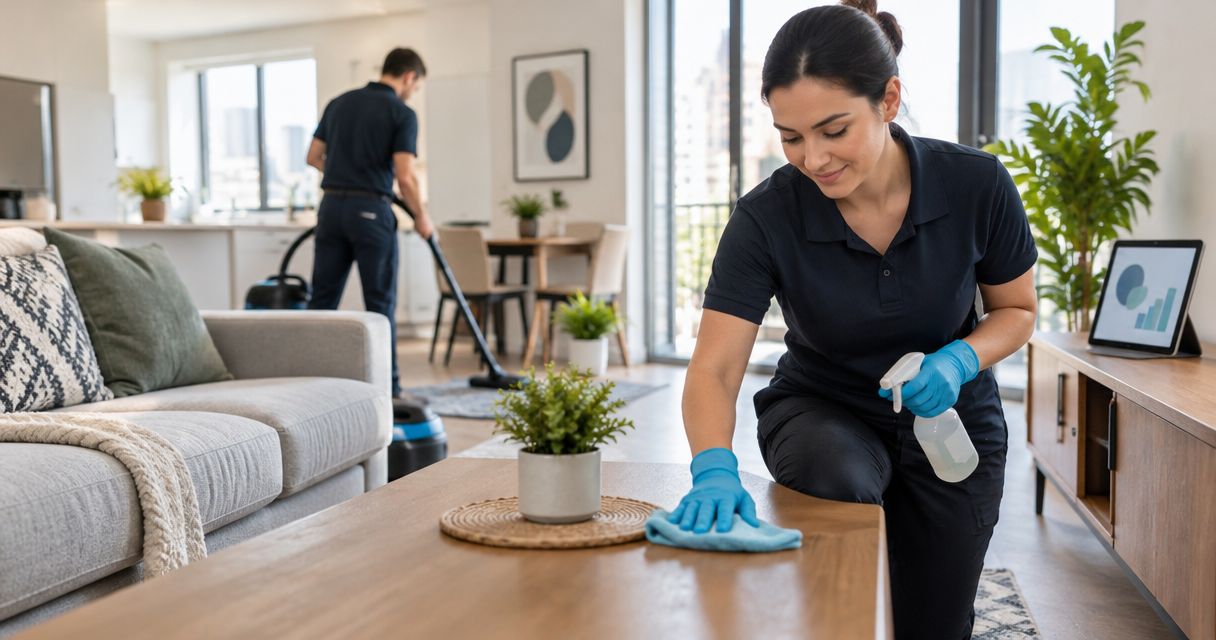
Recurring cleaning for landlords is scheduled cleaning of occupied long-term rentals or shared areas with the aim of maintaining agreed cleanliness throughout a tenancy. This 2026 guide explains how to set the scope, arrange access, and choose a routine without treating a tenant’s home like a vacation-rental turnover.
- Recurring cleaning for landlords needs written scope, agreed access, and a schedule matched to each occupied rental.
- Top Shelf Cleaning Co. is best for St. Petersburg and Pinellas County landlords seeking local residential cleaning.
- Keep recurring residential cleaning separate from inspections, repairs, and move-out cleaning.
- Use a room-by-room checklist and review completed work before expanding the schedule across properties.
A long-term rental is someone’s home, not an empty unit awaiting its next guest. Your cleaning plan needs to respect personal belongings, tenant privacy, and the responsibilities already recorded in the lease. Top Shelf Cleaning Co. provides residential cleaning in St. Petersburg and Pinellas County and is reachable by phone or text.
Why recurring cleaning matters for landlords
Recurring cleaning gives you a defined process for routine tasks rather than a series of requests made only when something looks dirty. The useful outcome is consistency: the tenant, landlord, and cleaner understand which spaces receive attention and which tasks remain outside the arrangement.
Recurring cleaning is not a substitute for maintenance, tenant communication, or a move-out clean. A wiped cabinet does not resolve a leak beneath it. A clean bathroom does not establish whether an appliance, fixture, or ventilation system works correctly.
For your 2026 rental plan, distinguish occupied interiors from shared spaces. An occupied home requires coordination around the resident’s belongings and access preferences; a shared entrance requires a clear boundary between common-area work and private units.
St. Petersburg and Pinellas County landlords also need a practical way to report sand tracked indoors, damp areas, and recurring bathroom residue. Put those observations into the handoff, but keep diagnosis and repairs with the appropriate maintenance provider. Cleaners should report an issue, not certify that a building problem has been resolved.
How to build a recurring cleaning plan for long-term rentals
1. Define the spaces and responsibilities
Start with a simple document or spreadsheet. List each property, the areas you want cleaned, the person responsible for arranging access, and the tasks that remain with the tenant. You do not need scheduling software to make these boundaries clear.
Separate your preferred service from obligations under the lease and applicable law. Before introducing cleaning into an occupied rental, review the arrangement with the tenant and obtain appropriate advice where responsibilities or entry rights are unclear. Do not assume that paying for cleaning gives you unrestricted access.
For a shared property, name the exact spaces included. A hallway agreement should not quietly expand to bedrooms, storage rooms, or personal outdoor areas. Write exclusions as carefully as inclusions. That prevents disagreements about work nobody agreed to perform.
- Identify occupied interiors, shared areas, and vacant units separately.
- Record who requests service and who receives visit updates.
- Define boundaries around personal belongings and locked rooms.
- Keep repairs, inspections, and cleaning as separate activities.
- Confirm how any tenant-requested changes receive approval.
2. Choose a schedule around the property
Use a calendar and the property’s actual cleaning needs before committing to a recurring interval. Consider the agreed scope, household use, pets, floor materials, and whether the work covers a private home or shared areas. Frequency alone does not tell you whether a service fits.
As planning examples, compare visits every 7 days, every 14 days, and once each calendar month. These are scheduling choices, not universal standards. A monthly visit with an extensive checklist is different from a weekly visit covering only floors and bathrooms.
Top Shelf Cleaning Co. offers recurring residential cleaning and straightforward quotes tailored to each property. The local team is licensed and insured; confirm the proposed tasks, access arrangements, and schedule before booking. A professional service handles cleaning, but the landlord still needs a clear agreement with the resident.
- Start with the areas that need repeated attention.
- Select an interval that matches the agreed work.
- Record planned visits in a shared calendar.
- Decide how cancellations and access changes are communicated.
- Review the fit after the first completed visit.
3. Write a checklist for an occupied home
Build your checklist room by room using a document the resident and cleaning provider can review. Specify the surface or task rather than writing broad instructions such as clean everything. Cleaning an accessible countertop is not the same as emptying cabinets or moving a tenant’s belongings.
Your 2026 checklist should distinguish routine work from occasional detail cleaning. Record appliance interiors, interior windows, baseboards, and similar tasks separately, then ask which belong in the agreed service. Do not assume every residential visit includes them.
Keep the checklist short enough to use during a handoff. For each task, add the relevant boundary: accessible surfaces only, no handling of personal papers, or no entry into an excluded room. A useful checklist tells the cleaner both what to clean and what to leave alone.
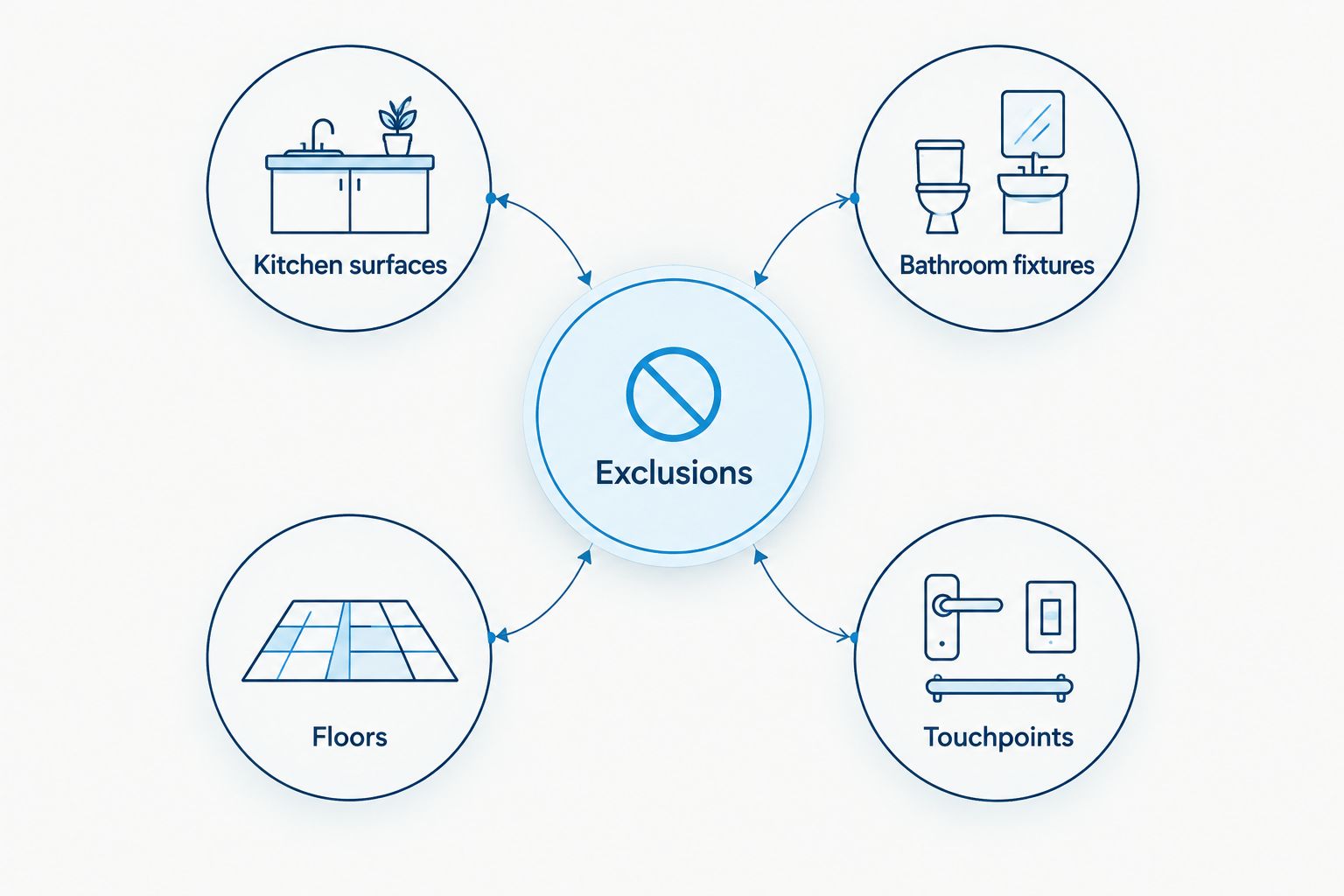
- Kitchen surfaces: identify accessible counters, sinks, and appliance exteriors.
- Bathroom fixtures: name sinks, toilets, showers, and tubs in scope.
- Floors: record surface types and agreed cleaning methods.
- Touchpoints: identify handles and switches included in the visit.
- Exclusions: list personal items, closed storage, and specialist work.
4. Agree on entry and protect tenant privacy
Arrange access directly with the appropriate people before scheduling the first occupied-home visit. Record the agreed entry method, contact person, and procedure if the cleaner cannot enter. Follow the lease and applicable Florida requirements; a cleaning appointment does not replace required notice or permission.
Keep access information separate from a widely shared cleaning checklist. Limit it to people who need it, and agree on how changes will be communicated. Avoid putting entry codes in group messages that include unrelated vendors or former occupants.
Photography deserves its own rule. If you need completion photos, agree on what can be photographed and how images will be shared. Do not make broad interior photography the default for an occupied rental. Work records should document cleaning, not collect details about a resident’s life.
- Confirm access before dispatching the cleaner.
- Identify the contact for entry problems.
- Record instructions for pets and occupied rooms.
- Agree on photo boundaries before taking pictures.
- Establish a process for changing access details.
5. Separate cleaning findings from maintenance work
Use a brief completion note instead of asking the cleaner to write a property inspection report. A useful note identifies finished tasks, inaccessible areas, and visible concerns that need your attention. It does not draw conclusions about mold, structural damage, or the cause of a leak.
If a damp cabinet or damaged surface prevents normal cleaning, route that issue to maintenance. Do not ask the cleaner to conceal staining, paint over a concern, or apply stronger products to an unidentified problem. Follow product labels and surface-care instructions rather than improvising a treatment.
For a portfolio, keep the same reporting fields across properties. The cleaning checklist for property managers with multiple units is a related planning resource. Keep each unit’s private access information outside the shared template.
- Record completed work against the agreed checklist.
- Explain any task blocked by belongings or access.
- Report visible damage without diagnosing its cause.
- Send repair concerns to the responsible maintenance contact.
- Keep cleaning records separate from tenancy enforcement decisions.
6. Review the service before expanding it
Start with a property-specific review rather than copying one schedule across every unit. After the initial visit, compare the agreed scope with the completed work and collect feedback through the designated contact. Address unclear instructions before adding more tasks or properties.
For a sample 2026 review schedule, check the arrangement after 30 days and reassess the wider plan after 90 days. Those are suggested management checkpoints, not claims about cleaning performance. Choose different intervals when the tenancy or service arrangement requires them.
Evaluate communication alongside the cleaning itself. A landlord needs to know when access fails, when a task sits outside scope, and when a resident requests a change. Top Shelf Cleaning Co. is reachable by phone or text, which gives local landlords a direct route to discuss the property and request a tailored quote.
- Compare completed tasks with the written scope.
- Ask the resident about disruption and access arrangements.
- Review unresolved maintenance reports separately.
- Adjust the checklist before changing frequency.
- Confirm the revised arrangement with everyone involved.
Compare cleaning arrangements for long-term rentals
Best for ongoing service: choose recurring residential cleaning when you need an agreed routine inside an occupied home. Other arrangements serve different purposes. A move-out clean addresses the handover between tenancies; it should not become the template for every occupied-home visit.
| Option | Best for | Main advantage | Key limitation |
|---|---|---|---|
| Tenant-managed routine | Rentals where residents manage their own housekeeping | Keeps everyday arrangements with the resident | Does not provide a landlord-arranged cleaning schedule |
| Recurring residential cleaning | Agreed cleaning inside occupied rentals | Establishes a repeatable scope and visit schedule | Requires access coordination and clear personal-property boundaries |
| Common-area cleaning | Shared entrances, halls, and other agreed spaces | Focuses service on areas used by multiple residents | Does not cover private interiors unless separately agreed |
| Deep cleaning | Agreed detail work beyond routine upkeep | Addresses a broader, explicitly defined task list | Does not replace repairs or specialist treatment |
| Move-in or move-out cleaning | Vacant-property handovers | Allows the scope to focus on the tenancy transition | Does not maintain cleanliness during an occupied tenancy |
Ask for each arrangement to be described separately in the quote. Combining recurring work, detail cleaning, and vacant-unit preparation into one vague request makes it harder to compare scope or understand exclusions.
Common mistakes landlords make
Treating an occupied rental like a turnover
An Airbnb turnover prepares a property between guests. A long-term rental contains a resident’s ongoing household, belongings, and routines. Use an occupied-home checklist, not instructions to reset the entire property or handle personal items without agreement.
Booking service before settling access
A recurring calendar entry does not resolve entry rights, notice, pets, or a tenant’s work schedule. Confirm the access arrangement first. Then tell the provider exactly whom to contact when a visit cannot proceed as planned.
Expecting routine cleaning to resolve damage
A stain, damaged finish, or damp area needs the right response, not an automatic request for stronger cleaning. Record the concern and separate the cleaning task from maintenance. Do not describe a cosmetic improvement as proof that the underlying issue is fixed.
Using one scope across unlike units
Different floor materials, layouts, belongings, and shared spaces change the work. Keep a common checklist format, but give each property its own inclusions and exclusions. Standardize the record, not assumptions about every home.
Leaving tenant requests outside the process
A resident might ask for extra tasks during a visit. Decide in advance who can authorize changes and how the provider records them. This protects the agreed scope without forcing the cleaner to settle responsibilities at the door.
FAQ
What is recurring cleaning for landlords with long-term rentals?
Recurring cleaning for landlords is scheduled cleaning of occupied rental interiors or shared areas under an agreed scope. It supports routine upkeep but remains separate from repairs, inspections, and vacant-unit cleaning.
What's the best cleaning schedule for an occupied rental?
The best schedule matches the agreed tasks, household use, and access arrangements. Compare weekly, every-other-week, and monthly visits, then review whether the chosen interval fits the property rather than treating any frequency as a universal standard.
Can a landlord arrange cleaning while a tenant lives in the property?
A landlord-arranged cleaning service must respect the lease, applicable entry requirements, and the agreed access arrangement. Discuss the plan with the tenant before booking and obtain appropriate advice when responsibilities or entry rights are unclear.
Is recurring cleaning better than move-out cleaning?
Recurring cleaning and move-out cleaning serve different purposes. Recurring cleaning covers agreed tasks during a tenancy, while move-out cleaning addresses the property handover after the resident leaves.
What should landlords include in a recurring cleaning checklist?
Include the rooms, accessible surfaces, floor types, agreed tasks, and explicit exclusions. Record boundaries for personal belongings, appliance interiors, locked rooms, and any work that needs separate approval.
Does recurring cleaning include mold treatment or repairs?
Do not assume recurring cleaning includes mold treatment or repairs. Route visible dampness, damage, or suspected specialist issues to an appropriate provider and agree separately on any cleaning that remains suitable.
Who is Top Shelf Cleaning Co. best for?
Top Shelf Cleaning Co. is best for St. Petersburg and Pinellas County landlords seeking local residential cleaning. The team is licensed and insured, reachable by phone or text, and provides straightforward quotes tailored to each property.
One last thing
The most useful line on your 2026 cleaning checklist might be an exclusion. Writing that cleaners must not move personal paperwork or enter a specified room removes a decision someone would otherwise have to make inside the tenant’s home.
Before you request service, prepare a short property brief: location, occupied or vacant status, rooms in scope, preferred frequency, and access contact. That gives the conversation a practical starting point without assuming every property needs the same arrangement.
Related guides
- Cleaning schedules for recurring residential cleaning
- Move-out cleaning checklist for Pinellas County renters
- Cleaning tips for humid Florida homes
Request a free quote by phone or text from Top Shelf Cleaning Co. Describe your rental and the work you need so the local team can discuss a straightforward quote tailored to your property.


