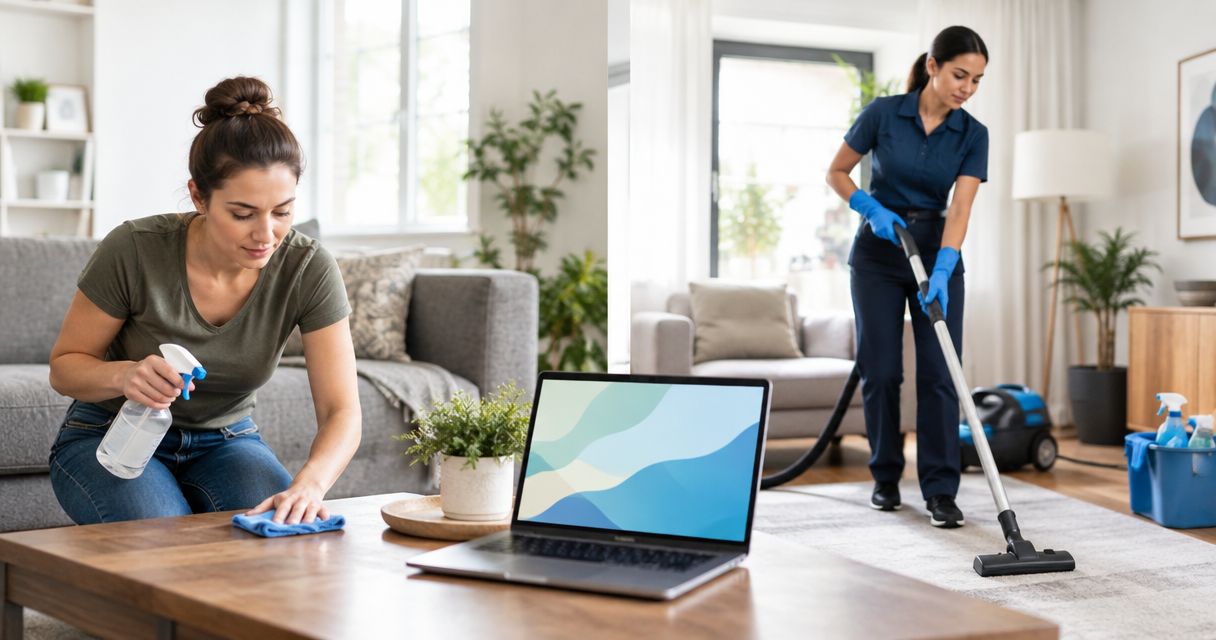
Cleaning your own house is cheaper when your supplies and equipment cost less than a comparable cleaning-service quote and you do not count your time as an expense. For St. Petersburg and Pinellas County households comparing options in 2026, the deciding factor is whether the money saved outweighs the cleaning, preparation, and scheduling work you keep.
- Is it cheaper to clean your own house or hire a cleaning service? Compare cash expenses and your time separately.
- DIY house cleaning fits homeowners who have the equipment, time, and ability to finish the agreed tasks.
- Professional house cleaning transfers agreed cleaning tasks, not every household chore; check the scope before booking.
- Tampatopshelf suits St. Petersburg homeowners and vacation-rental hosts seeking a local, licensed and insured cleaning team.
Why this matters
The cheaper choice depends on what you are buying: a clean home, time back, or a property ready for its next occupant. A homeowner with a flexible afternoon faces a different decision from a vacation-rental host managing a checkout and arrival.
Tampatopshelf provides residential and vacation-rental cleaning in St. Petersburg and Pinellas County, with straightforward quotes tailored to each property. Compare that written scope against the work you would actually do yourself, rather than comparing a complete service with a quick tidy.
Is it cheaper to clean your own house or hire a cleaning service?
Compare the same tasks, then separate cash spending from time spent. DIY removes the service charge from your household budget, but it leaves you responsible for supplies, equipment, physical work, and completion.
Hiring a cleaner adds a service expense and transfers the agreed cleaning tasks. It does not automatically include decluttering, laundry, appliance interiors, or every job on your personal checklist; confirm each task before treating it as covered.
| Approach | Best for | Main advantage | Main drawback | What to compare |
|---|---|---|---|---|
| DIY cleaning | Homeowners with time, suitable equipment, and manageable cleaning needs | You control the work and avoid a service charge | You supply the labor and handle unfinished tasks | Consumables, equipment needs, and your full time commitment |
| Recurring professional cleaning | Households that want regular help with an agreed checklist | You transfer repeated cleaning tasks | The service remains an ongoing household expense | Included rooms, tasks, frequency, and preparation requirements |
| Occasional professional cleaning | Households that handle routine upkeep but want help with larger jobs | You delegate selected work without outsourcing every clean | Routine cleaning remains your responsibility | The specific condition and tasks covered by each visit |
| Professional rental turnovers | Hosts and property managers who need cleaning between stays | You transfer agreed turnover cleaning tasks | Access, scheduling, and responsibilities still need coordination | Cleaning scope, linens, restocking, and the handoff process |
For your 2026 household budget, the useful comparison is not simply supplies versus a cleaning invoice. It is supplies and your labor versus the quoted service and the responsibilities you retain.
Compare cash spending without counting purchases twice
For DIY cleaning, list the products you use and the equipment you need to buy or replace. Do not charge the full purchase of an existing vacuum to every cleaning session. Likewise, do not treat a partly used bottle of cleaner as a new purchase each time.
For professional cleaning, use a quote for your actual property and requested work. Ask whether supplies are included and whether any requested tasks fall outside the quoted scope. A comparison becomes misleading when one side includes a detailed bathroom clean and the other includes only a surface wipe.
Count time without pretending it is automatically lost income
Include setup, putting items away, cleaning, washing reusable cloths, and storing equipment. If you hire a service, count any preparation, access arrangements, and follow-up you still handle.
Your free time matters, but it is not automatically paid work you have lost. If cleaning displaces paid work, use the earnings you would actually forgo. If it displaces rest, family time, or another responsibility, make that trade-off directly rather than inventing an hourly income figure.
DIY cleaning: best for a manageable routine
DIY cleaning fits when you can complete the work safely, have suitable supplies, and can maintain a standard you accept. The financial advantage is clearest when you already own the necessary equipment and do not need to give up paid work to clean.
The drawback is responsibility. A postponed bathroom, unfinished floor, or skipped kitchen task stays on your list. Buying supplies does not remove the need to use them.
Before choosing DIY, check the actual workload:
- Rooms: Identify the spaces you will clean, including bathrooms and other demanding areas.
- Tasks: Separate tidying from cleaning surfaces, fixtures, and floors.
- Equipment: Check what you already own before buying replacements or specialist tools.
- Completion: Decide when you will finish the work, not just when you will start.
Choose DIY when the work fits your budget, schedule, and physical ability. Do not choose it solely because a supply purchase looks smaller than a service quote.
Recurring cleaning: best for regular household support
Recurring residential cleaning suits households that want an agreed set of tasks handled repeatedly. Its value comes from transferring that work; it does not mean you stop doing daily household upkeep.
Confirm what you need to put away before each visit and which tasks remain yours. Dishes, personal belongings, and laundry need an explicit agreement rather than an assumption.
For a 2026 comparison, record the household work left after a professional visit. If you still spend time organizing rooms or completing excluded tasks, keep that time in your assessment. This gives you an honest picture of what the service removes from your week.
Choose recurring cleaning when the repeated work you transfer justifies the expense for your household. Read the guide to whether recurring house cleaning is worth it if you are deciding between regular help and occasional visits.
Occasional cleaning: best for a defined larger job
You do not have to choose between doing everything yourself and hiring a cleaner for every visit. You can maintain routine cleanliness and request professional help for a deeper clean, move-in, or move-out.
This approach works best when the task list is specific. Explain the property's condition, identify the areas needing attention, and ask what preparation is required. Do not assume that a service label includes every cabinet, appliance, or detailed task you have in mind.
The limitation is that the service ends when the agreed job is complete. You remain responsible for upkeep afterward, and an occasional appointment does not replace a household cleaning routine.
Choose occasional cleaning when you can manage everyday work but want help with a clearly defined project. Compare that project against the time and equipment you would need to complete it yourself.
Rental turnovers: best for hosts who need cleaning coverage
For vacation-rental hosts, the decision includes more than household convenience. You need an agreed cleaning scope and a clear handoff between departure and arrival.
Self-cleaning keeps turnover labor with you. That can fit a host who is nearby and able to complete the work, but it also means the host handles access, supplies, cleaning, and any unfinished tasks before the property is handed over.
Professional turnover cleaning transfers the agreed cleaning work. It still requires clear instructions about access, linen handling, restocking, and reporting problems. Ask which responsibilities are included rather than treating all turnover work as one automatic package.
Tampatopshelf is best suited to St. Petersburg homeowners and vacation-rental hosts who want a local, licensed and insured cleaning team. Its residential and vacation-rental services fit those needs; the comparison still depends on your property's quoted scope and the work you retain.
Why the DIY-versus-service comparison varies
These factors change the work you need to compare. Describe them when requesting a quote instead of relying on a general house-cleaning estimate.
- Property size and layout: List the rooms and areas requiring attention. A room count alone does not describe every surface or access issue.
- Starting condition: Describe accumulated dirt and neglected areas so the requested work matches the property's condition.
- Scope of cleaning: Routine upkeep, deeper cleaning, and move-related work are different assignments. Confirm the task list.
- Frequency: Compare your proposed household routine with the proposed service schedule, not unrelated cleaning intervals.
- Supplies and equipment: Identify what you already have and ask what the cleaning service brings.
- Access and scheduling: Include entry arrangements, preparation, and rental handoffs when assessing the work that remains yours.
For a useful 2026 decision, change one part of the comparison at a time. If you change the cleaning scope and frequency together, you will not know which change made the arrangement better suited to your needs.
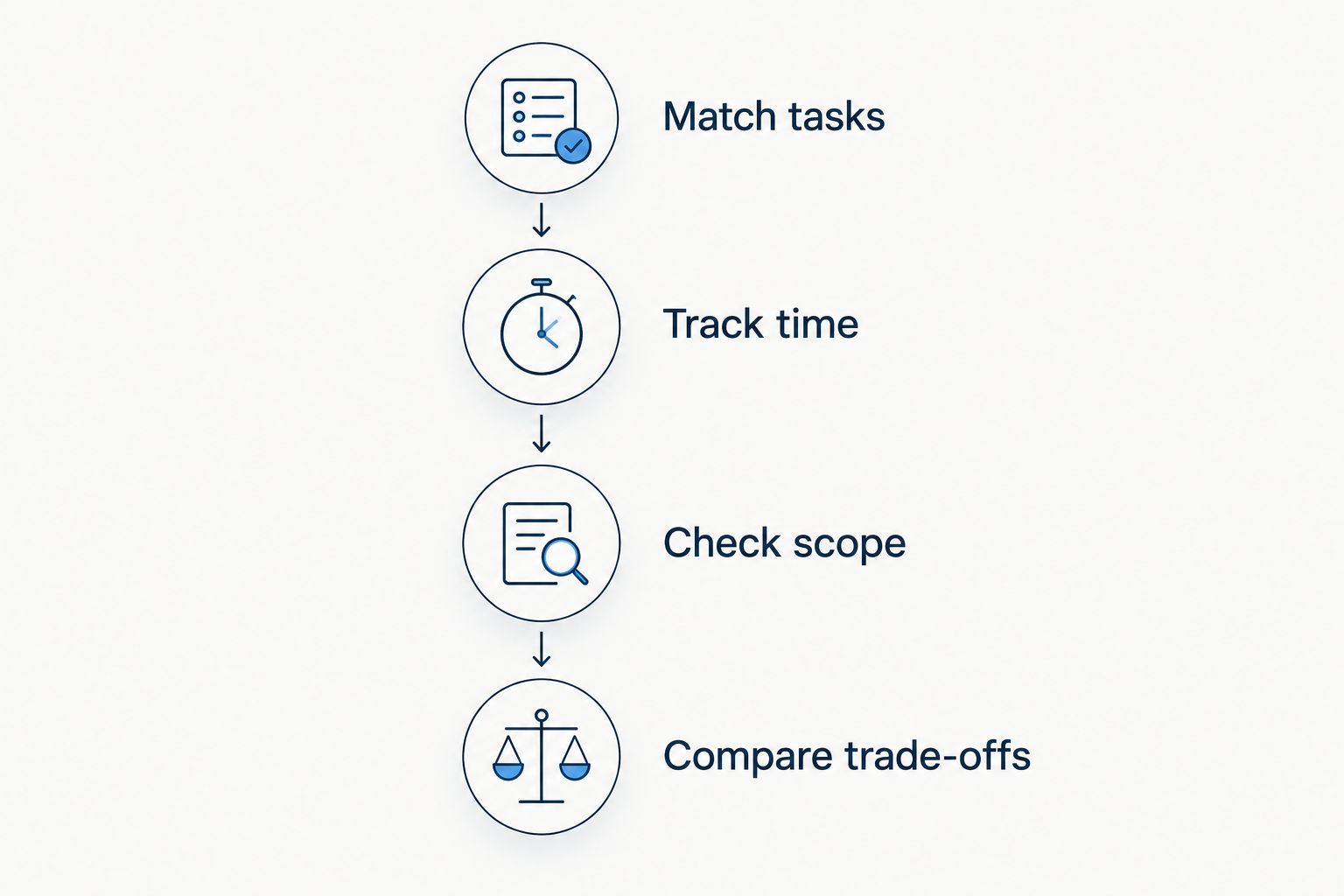
How do you make a fair comparison for your home?
Use the same checklist for DIY and professional cleaning. A written comparison exposes differences that a headline quote or supply receipt cannot show.
- Match tasks. List the rooms and cleaning jobs you expect completed. Keep decluttering and optional extras separate.
- Track time. Record an actual DIY session, including preparation and cleanup. Record the responsibilities you would retain with a service.
- Check scope. Request a property-specific quote and confirm inclusions, exclusions, supplies, and access arrangements.
- Compare trade-offs. Decide whether you prefer the cash savings from DIY or the work transferred through professional cleaning.
Keep the completed comparison for your next review. If your household routine, property condition, or rental workload changes during 2026, update those parts rather than starting with a generic estimate again.
Is hiring a cleaner worth it if I can clean myself?
Hiring a cleaner is worth considering when you want to transfer the work, even if you can do it yourself. Ability and preference are different questions. Compare the quoted expense with the tasks removed and decide whether that exchange fits your household.
Can I hire a cleaner only for the jobs I dislike?
Ask for a quote based on the tasks you want to delegate. Do not assume every provider accepts a task-only arrangement or that removing rooms changes the quote proportionately. Get the agreed scope before booking.
FAQ
Is it cheaper to clean your own house or hire a cleaning service?
Cleaning your own house is cheaper when your DIY expenses are lower than a comparable service quote and you exclude your time from the calculation. Compare the same tasks, then assess the time and responsibilities each option leaves with you.
Is cleaning my own home free if I already have supplies?
Cleaning your own home still uses your time and consumable supplies, even if you do not buy anything that day. Equipment replacement and future supply purchases also belong in your household budget.
Should I count my hourly wage when comparing cleaning options?
Count your hourly earnings only when cleaning actually displaces paid work you would otherwise do. For personal time, decide whether keeping that time is worth the quoted cleaning expense without treating it as lost wages.
Is recurring house cleaning better than an occasional deep clean?
Recurring house cleaning fits ongoing upkeep, while an occasional deeper clean fits a defined larger task. Choose according to the work you want transferred and confirm each service's checklist.
Should I clean my Airbnb myself or hire turnover cleaners?
Clean your Airbnb yourself if you can complete the agreed turnover work and manage the handoff. Hire turnover cleaners when you want that cleaning work transferred, while confirming access, linen handling, restocking, and reporting responsibilities.
What should I tell a cleaning company before requesting a quote?
Describe the property, its current condition, the rooms involved, and the tasks you want completed. Include your preferred frequency, access arrangements, and any turnover or move-related requirements so the quote addresses the actual work.
One last thing
Compare finished work, not effort. A long DIY session is not automatically equivalent to a professional visit, and a professional visit is not automatically a complete reset of your home. The shared checklist is what makes the comparison fair.
Before you decide, mark which tasks would still be yours after hiring help. That remaining list tells you more about the arrangement's value than a broad promise of saving time.
Related guides
- How to prepare your home before cleaners arrive
- How long a standard house-cleaning appointment takes
- Airbnb turnover cleaning checklist
For cleaning built around your St. Petersburg or Pinellas County property, request a free quote from Tampatopshelf by phone or text. Reach a real person, explain the work you need, and ask for a straightforward property-specific quote.


