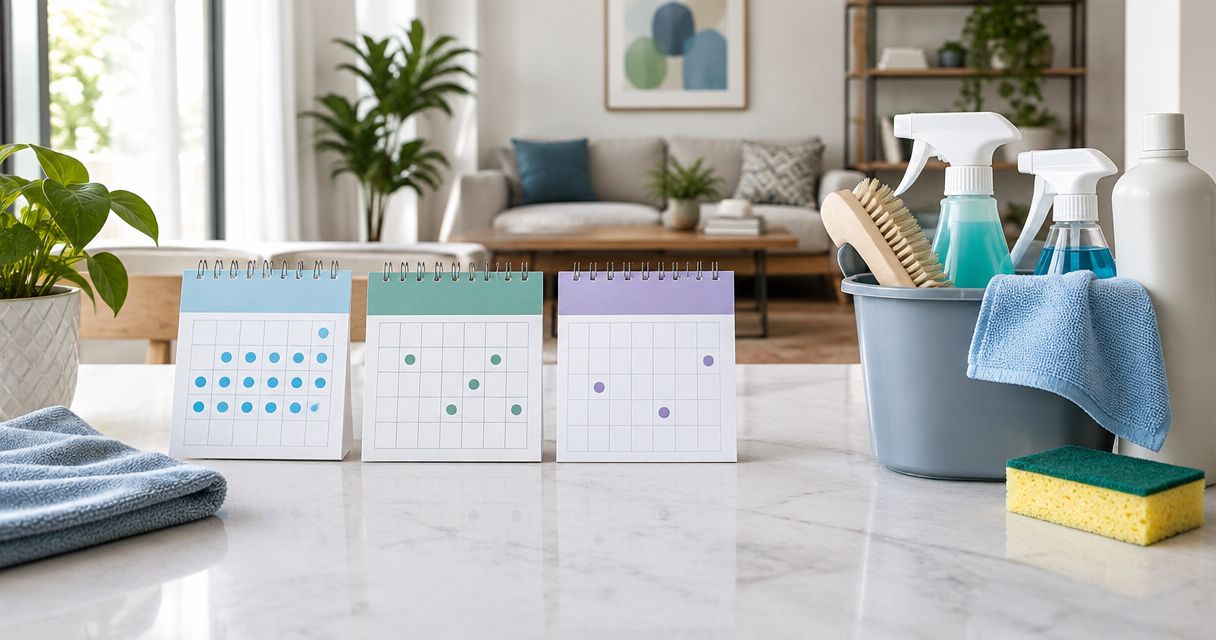
Best overall starting point: biweekly cleaning. Best for busy, heavily used homes: weekly cleaning. Best for households that handle routine cleaning themselves: monthly cleaning. This 2026 guide compares weekly vs biweekly vs monthly house cleaning for St. Petersburg and Pinellas County homes, with a separate rule for vacation rentals: schedule around guest departures, not a household calendar.
- For weekly vs biweekly vs monthly house cleaning, choose biweekly as your starting point when you handle light upkeep.
- Weekly cleaning suits busy homes where kitchen, bathroom, and floor cleaning becomes difficult between visits.
- Monthly cleaning supports households that already manage routine cleaning; it does not replace that work.
- Tampatopshelf residential cleaning suits St. Petersburg and Pinellas County homeowners seeking a local, licensed and insured team.
- Airbnb turnover cleaning follows guest departures, not a weekly, biweekly, or monthly residential schedule.
Why cleaning frequency matters
The right cleaning plan matches the work you actually want to stop doing. If you book monthly visits but need help with bathroom cleaning every week, the calendar and the job do not match.
Tampatopshelf residential cleaning is best for local homeowners who want a plan tailored to their property and a team reachable by phone or text. Request a straightforward quote with your home's condition, occupied rooms, and preferred schedule so the conversation starts with the work required.
For your 2026 cleaning plan, separate frequency from scope. Frequency determines when someone comes; scope determines what gets cleaned. Neither tells you whether appliance interiors, detailed buildup removal, laundry, or other specific tasks are included.
What makes the best recurring cleaning plan
Choose a schedule against these criteria before comparing the options:
- Household use: Count the rooms people actually use, especially bathrooms and cooking areas. A rarely used guest room and a daily-use kitchen create different workloads.
- Between-visit effort: Decide which jobs you will reliably do yourself. Include floors and bathrooms, not just dishes and tidying.
- Your cleanliness standard: Judge the home near the end of the interval, not immediately after a visit.
- Starting condition: Separate existing buildup from routine maintenance. Ask whether an initial deep clean belongs in the plan.
- Access and coordination: Consider entry instructions, pets, parking, and any condo building requirements.
- Property purpose: An occupied home needs maintenance; a vacation rental needs a reset between guest stays.
The best schedule is the one whose remaining chores you can sustain. Choosing a longer interval only works when you accept the cleaning that falls between appointments.
Cleaning plans at a glance
| Rank and plan | Best for | Standout feature | Key limitation | Interval |
|---|---|---|---|---|
| 1. Biweekly cleaning | Households handling light upkeep | Regular professional cleaning with an intervening week for self-maintenance | Requires cleaning between visits | Every 14 days |
| 2. Weekly cleaning | Busy, heavily used homes | Shortest gap between scheduled visits | More appointments to coordinate; daily chores remain | Every 7 days |
| 3. Monthly cleaning | Households doing their own routine cleaning | Periodic professional support alongside your routine | Leaves the longest stretch of work to you | Once per calendar month |
Biweekly means every 2 weeks, not twice per month. Monthly means a calendar-month schedule; a visit every 4 weeks repeats every 28 days and is a different arrangement. Confirm the actual recurring dates rather than relying on a label.
1. Biweekly cleaning: best for shared upkeep
Biweekly cleaning puts a professional visit every 14 days. You handle daily mess and intervening cleaning; the scheduled visit covers the agreed recurring tasks.
This is the default recommendation when you want regular help without expecting the cleaner to manage everything. It works only if the work left between appointments feels manageable in practice.
Biweekly cleaning pros:
- Establishes a repeating routine for professional cleaning.
- Supports households comfortable doing light cleaning between visits.
- Gives you a clear interval for judging whether the schedule fits.
- Involves fewer appointments than a weekly plan.
Biweekly cleaning cons:
- Kitchen and bathroom cleaning still falls to you between appointments.
- A heavily used home can need attention before the next visit.
- Skipping an appointment extends the gap substantially.
Best for: Homeowners who can maintain the kitchen, manage spot cleaning, and keep floors and bathrooms acceptable between visits.
When biweekly is the wrong fit
Choose a shorter interval if you repeatedly spend your free time catching up on the same jobs you intended to hand over. The issue is not whether you can tolerate another week; it is whether the plan removes the work you hired help to do.
For a 2026 household routine, write down the tasks you expect to keep. If that list includes more bathroom and floor cleaning than you want, weekly service is the more suitable starting point.
Verdict — Buy: Choose biweekly cleaning when you want shared responsibility: professional recurring care plus realistic upkeep from you.
2. Weekly cleaning: best for heavily used homes
Weekly cleaning schedules professional visits every 7 days. It shortens the interval between appointments, making it the stronger choice when recurring cleaning jobs outpace your willingness or ability to handle them.
Daily cooking, frequently used bathrooms, pets, and a busy household are reasons to examine the workload closely. None automatically requires weekly service; the deciding factor is the cleaning those activities leave for you.
Weekly cleaning pros:
- Leaves a shorter gap between professional visits.
- Suits households that want to hand over recurring cleaning more often.
- Creates a regular checkpoint for kitchens, bathrooms, and floors.
- Fits homeowners whose between-visit task list is otherwise unrealistic.
Weekly cleaning cons:
- Requires more frequent access and appointment coordination.
- Does not eliminate dishes, spills, clutter, or other daily work.
- Does not automatically include deep-cleaning tasks or extras.
Best for: Busy households where essential cleaning repeatedly becomes unfinished work before the next appointment.
Define the work, not just the weekday
A weekly appointment is not an agreement to clean every surface or handle every household task. Ask which rooms and tasks are included, what preparation is needed, and how to request work outside the recurring scope.
For condo residents, share building entry and parking instructions before the appointment. For homes with pets, agree on access arrangements rather than assuming the cleaner can manage them.
Verdict — Buy: Choose weekly cleaning when reducing the amount of recurring cleaning you personally perform matters more than spacing appointments farther apart.
3. Monthly cleaning: best for capable self-maintainers
Monthly cleaning adds a professional visit to a routine you already manage. It is not a substitute for cleaning kitchens, bathrooms, and floors throughout the month.
The strongest fit is a household that wants periodic help but is comfortable doing the intervening work. A lightly occupied property still needs a task-based plan; occupancy alone does not define its cleaning needs.
Monthly cleaning pros:
- Supports an established household cleaning routine.
- Requires fewer recurring appointments to coordinate.
- Provides a regular opportunity to address the agreed cleaning scope.
Monthly cleaning cons:
- Leaves routine cleaning to you for most of the month.
- Does not automatically turn each visit into a deep clean.
- Is a poor match if you already struggle to keep up between visits.
Best for: Homeowners who clean routinely and want supplemental professional help rather than frequent relief from chores.
Monthly does not mean deep cleaning
Do not assume that a longer gap includes more detailed work. A monthly maintenance visit and a deep clean describe different things: one is a schedule, the other is a scope.
If your home has accumulated buildup, explain the condition when requesting a quote. Ask what belongs in an initial clean and what the recurring monthly visit would cover afterward.
Verdict — Buy: Choose monthly cleaning when you already maintain the home. Skip monthly as a replacement for the weekly cleaning you do not want to do.
How to choose your 2026 cleaning schedule
Use the condition of your home just before the next appointment as your decision point. A freshly cleaned room cannot tell you whether the interval works.
- List your chores. Identify the cleaning jobs you want help with, separating daily tidying from recurring surface cleaning.
- Set your interval. Start with biweekly if you expect to share the upkeep; choose weekly if you want more frequent help.
- Confirm the scope. Agree on rooms, tasks, exclusions, and any initial cleaning needs.
- Review the gap. Notice which jobs you must do before the next visit and whether that workload is acceptable.
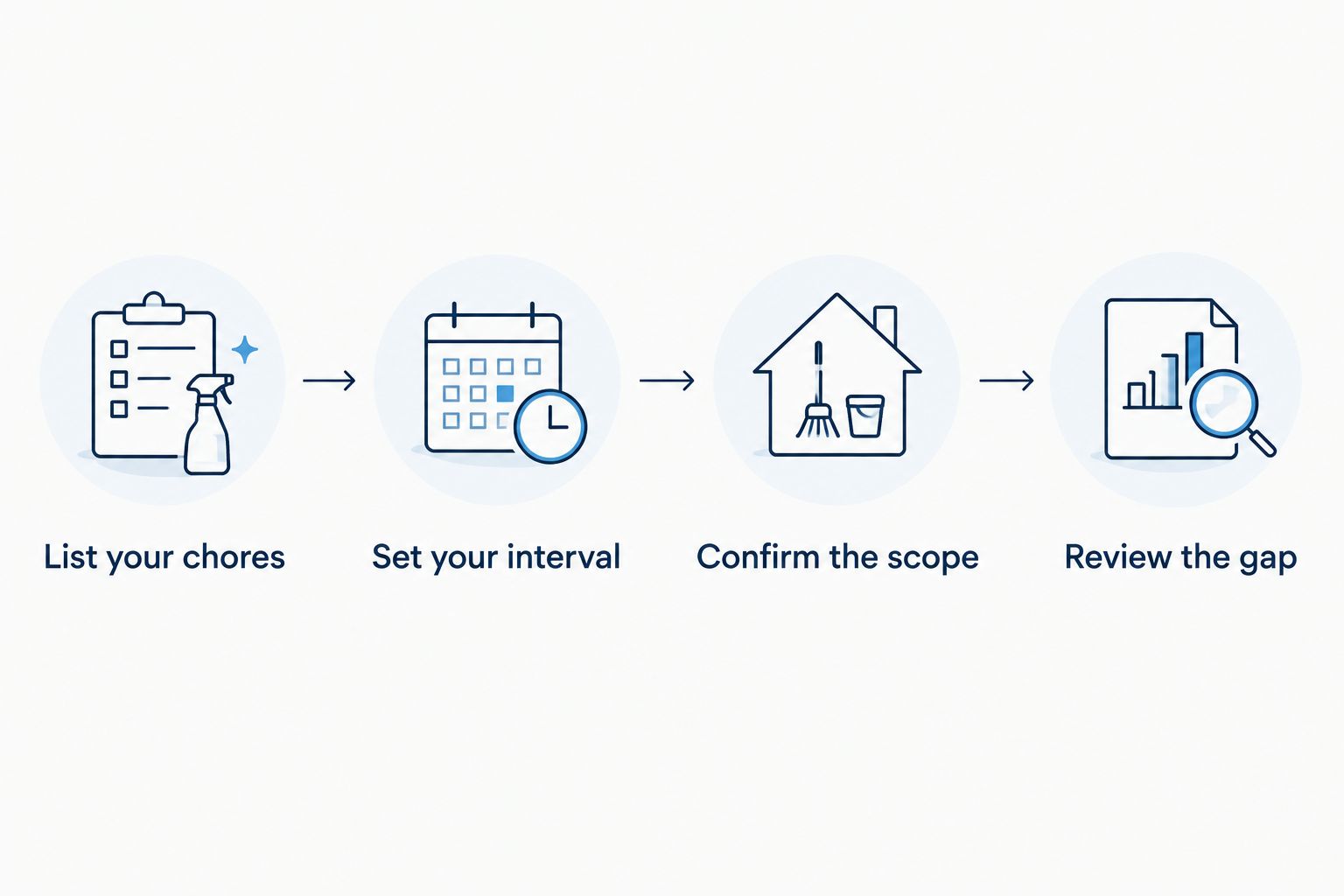
If one room repeatedly needs extra attention, discuss that room before changing the entire schedule. If the whole home needs cleaning long before each appointment, shorten the interval rather than continually stretching the same plan.
Vacation rentals need a different schedule
Airbnb and vacation-rental cleaning should follow guest departures. A weekly residential appointment does not cover a departure that falls between those visits, and a monthly plan does not reset a property between bookings.
For St. Petersburg and Pinellas County hosts, distinguish guest-ready turnover work from periodic detailed cleaning. Tell the cleaning team about departure and arrival dates, access instructions, linen arrangements, and the property checklist; confirm which responsibilities belong to whom.
Tampatopshelf provides vacation-rental turnover cleaning as well as residential service. Request a property-specific plan rather than assuming a household cleaning frequency covers rental operations.
For a seasonal home, discuss reopening condition separately from ongoing maintenance. An arrival clean and a recurring occupied-home schedule solve different problems.
How the cleaning plans are ranked
This 2026 ranking uses household workload, between-visit effort, appointment coordination, and the distinction between frequency and scope. It is a fit-based recommendation, not a measured performance comparison.
Biweekly ranks first as the starting point for shared upkeep. Weekly wins when you need more frequent professional help; monthly wins when you already do routine cleaning yourself. Vacation-rental turnovers sit outside that ranking because bookings determine the cleaning dates.
Which cleaning plan should you choose?
Choose biweekly first if you can handle light upkeep. Choose weekly if routine cleaning keeps falling behind. Choose monthly only if your own cleaning routine already works.
Before committing to your 2026 schedule, ask for the recurring task list and explain the home's current condition. Tampatopshelf is a local St. Petersburg team, licensed and insured, with straightforward quotes tailored to each property and contact by phone or text.
FAQ
What's best: weekly, biweekly, or monthly house cleaning?
Biweekly cleaning is the best starting point when you can handle light upkeep between visits. Choose weekly for more frequent professional help and monthly when you already manage routine cleaning yourself.
Does biweekly cleaning mean twice a month?
Biweekly cleaning means every 14 days, not twice per calendar month. Confirm the recurring dates so both you and the cleaning team understand the schedule.
Is monthly house cleaning enough?
Monthly cleaning is enough as professional support when you reliably handle routine cleaning between visits. It is not enough to replace the kitchen, bathroom, and floor cleaning you otherwise need to do throughout the month.
Should I book weekly cleaning if I have pets?
Choose weekly cleaning if pet-related mess makes the between-visit workload more than you want to handle. Having a pet alone does not determine the schedule; judge the actual floor, furniture, and other cleaning work.
Do I need a deep clean before recurring cleaning?
An initial deep clean is a separate scope decision based on your home's condition. Describe existing buildup and ask which tasks belong in the first appointment versus recurring visits.
Does weekly cleaning include laundry and appliance interiors?
Weekly frequency does not establish whether laundry or appliance interiors are included. Confirm those tasks explicitly before booking rather than treating them as part of every recurring visit.
Can I use biweekly house cleaning for an Airbnb?
Biweekly residential cleaning does not replace turnover cleaning between Airbnb guests. Schedule turnover work around departures and coordinate any separate detailed cleaning around the booking calendar.
How do I request a cleaning plan from Tampatopshelf?
Request a free quote by phone or text and describe your property, preferred frequency, and cleaning priorities. Include the home's current condition and whether it is your residence, a seasonal home, or a vacation rental.
One last thing
The most useful question is not how clean the house looks after a visit, but which jobs you still have to do before the next one. Keep that list and use it when discussing frequency. It turns a vague preference into a practical service request.
Related guides
- How often should you get your house professionally cleaned?
- How to prepare your home before cleaners arrive
- Is recurring house cleaning worth it?
- Airbnb turnover cleaning checklist
Request a free quote by phone or text. Share your property details and the cleaning you want help with so your plan fits your home.


