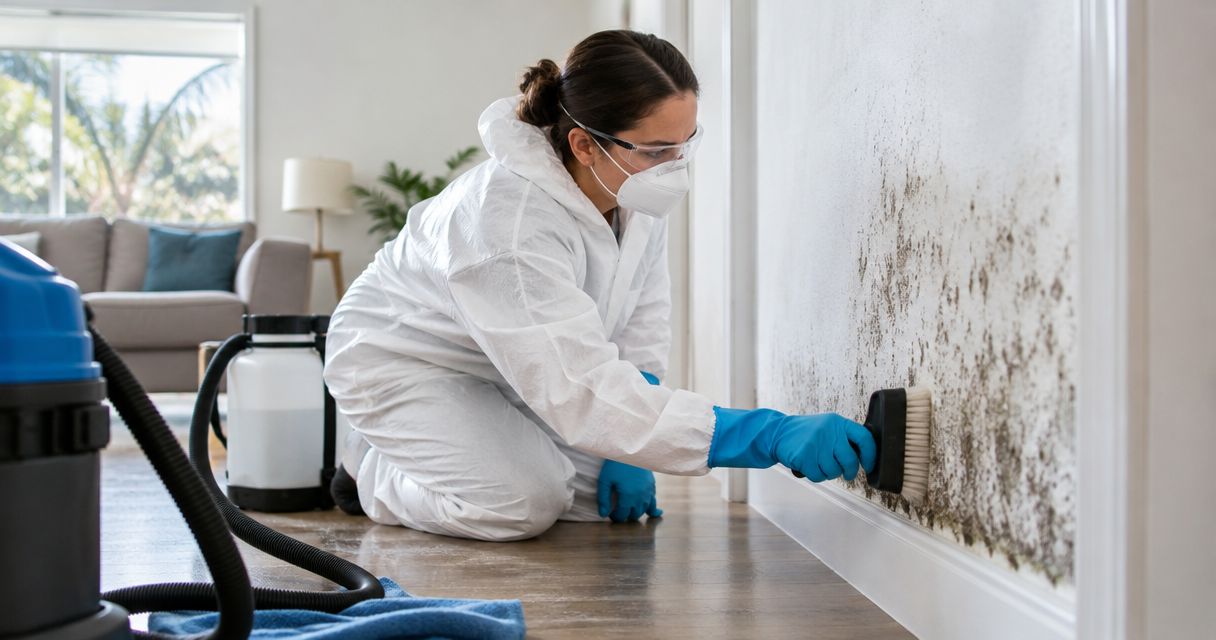
Yes—a cleaning service can help with the housekeeping side of Florida humidity, but routine cleaning does not fix leaks, control indoor humidity, or replace mold remediation. Small areas of surface mold require an agreed cleaning scope; recurring growth, wet building materials, or suspected hidden mold need a moisture assessment and potentially a remediation professional. For St. Petersburg and Pinellas County properties, the right next step depends on what is wet, what is affected, and whether the problem returns.
- Can a cleaning service handle Florida humidity and mold? Routine cleaning helps; moisture repairs and mold remediation are separate.
- Tampatopshelf provides residential and vacation-rental cleaning; confirm any mold-related work before booking.
- EPA recommends indoor humidity below 60%, ideally between 30% and 50%.
- Recurring growth, damaged porous materials, and suspected HVAC contamination call for more than housekeeping.
Can a cleaning service handle Florida humidity and mold issues?
A cleaning service handles housekeeping, not the underlying cause of a damp building. Cleaning removes dirt and residue from agreed surfaces. Repairing a leaking pipe, correcting condensation, and removing mold-damaged drywall are different jobs.
For residential and vacation-rental cleaning, Tampatopshelf serves St. Petersburg and Pinellas County. Describe any suspected mold before requesting a quote rather than assuming a standard appointment includes its removal.
Use this distinction when arranging help in 2026:
| Type of help | Best for | Main benefit | Main limitation |
|---|---|---|---|
| Routine cleaning | Regular upkeep of dry, sound surfaces | Removes ordinary dirt, soap residue, and other buildup | Does not repair leaks or control humidity |
| Deep cleaning | More detailed housekeeping within an agreed scope | Addresses accumulated surface buildup | Is not another name for mold remediation |
| Mold assessment or remediation | Recurring, extensive, hidden, or complicated contamination | Addresses mold conditions beyond ordinary housekeeping | Still requires the moisture source to be corrected |
| Plumbing or HVAC service | Leaks, condensation, or ventilation problems | Addresses the source of excess moisture | Does not automatically include cleaning affected materials |
You do not have to choose one provider for every task. A property sometimes needs repair work first, specialist cleanup next, and ordinary cleaning afterward.
Why this matters in a Florida home or rental
A bathroom can look clean while a cabinet underneath the sink stays damp. Likewise, a freshly cleaned vacation rental can still have an unresolved condensation problem. Appearance alone does not establish that the moisture problem is resolved.
For your 2026 maintenance plan, use the U.S. Environmental Protection Agency's homeowner guidance: keep indoor relative humidity below 60%, ideally between 30% and 50%. A hygrometer measures that condition; a cleaning checklist does not.
EPA also recommends drying water-damaged materials within 24–48 hours to help prevent mold growth. That is a moisture-response guideline, not a promised cleaning turnaround or a guarantee that materials are safe afterward.
For practical housekeeping between visits, see these cleaning tips for humid Florida homes. Keep maintenance decisions separate from cleaning frequency: booking more visits does not repair a leak.
Routine cleaning: best for upkeep, not moisture repair
Routine cleaning is appropriate when you need normal bathroom, kitchen, floor, and other agreed surface care. Removing soap residue and accumulated dirt makes those surfaces easier to maintain. It also gives you a clearer view of staining or deterioration that needs attention.
Its limitation is straightforward: a cleaner cannot wipe away the reason a wall stays wet. If discoloration returns in the same place, report the recurrence instead of repeatedly treating it as an ordinary housekeeping task.
Before booking, describe the exact location. A mark on shower tile, a soft patch of drywall, and discoloration inside an air-conditioning vent are not interchangeable conditions.
Best for: homeowners and hosts who need regular housekeeping in spaces without an unresolved mold problem. Confirm that any questionable area falls within the cleaner's scope before work begins.
Deep cleaning: best for buildup, not hidden mold
Deep cleaning means a more detailed cleaning scope—not permission to disturb damaged building materials. Ask which surfaces and tasks the quote includes. Do not assume that removing drywall, lifting carpet, cleaning ducts, or treating concealed cavities belongs in the appointment.
This distinction matters before a move-in or move-out. An empty room makes damage easier to see, but it does not make a suspected mold problem suitable for routine cleaning.
If a cabinet smells musty or a wall feels damp, tell the property owner or manager before arranging cosmetic cleanup. Painting over a mark or masking the odor does not correct the moisture source.
Best for: accumulated household buildup on accessible, sound surfaces. Its boundary is the same as routine cleaning: deeper housekeeping is not remediation.
Specialist help: best for recurring or complicated mold
EPA's homeowner guidance uses about 10 square feet of mold growth as a practical decision point. For larger areas, extensive water damage, or other complications, consult the agency's remediation guidance and an appropriate professional. The area measurement alone does not settle whether a job is suitable for a homeowner or cleaner.
Seek specialist advice when you suspect mold inside walls, encounter contaminated floodwater, or see damage affecting porous materials. Suspected HVAC contamination also deserves separate attention; EPA advises against running a system you know or suspect is contaminated with mold.
Do not ask a turnover cleaner to open a wall or disturb suspected contamination to find out how far it extends. Explain the location, moisture history, and visible condition to the appropriate professional instead.
Best for: situations where the affected material, extent, or moisture source goes beyond ordinary surface care. A specialist's work still depends on correcting the underlying water problem.
Why humidity and mold problems vary between properties
The right response depends on the building conditions, not just the cleaning package. Review these factors before selecting a service:
- Moisture source: A plumbing leak, persistent condensation, and water intrusion require different repairs. Cleaning does not identify or correct every source.
- Surface material: EPA distinguishes washable hard surfaces from porous materials. Moldy porous materials can be difficult or impossible to clean completely and sometimes require disposal.
- Affected area: A small, accessible patch presents a different scope from growth extending across a room or into concealed spaces.
- Recurrence: Growth returning after cleanup points to a moisture problem that still needs investigation.
- Water contamination: Sewage or other contaminated water changes the cleanup requirements. It is not a routine housekeeping assignment.
- Ventilation and humidity: Excess indoor moisture supports continued growth even after visible surfaces have been cleaned.
Use these factors in your 2026 service request. A clear description helps the provider decide whether to quote the work, exclude the affected area, or recommend another professional.
What should you do before booking a cleaner?
Give the cleaning company enough information to make a scope decision before arrival. You do not need to diagnose the mold yourself, and you should not disturb suspect materials to collect more details.
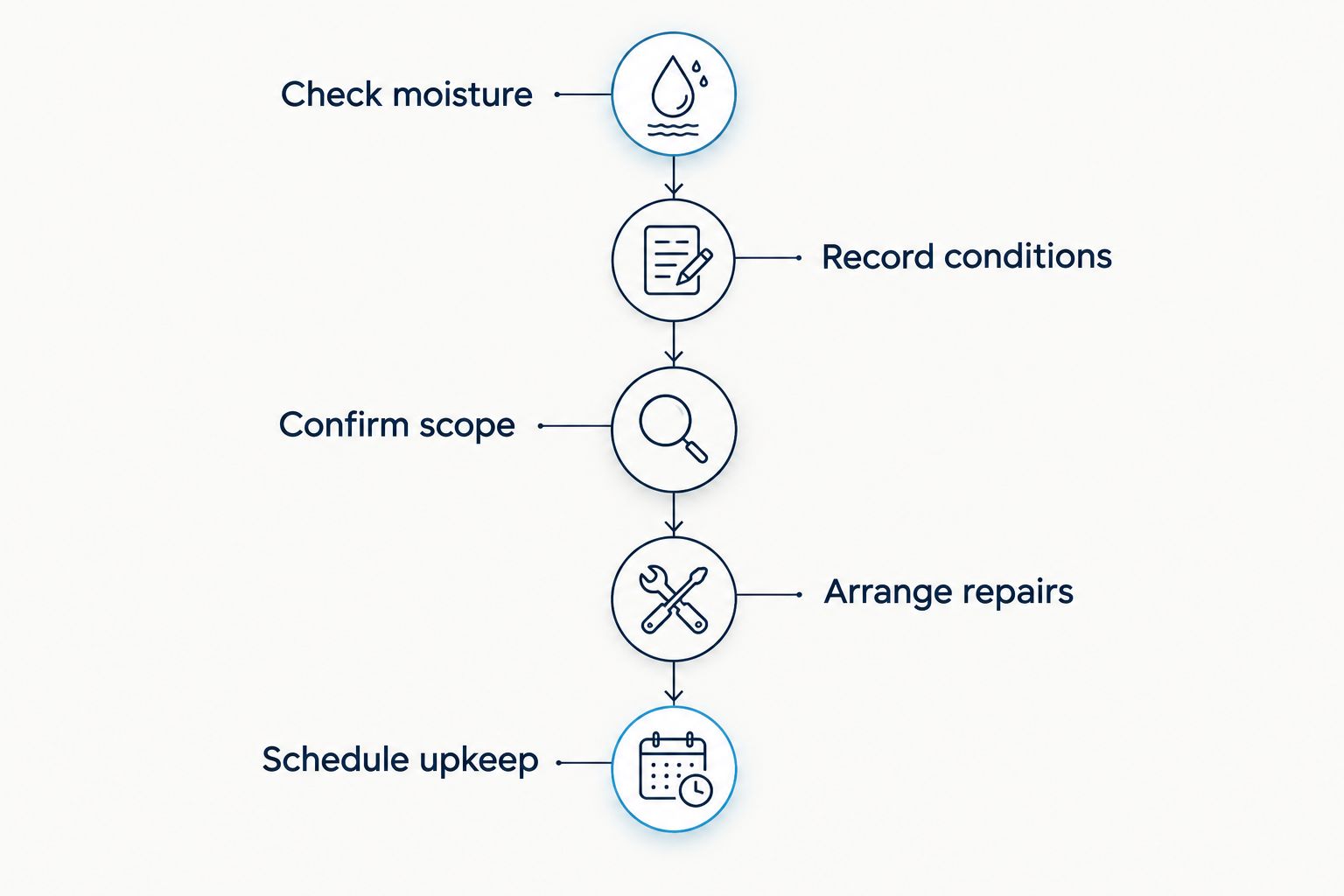
- Check moisture. Note active drips, condensation, damp belongings, and any recent water event. Arrange the appropriate repair rather than waiting for the cleaning appointment.
- Record conditions. Photograph visible areas without scraping, opening walls, or removing materials. Note where the issue appears and whether it has returned.
- Confirm scope. Tell the cleaner about suspected mold, affected materials, and odors. Ask whether the area is included, excluded, or needs specialist review.
- Arrange repairs. Coordinate plumbing, HVAC, or remediation work when needed. Do not assume that one appointment covers all these services.
- Schedule upkeep. Once the moisture issue and any required cleanup are addressed, set the normal housekeeping plan around how the property is used.
Keep the description factual: where the mark is, whether the surface is wet, and what has already been repaired. Color alone does not establish the type of mold or the appropriate cleanup method.
What should Airbnb hosts do between guests?
Treat a dampness report as a maintenance issue, not just a turnover checklist item. Ask for a clear description of the location and visible condition, then arrange the appropriate response. Do not make the next arrival time the deciding factor in whether an unresolved problem needs attention.
Separate routine cleaning tasks from escalation decisions. Your agreed turnover scope can cover ordinary bathroom and kitchen cleaning, while the property manager remains responsible for arranging repairs or specialist assessment when necessary.
For your 2026 turnover instructions, identify who receives a report about a leak, persistent musty odor, or recurring discoloration. Include a backup contact so the cleaning team does not have to guess who can authorize maintenance.
Do not present a completed turnover as proof that a property is free of hidden mold. A cleaning visit is not a building assessment, and an odor-free room is not evidence that wet materials have dried.
What indoor humidity should you aim for?
Below 60%, ideally 30%–50%, is EPA's recommended indoor relative humidity guidance. Measure humidity rather than judging the room by smell or how cool it feels.
If readings remain elevated, review the moisture source and ask an HVAC professional about the building's cooling, ventilation, and dehumidification needs. Cleaning supports upkeep but does not replace those controls.
How quickly should you respond to water damage?
Within 24–48 hours is EPA's recommended drying window for water-damaged materials to help prevent mold growth. Begin addressing the water source promptly; do not wait for a routine cleaning visit to start the response.
Contaminated water, electrical hazards, and damaged building materials need appropriate professional handling. The drying window is not a reason to attempt unsafe cleanup yourself.
How much visible mold is too much for ordinary cleaning?
About 10 square feet is EPA's homeowner guidance threshold for consulting more detailed remediation guidance. It is not an automatic approval for any smaller job.
Hidden growth, contaminated water, recurring moisture, affected HVAC equipment, and the type of material can require specialist help regardless of visible area. Describe those conditions before asking anyone to clean.
How to request the right cleaning scope
Tampatopshelf residential and vacation-rental cleaning is best for St. Petersburg owners and hosts seeking routine property upkeep. It is a local, licensed and insured team reachable by phone or text, with straightforward quotes tailored to each property.
When requesting a Tampatopshelf cleaning quote, explain whether you need recurring housekeeping, a vacation-rental turnover, or a deeper cleaning visit. Disclose suspected mold separately and ask what falls within the proposed scope. Do not treat licensing and insurance as confirmation of mold-remediation services.
For a 2026 cleaning request, include the property location, relevant access instructions, affected rooms, and any unresolved moisture issue. That gives the team a practical starting point without turning the quote request into a diagnosis.
FAQ
Can a cleaning service remove mold from my Florida bathroom?
A cleaning service can consider small surface-cleaning tasks only within an agreed scope; routine housekeeping does not automatically include mold removal. Explain the affected material, moisture source, and whether the growth keeps returning before booking.
Will a deep clean stop mold from coming back?
A deep clean does not stop mold from returning when moisture remains unresolved. Repair leaks and address excess humidity alongside any appropriate cleanup.
What humidity level should I keep in my Florida home?
EPA recommends indoor relative humidity below 60%, ideally between 30% and 50%. Use a hygrometer to check conditions and address persistent excess moisture.
Should I use bleach on every moldy surface?
No—EPA does not recommend bleach or other biocides as a routine practice during mold cleanup. Cleanup depends on the material and circumstances; never mix bleach with ammonia or other cleaning products.
Can an Airbnb turnover replace mold remediation?
An Airbnb turnover cannot replace mold remediation. Keep normal guest-changeover tasks separate from assessment, moisture repairs, and any required specialist cleanup.
Does a musty smell prove there is mold behind a wall?
A musty smell alone does not prove that mold is behind a wall. Persistent odors and dampness deserve investigation, but do not open building materials simply to check.
Can I book Tampatopshelf for regular cleaning after a moisture problem?
Tampatopshelf provides residential and vacation-rental cleaning in St. Petersburg and Pinellas County. Explain the moisture history and completed repairs, then confirm the appropriate cleaning scope by phone or text.
One last thing
Killing mold is not the same as removing it. EPA explains that dead mold can still cause allergic reactions, so cleanup requires removal—not simply spraying a product and leaving the residue behind.
Use a practical stopping rule: if the same patch returns, stop treating each appearance as a fresh housekeeping job. Have the moisture source investigated before paying for another cosmetic cleanup.
Related guides
- Mold-prevention cleaning products for Florida humidity
- Airbnb turnover cleaning checklist
- Cleaning checklist for snowbird homes left vacant in summer
Request a free quote by phone or text. Describe your property, the cleaning you need, and any moisture concerns so the scope is clear before the visit.


