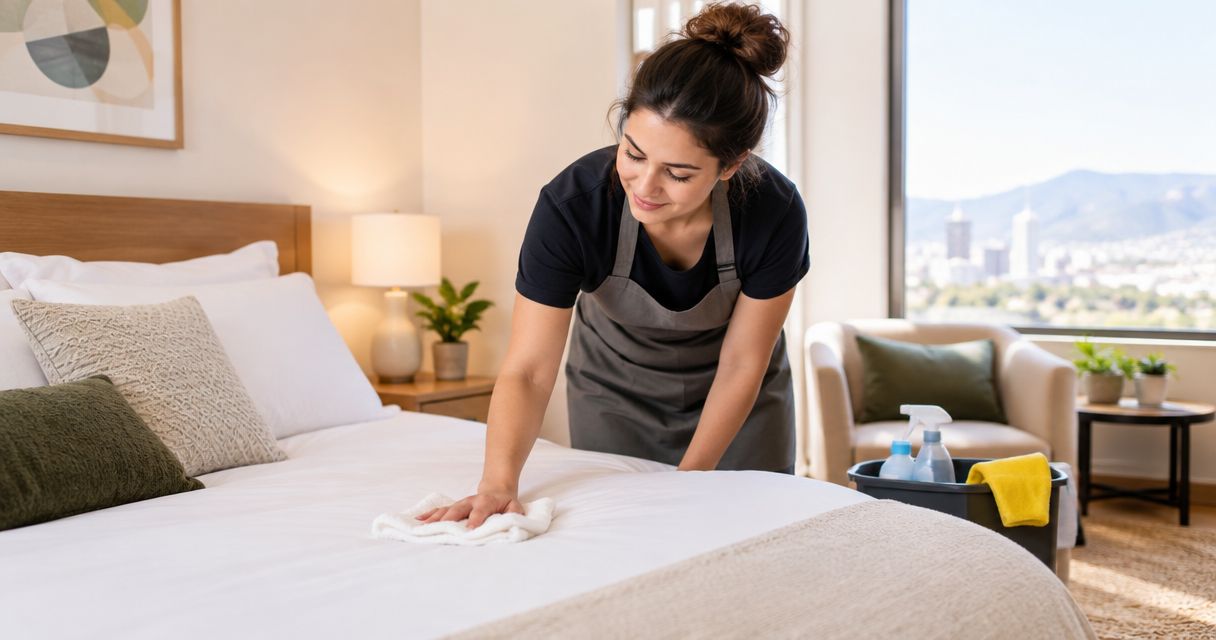
Best overall: a property-specific turnover checklist. Best for bedding consistency: a linen reset. Best for catching missed details: a final guest-eye inspection. These cleaning tips to protect Airbnb Superhost status help you build a repeatable turnover routine for your St. Petersburg or Pinellas County rental in 2026.
- The best cleaning tips to protect Airbnb Superhost status start with a property-specific Airbnb turnover checklist.
- Replace used linens, separate bathroom tools, and inspect the rental before releasing it for arrival.
- Tampatopshelf provides vacation-rental cleaning for St. Petersburg and Pinellas County hosts who want local turnover support.
- Cleanliness supports guest satisfaction, but cleaning alone does not determine Airbnb Superhost status.
Why this matters
A completed cleaning visit and a guest-ready rental are not the same thing. The bed can look finished while a pillowcase has a stain; the bathroom can smell clean while hair remains behind the door.
For your 2026 hosting plan, separate completing the work from accepting the result. Give the cleaner a clear scope, then require a final check before the property is marked ready.
Tampatopshelf provides vacation-rental cleaning through a local St. Petersburg team that is licensed, insured, and reachable by phone or text. Tampatopshelf vacation-rental cleaning is best for St. Petersburg and Pinellas County hosts who want local turnover support and direct communication.
What makes the best Airbnb cleaning practice?
The strongest practices make expectations visible and missed work easier to catch. Use these criteria when setting your standard:
- Repeatability: A different cleaner can understand what finished means.
- Guest contact: The routine covers bedding, bathrooms, kitchens, and frequently touched surfaces.
- Separation: Dirty laundry and bathroom tools stay away from clean items and food-preparation areas.
- Verification: Someone checks the result rather than relying on a completion message.
- Escalation: Stains, damage, missing supplies, and maintenance problems reach the responsible person before arrival.
Best Airbnb cleaning practices at a glance
| Rank | Practice | Best for | Standout feature | Key limitation |
|---|---|---|---|---|
| 1 | Property-specific checklist | Consistent turnover coverage | Defines the scope room by room | Becomes unreliable when property details change |
| 2 | Linen reset | Bedding and towel consistency | Separates used, clean, and rejected textiles | Requires laundry planning and storage |
| 3 | Bathroom and kitchen separation | Cross-contamination control | Assigns tools to different work areas | Depends on consistent handling |
| 4 | Final guest-eye inspection | Catching visible misses | Checks the finished rental from the guest's perspective | Cannot verify every hidden surface |
| 5 | Arrival-window handoff | Back-to-back booking coordination | Confirms access, completion, and unresolved issues | Requires host and cleaner communication |
| 6 | Planned detail cleaning | Buildup outside the turnover scope | Gives overlooked areas their own schedule | Does not replace cleaning between guests |
These practices work together. Start with the checklist, then add the controls that address your property's recurring problems.
1. Property-specific checklist: best for consistent turnovers
A property-specific checklist tells your cleaner what to clean, reset, inspect, and report. It replaces vague instructions such as making everything look good with a defined finish condition for each room.
For your 2026 checklist, describe the result rather than just naming the task. A bathroom instruction should cover a hair-free shower, clean fixtures, an empty bin, and the agreed towel arrangement—not simply say bathroom done.
Include property details that a new cleaner would otherwise have to guess:
- Where clean linens belong and where used laundry goes.
- Which cupboards and appliances need an interior check.
- How furniture and guest supplies should be reset.
- Who receives reports about damage or missing items.
Checklist pros:
- Makes the agreed scope easy to review.
- Helps replacement cleaners follow the same expectations.
- Gives you a place to record recurring misses.
Checklist cons:
- Needs updates when furnishings or amenities change.
- Checking a box does not prove the work meets the standard.
Best for: Hosts who need consistent execution across different stays or cleaners.
Verdict: Use a property-specific checklist as your default foundation.
2. Linen reset: best for bedding and towel consistency
A linen reset means removing used textiles, inspecting clean replacements, and keeping the laundry path separate from the clean bed. Making the bed is the final step, not the entire process.
Inspect sheets, pillowcases, and towels before placing them in the rental. Pull stained, damaged, or damp items out of the guest rotation instead of hiding a mark beneath a fold.
If you keep backup sets, store them in a clean, dry location away from used laundry. Confirm the laundry arrangement with your cleaner before a busy booking period; do not assume washing, drying, folding, and off-site laundry are included in the same scope.
Linen reset pros:
- Creates a clear separation between used and ready textiles.
- Catches stains before the guest finds them.
- Makes shortages visible before the next bed needs dressing.
Linen reset cons:
- Requires storage and inventory attention.
- Laundry problems still need an agreed backup response.
Best for: Hosts managing multiple beds, frequent turnovers, or laundry away from the property.
Verdict: Use a linen reset at every turnover; skip shortcuts based on appearance alone.
3. Bathroom and kitchen separation: best for tool hygiene
Keep bathroom cleaning tools separate from those used on kitchen counters and other food-preparation surfaces. A clean-looking cloth does not tell you where it was last used.
Establish at least 2 separate cloth groups: bathroom and kitchen. Keep floor tools separate from countertop tools, and replace soiled cloths during the clean rather than carrying dirt into the next room.
Product selection also matters. Follow the product label and the surface manufacturer's care instructions; when disinfecting, follow the label's required contact time. Never mix cleaning chemicals, and do not substitute a stronger product for the correct process.
Tool separation pros:
- Creates a straightforward handling rule for cleaners.
- Keeps toilet-area tools away from food-preparation areas.
- Makes supply organization easier to inspect.
Tool separation cons:
- Requires enough clean tools to complete the job.
- A color system is ineffective unless everyone understands it.
Best for: Hosts standardizing cleaning across bathrooms and kitchens or working with changing team members.
Verdict: Use dedicated tools by work area; skip an all-purpose cloth that travels through the property.
4. Final guest-eye inspection: best for catching missed details
A final inspection checks the rental after cleaning and resetting are complete. Walk through as an arriving guest would, starting at the entrance rather than reviewing only the cleaner's task list.
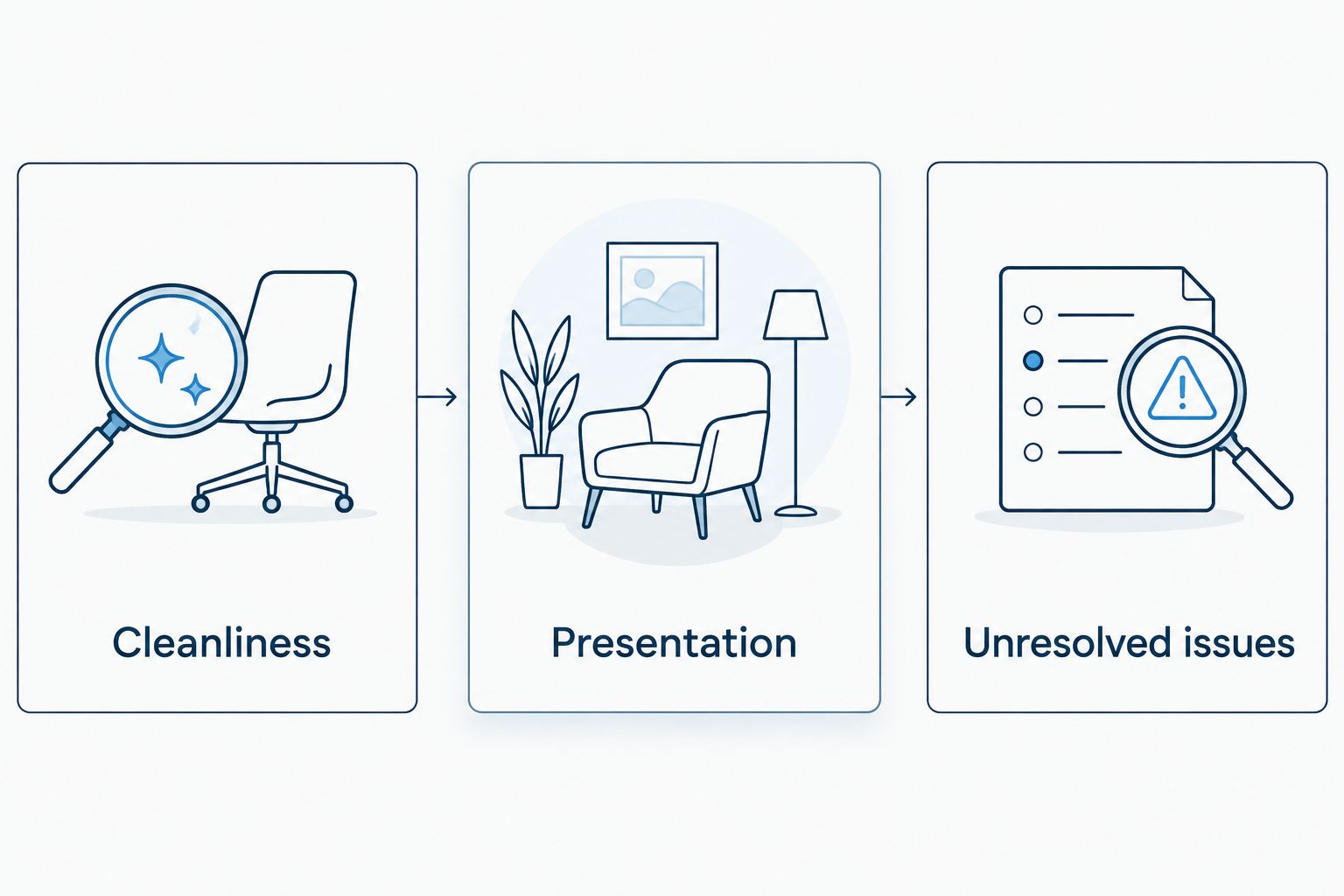
Use 3 release checks in your 2026 turnover routine: cleanliness, presentation, and unresolved issues. Look for hair, crumbs, streaks, odors, misplaced items, and anything already reported but not resolved.
What to check before marking the rental ready
- Cleanliness: Inspect bedding, bathroom surfaces, kitchen counters, floors, and accessible appliance interiors.
- Presentation: Confirm the agreed bed setup, furniture placement, towels, and guest supplies.
- Unresolved issues: Read the cleaner's report and assign responsibility for damage, access problems, or maintenance.
Photographs can document visible conditions, but they do not confirm how a room smells or whether a hidden area was cleaned. Combine photos with an actual walk-through whenever your operating arrangement allows.
Final inspection pros:
- Catches visible misses before arrival.
- Separates cleaning completion from property readiness.
- Gives reported problems an explicit decision point.
Final inspection cons:
- Adds work after the clean.
- Photos and visual checks cannot verify every condition.
Best for: Remote hosts, detailed properties, and rentals with recurring cleanliness complaints.
Verdict: Use a final inspection before releasing the rental for arrival.
5. Arrival-window handoff: best for back-to-back bookings
A good cleaning routine needs accurate access and booking information. Confirm the actual departure, approved entry method, incoming arrival, and the person responsible for resolving delays.
For each 2026 booking, keep 1 property-specific handoff record that contains the current instructions. Update the same record when plans change rather than leaving conflicting details across separate message threads.
Distinguish between the cleaner gaining entry, finishing the cleaning, and the property being ready. If a guest leaves late or a problem expands the scope, ask for an updated plan before accepting an early arrival request.
Arrival-window handoff pros:
- Gives the cleaner current access information.
- Makes delays and exceptions easier to communicate.
- Clarifies who decides whether the property is ready.
Arrival-window handoff cons:
- Depends on timely updates from the host or manager.
- Cannot create extra cleaning time when the booking window changes.
Best for: Hosts coordinating back-to-back reservations or managing the rental remotely.
Verdict: Use a confirmed handoff; skip assumptions based on the original calendar entry.
6. Planned detail cleaning: best for buildup between turnovers
Turnover cleaning prepares the rental for the next guest. Planned detail cleaning addresses work that needs a separate scope, such as buildup around fixtures, accessible vents, baseboards, or areas behind movable furnishings.
In a Pinellas County rental, include entry tracks and other places where guests bring in sand. Check for dampness and musty odors, but treat recurring moisture as an issue to investigate—not something to cover with fragrance.
Schedule detail work around the property's condition and use. Agree on access and the exact tasks before booking; ordinary cleaning is not a substitute for repairing leaks or addressing a moisture source.
Planned detail cleaning pros:
- Gives easily postponed tasks a defined place.
- Keeps the turnover scope realistic.
- Creates opportunities to spot maintenance concerns.
Planned detail cleaning cons:
- Requires separate planning and scope agreement.
- Does not replace cleaning after each guest departure.
Best for: Frequently occupied properties and rentals with visible buildup beyond the routine checklist.
Verdict: Use condition-based detail cleaning alongside regular turnovers, not instead of them.
How these practices are ranked
The ranking puts repeatable coverage first, followed by textiles, tool handling, verification, coordination, and periodic detail work. It prioritizes practices you can define, assign, and check rather than promises about review scores.
Airbnb Superhost status involves requirements beyond cleaning. No checklist or cleaning provider can guarantee the designation; these recommendations address the cleaning process you control.
Which cleaning practices should you choose?
Start with the property-specific checklist and final inspection. Together, they define the work and check the result. Add a linen process and tool separation before expanding into more elaborate reporting.
If you need local help putting that scope into practice, request a straightforward property-specific quote. Tampatopshelf vacation-rental cleaning serves St. Petersburg and Pinellas County hosts; discuss your layout, laundry arrangements, access, and turnover expectations before agreeing on the work.
FAQ
What's the best cleaning practice for protecting Airbnb Superhost status?
A property-specific turnover checklist paired with a final inspection is the strongest starting point. The checklist defines the work, and the inspection checks the finished rental; neither guarantees Superhost status.
Should I replace sheets after every Airbnb guest?
Replace used sheets and pillowcases between guest stays. Inspect the clean replacements for stains, damage, and dampness before making the bed.
Is a deep clean enough between Airbnb bookings?
A deep clean does not replace cleaning between guest stays. You still need to remove used linens, clean the agreed surfaces, reset supplies, and inspect the rental after each departure.
How do I check an Airbnb cleaning when I live elsewhere?
Use a property-specific checklist, agreed completion photos, and a clear process for reporting exceptions. Arrange an on-site inspection when needed because photos cannot confirm odors or every hidden surface.
What should I do if a guest reports a cleaning problem?
Acknowledge the specific problem and arrange an appropriate response with the person responsible for the property. Record the missed task and update the checklist or inspection process to address the cause.
Can a cleaning company guarantee my Superhost rating?
No cleaning company can guarantee Airbnb Superhost status. Cleaning is only part of the hosting experience, and Airbnb determines eligibility under its program requirements.
Who offers local vacation-rental cleaning in St. Petersburg?
Tampatopshelf provides vacation-rental cleaning in St. Petersburg and Pinellas County. The local team is licensed, insured, and reachable by phone or text for a property-specific quote.
One last thing
Do not use fragrance as the final test of a clean rental. If the property smells musty after cleaning, report it and investigate the source instead of adding a stronger scent.
For your 2026 routine, make the final question specific: Is the property ready, or is the cleaning merely finished? That distinction gives your team a clear point to stop, report a problem, and get it resolved.
Related guides
- Airbnb turnover cleaning checklist
- How long an Airbnb turnover cleaning takes
- Cleaning tips for sand and salt at beach vacation rentals
Request a free quote by phone or text. Share your property's location, layout, and turnover needs so the local team can provide a straightforward quote tailored to your rental.


