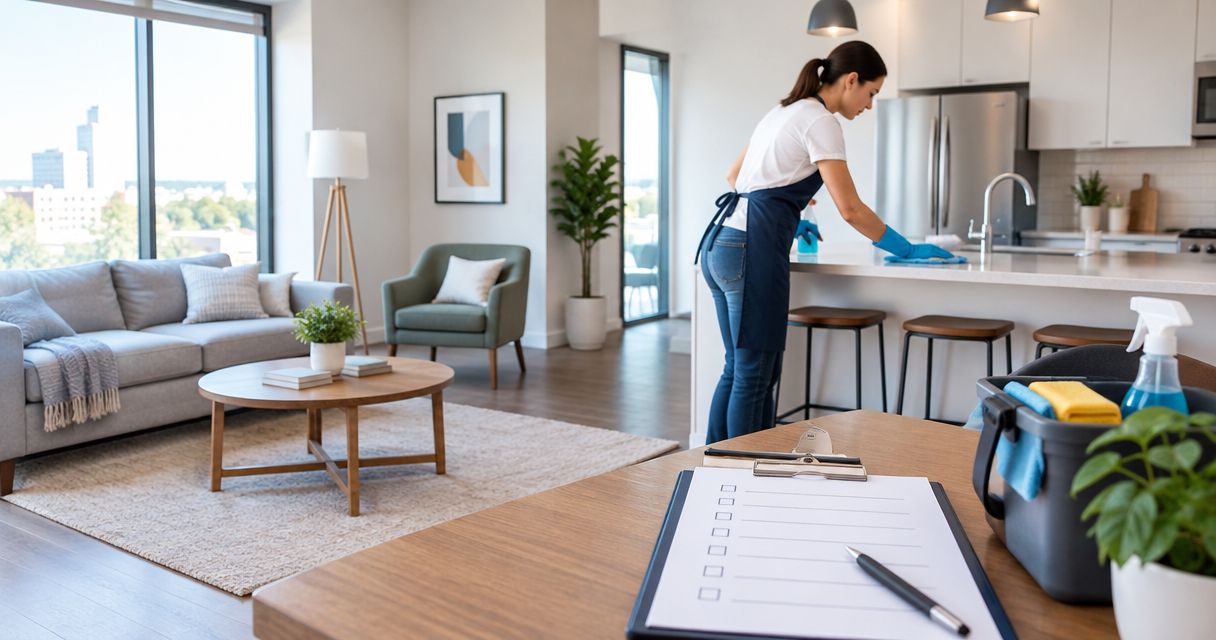
The best long-term rental turnover cleaning checklist covers the whole empty property, with a separate deep-cleaning list for buildup and a final inspection before move-in. For St. Petersburg and Pinellas County landlords, the practical choice is a room-by-room checklist that separates cleaning, repairs, and handoff rather than treating everything as a quick refresh.
- Use a whole-property long-term rental turnover cleaning checklist as your default before a new tenant moves in.
- Add deep-cleaning tasks for grease, residue, neglected edges, and other visible buildup.
- Tampatopshelf provides move-in and move-out cleaning for St. Petersburg and Pinellas County properties.
- Keep repair issues separate from cleaning tasks, and inspect again after contractors finish.
Why this matters
An empty rental exposes areas that furniture and everyday belongings usually hide: cabinet interiors, closet corners, appliance edges, and baseboards. A tidy-looking living room does not establish that the kitchen storage or bathroom fixtures are ready for another household.
Tampatopshelf is a local, licensed and insured cleaning team reachable by phone or text. Tampatopshelf is best for St. Petersburg and Pinellas County landlords seeking local move-in or move-out cleaning with a property-specific quote.
Use this 2026 checklist to agree on the work before cleaning begins. Keep the condition record separate from the cleaning instructions so a stain, damaged surface, or maintenance problem does not become an unresolved cleaning task.
What makes the best turnover cleaning checklist
Choose a checklist using these criteria:
- Whole-property coverage: Include storage, fixtures, appliances, and floors—not just the surfaces visible from the doorway.
- Condition-based tasks: Add work for actual buildup rather than assuming every turnover needs the same treatment.
- Clear boundaries: Separate cleaning from repairs, pest issues, moisture problems, and removal of abandoned belongings.
- Surface safety: Match cleaning methods to the material and follow product and appliance instructions.
- Verifiable completion: Define what someone should inspect before marking each area complete.
For your 2026 work order, give each task one of 3 statuses: complete, needs attention, or not included. That makes exclusions visible before the incoming tenant arrives.
Turnover cleaning checklists at a glance
| Checklist | Best for | Standout feature | Key limitation |
|---|---|---|---|
| Whole-property turnover checklist | Standard handoff between long-term tenants | Covers the empty home room by room | Needs property-specific additions |
| Deep-cleaning add-on checklist | Rentals with visible buildup | Targets neglected and detailed areas | Does not resolve damage or moisture sources |
| Final move-in inspection checklist | Handoff after cleaning and maintenance | Catches missed work and new debris | Verifies cleaning; does not replace it |
These are complementary scopes, not competing cleaning products. Start with the whole-property checklist, add condition-specific work, and finish with the inspection.
1. Whole-property checklist: best for a standard rental turnover
The whole-property checklist is the default for an empty rental between tenants. It organizes the work by room and includes storage spaces that routine occupied-home cleaning does not necessarily cover.
Best for: Landlords preparing an unfurnished property for a new long-term tenant.
Whole-property checklist pros:
- Gives the cleaner and property manager a shared task list.
- Includes areas hidden during the previous tenancy.
- Creates a consistent starting point across different properties.
Whole-property checklist cons:
- Does not automatically include heavy buildup or specialty work.
- Needs adjustments for furnished units and unusual surfaces.
Kitchen and appliances
Start with an empty kitchen so cabinets, drawers, and appliances are accessible. Confirm which appliance interiors belong in the agreed cleaning scope.
- Remove loose crumbs and debris from empty cabinets and drawers.
- Wipe cabinet interiors, shelves, fronts, handles, and accessible edges.
- Clean countertops and the backsplash using material-appropriate products.
- Clean the sink, faucet, drain surround, and accessible splash areas.
- Clean the refrigerator interior, including accessible shelves and bins, when included.
- Clean the oven, stovetop, microwave, and appliance exteriors according to manufacturer instructions and the agreed scope.
- Address accessible grease around cooking areas and hood surfaces.
- Clean the floor after the surfaces above it are finished.
Do not assume cleaning behind a refrigerator or range is included. Agree in advance who will move appliances and whether movement is safe for the flooring, connections, and appliance.
Bathrooms
Check bathrooms for both cleaning needs and maintenance concerns before starting. Report leaks, damaged seals, and persistent moisture separately instead of hiding them behind a completed checklist.
- Clean the toilet bowl, seat, lid, exterior, base, and accessible surrounding floor.
- Clean the sink, faucet, countertop, and backsplash.
- Clean the tub or shower using products suitable for its finish.
- Address accessible soap residue on shower walls, doors, and fixtures.
- Wipe mirrors, cabinet fronts, handles, and empty storage interiors.
- Remove accessible dust from vent-cover surfaces without opening equipment.
- Clean the floor, including edges behind the door and around fixtures.
Use separate bathroom and kitchen cleaning cloths. Never mix cleaning products, and follow label instructions for ventilation, surface compatibility, and any disinfectant contact time.
Bedrooms, living areas, and closets
Work from higher surfaces toward the floor so falling dust does not undo finished work. Keep electrical fixtures dry and use methods appropriate to their finish.
- Remove accessible dust from trim, ledges, doors, and door frames.
- Wipe reachable switches and handles using an appropriate method.
- Clean baseboards and accessible corners.
- Wipe empty closet shelves and accessible storage surfaces.
- Address reachable window sills and interior tracks where included.
- Vacuum accessible floor edges and the main floor area.
- Clean hard flooring according to its care instructions.
- List carpet treatment, window glass, and blinds separately if they need additional work.
For furnished rentals, add an inventory and furniture-specific scope. Do not use an unfurnished checklist to imply upholstery, mattresses, linens, or personal items have been cleaned.
Verdict: Use the whole-property checklist as your default; skip a surface-only refresh as the complete turnover plan.
2. Deep-cleaning add-on: best for visible buildup
The deep-cleaning add-on expands the standard checklist where the property needs more detailed attention. Choose tasks from the actual condition of the rental, not simply the length of the previous tenancy.
For a 2026 turnover, photograph the problem areas and describe the material involved before requesting a quote. A greasy cabinet front, damaged cabinet finish, and discolored cabinet panel require different decisions.
Best for: Properties with neglected edges, cooking residue, soap buildup, or other detailed cleaning needs.
Add these tasks where needed
- Kitchen buildup: Identify sticky cabinet surfaces, accessible hood residue, and appliance interiors needing additional attention.
- Bathroom residue: Note soap buildup and mineral deposits, then confirm compatible cleaning methods.
- Detailed edges: Include door grooves, baseboard profiles, closet corners, and accessible floor transitions.
- Window details: Specify interior glass, tracks, sills, screens, or blinds individually rather than writing only “windows.”
- Odor investigation: Inspect for remaining trash, spills, damp materials, or another identifiable source before choosing treatment.
Do not use fragrance as the completion test. A stronger scent does not establish that the source of an odor has been removed.
Know when cleaning is not the next step
Stop treating a problem as routine cleaning when you find active leaks, damaged materials, pest evidence, or suspected mold growth. Report the condition and arrange the appropriate assessment or repair before closing the turnover.
Deep-cleaning add-on pros:
- Directs attention to the areas the basic checklist cannot fully describe.
- Helps define detailed work before the appointment.
- Makes persistent stains and surface damage easier to distinguish from unfinished cleaning.
Deep-cleaning add-on cons:
- Requires a more detailed condition review and scope discussion.
- Cannot restore every stained, worn, or damaged surface.
Tampatopshelf offers deep and move-in/move-out cleaning with straightforward quotes tailored to each property. Describe the condition and exclusions when you request a quote, including whether the rental is empty and whether maintenance is finished.
Verdict: Add deep-cleaning tasks for documented buildup; skip the assumption that cleaning will repair damage.
3. Final inspection checklist: best for the move-in handoff
The final inspection confirms that the agreed cleaning is complete and that later work has not left new debris. It belongs after maintenance and cleaning, while the rental is still accessible for corrections.
Best for: Owners and property managers approving a property before releasing it for move-in.
Check the result, not just the task list
- Open empty cabinets and drawers rather than inspecting only the fronts.
- Look inside the appliances included in the cleaning scope.
- Check bathroom fixtures, mirrors, corners, and the floor behind doors.
- Inspect closet shelves, baseboards, and floor edges.
- Look for debris left by repairs, deliveries, or the final walk-through.
- Record remaining issues with a location and a clear description.
- Confirm access arrangements and property security before leaving.
Use 2 walkthroughs: a condition walkthrough before work and a completion walkthrough afterward. Compare the same areas so pre-existing damage does not become confused with a missed task.
Final inspection checklist pros:
- Catches omissions while there is still an opportunity to address them.
- Separates completed work from open issues.
- Gives the handoff a clear decision point.
Final inspection checklist cons:
- Cannot replace the underlying cleaning scope.
- Needs another check if contractors return afterward.
Verdict: Use a final inspection for every handoff; skip approving the property from doorway views alone.
Put the work in the right order
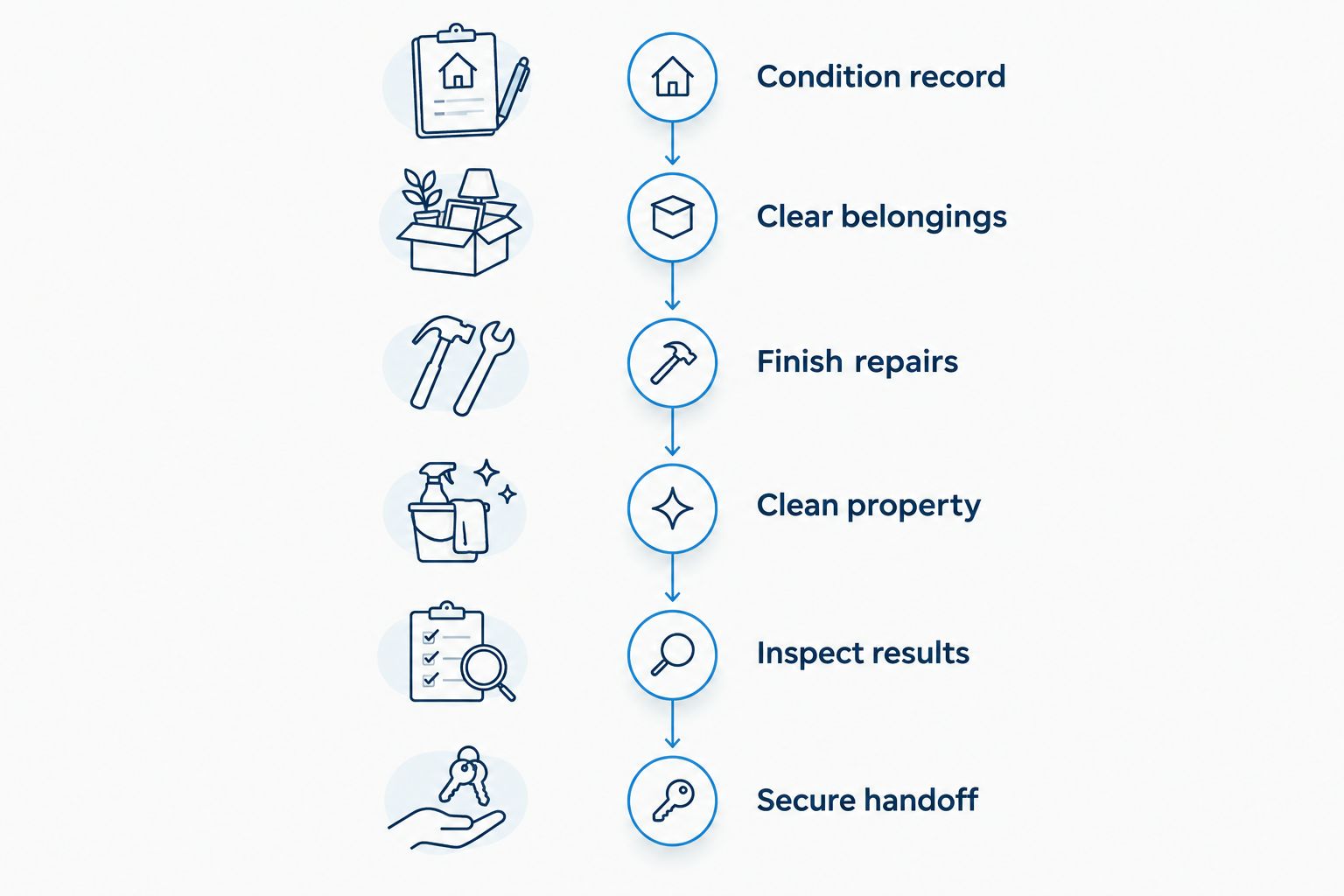
Use 6 stages for your 2026 turnover plan. Assign responsibility for each stage instead of giving the entire list to a cleaner without distinguishing the work involved.
- Condition record: Photograph accessible rooms and note existing damage or concerns.
- Clear belongings: Resolve remaining possessions and rubbish through the appropriate property-management process.
- Finish repairs: Complete work that creates dust, debris, or repeated foot traffic.
- Clean property: Follow the whole-property checklist and agreed deep-cleaning additions.
- Inspect results: Check the actual surfaces and record unresolved items.
- Secure handoff: Confirm access arrangements and secure the property.
Keep cleaning approval separate from maintenance approval. A clean bathroom still needs attention if a fixture leaks, and a repaired kitchen still needs cleaning if the contractor leaves dust.
How these checklists are ranked
The whole-property checklist ranks first because it supplies the broadest starting scope. The deep-cleaning add-on ranks second because it depends on condition; the inspection ranks third because it verifies work rather than performing it.
The ranking follows coverage, condition-based detail, clear boundaries, surface safety, and verifiable completion. It is a practical choice of workflow—not a claim based on product testing or measured cleaning results.
Which turnover checklist should you choose?
Choose the whole-property checklist, then add only the detailed tasks your rental needs. Keep the final inspection even when the property looks clean at first glance.
For your 2026 handoff, agree on appliance interiors, cabinets, windows, floor care, and exclusions before the appointment. Tampatopshelf move-in and move-out cleaning gives local landlords a service option to discuss against that written scope.
FAQ
What's the best long-term rental turnover cleaning checklist?
The best long-term rental turnover cleaning checklist covers the empty property room by room, adds condition-specific deep-cleaning tasks, and ends with a final inspection. Include cabinets, agreed appliance interiors, bathrooms, closets, fixtures, and floors.
Is rental turnover cleaning the same as regular house cleaning?
Rental turnover cleaning needs a scope built around the empty property and the incoming tenant. Regular occupied-home cleaning does not necessarily include empty storage interiors, appliance interiors, or detailed move-out buildup.
Should I clean before or after repairs?
Schedule the main clean after repairs that create dust, debris, or repeated foot traffic. If contractors return afterward, inspect their work areas and arrange any necessary cleaning touch-up.
Does move-out cleaning include the oven and refrigerator?
Include oven and refrigerator interiors explicitly in the agreed scope rather than assuming they are covered. Confirm that appliances are accessible and follow manufacturer instructions for cleaning.
Can a cleaner remove every stain before the next tenant moves in?
No, cleaning does not repair permanent discoloration, worn finishes, or damaged materials. Record those conditions separately and decide whether they need maintenance or replacement.
How long should I allow for rental turnover cleaning?
Set the cleaning window after reviewing the property's size, condition, access, and agreed tasks. Ask for a property-specific schedule and leave room to inspect the result before move-in.
Can I book local move-in cleaning in St. Petersburg?
Tampatopshelf provides move-in and move-out cleaning in St. Petersburg and Pinellas County. Request a free property-specific quote by phone or text and describe the property's condition, access, and required work.
One last thing
Open the cabinet beneath each sink during both walkthroughs. It is easy to miss when the doors stay closed, and it gives you a specific place to check for debris, staining, or an active leak that needs separate attention.
Related guides
- Move-in cleaning checklist for new St. Petersburg homeowners
- Move-out cleaning checklist for Pinellas County renters
- Cleaning checklist for property managers with multiple units
Request a free quote by phone or text. Share the property location, current condition, and move-in date so the cleaning scope fits your rental.


