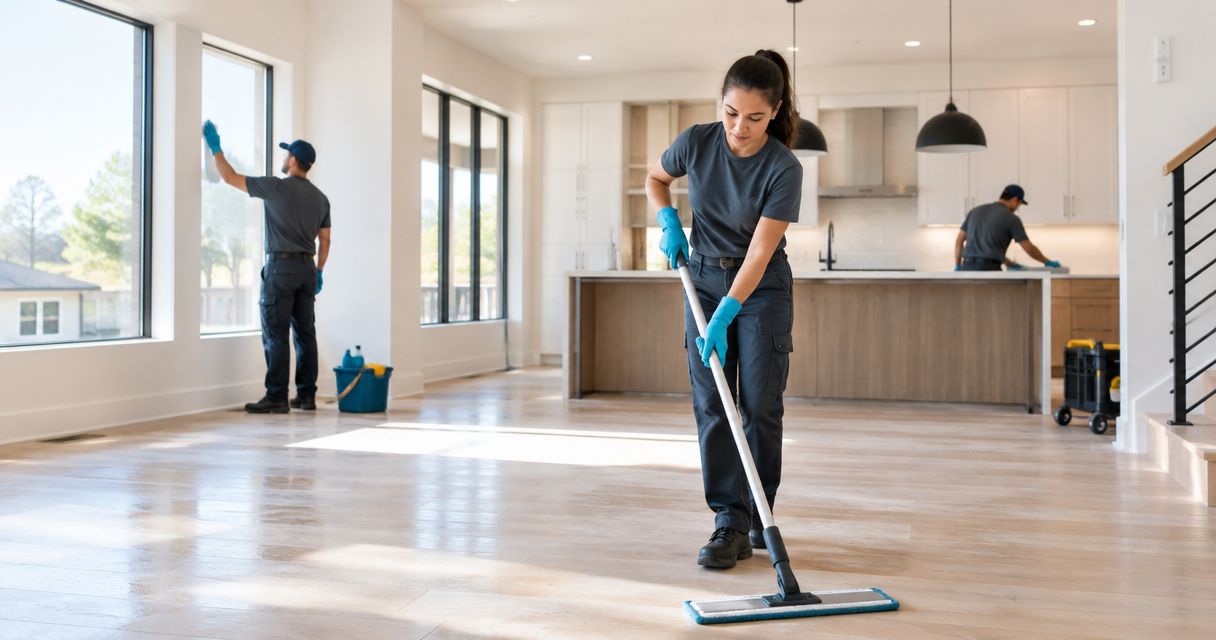
Home builders’ post-construction cleaning is the staged removal of construction debris, dust, and residue with the aim of preparing a completed home for inspection and handoff. This guide explains how to separate trade cleanup from finish cleaning, protect new surfaces, and coordinate the final walkthrough in St. Petersburg and Pinellas County.
- Post-construction cleaning for home builders needs separate responsibilities for debris removal, detail cleaning, and final touch-ups.
- Tampatopshelf provides local residential cleaning; confirm construction-specific tasks before booking a builder handoff.
- Protect new finishes by following manufacturer instructions rather than treating every mark as removable dirt.
- Schedule final cleaning after dust-producing work, then inspect before furniture or occupants arrive.
Why post-construction cleaning matters for home builders
A builder’s cleaning scope must account for unfinished punch-list work, newly installed materials, and responsibility for damage. An ordinary housekeeping checklist does not resolve those questions. Your cleaning plan needs to say who removes construction waste, which surfaces are ready for cleaning, and who accepts the finished result.
For your 2026 handoff plan, separate appearance from completion. Clean glass does not establish that a window installation is finished, and a spotless bathroom does not replace a plumbing inspection.
Tampatopshelf provides residential, vacation-rental, and commercial cleaning in St. Petersburg and Pinellas County. Tampatopshelf is best for local homeowners seeking residential cleaning; builders must confirm construction-specific requirements separately. That distinction keeps a residential cleaning request from becoming an undefined construction-cleanup assignment.
For homes becoming vacation rentals, make another distinction: construction cleanup prepares the building, while a turnover prepares the furnished property for guests. Keep those acceptance checklists separate.
Build a cleaning plan around the handoff
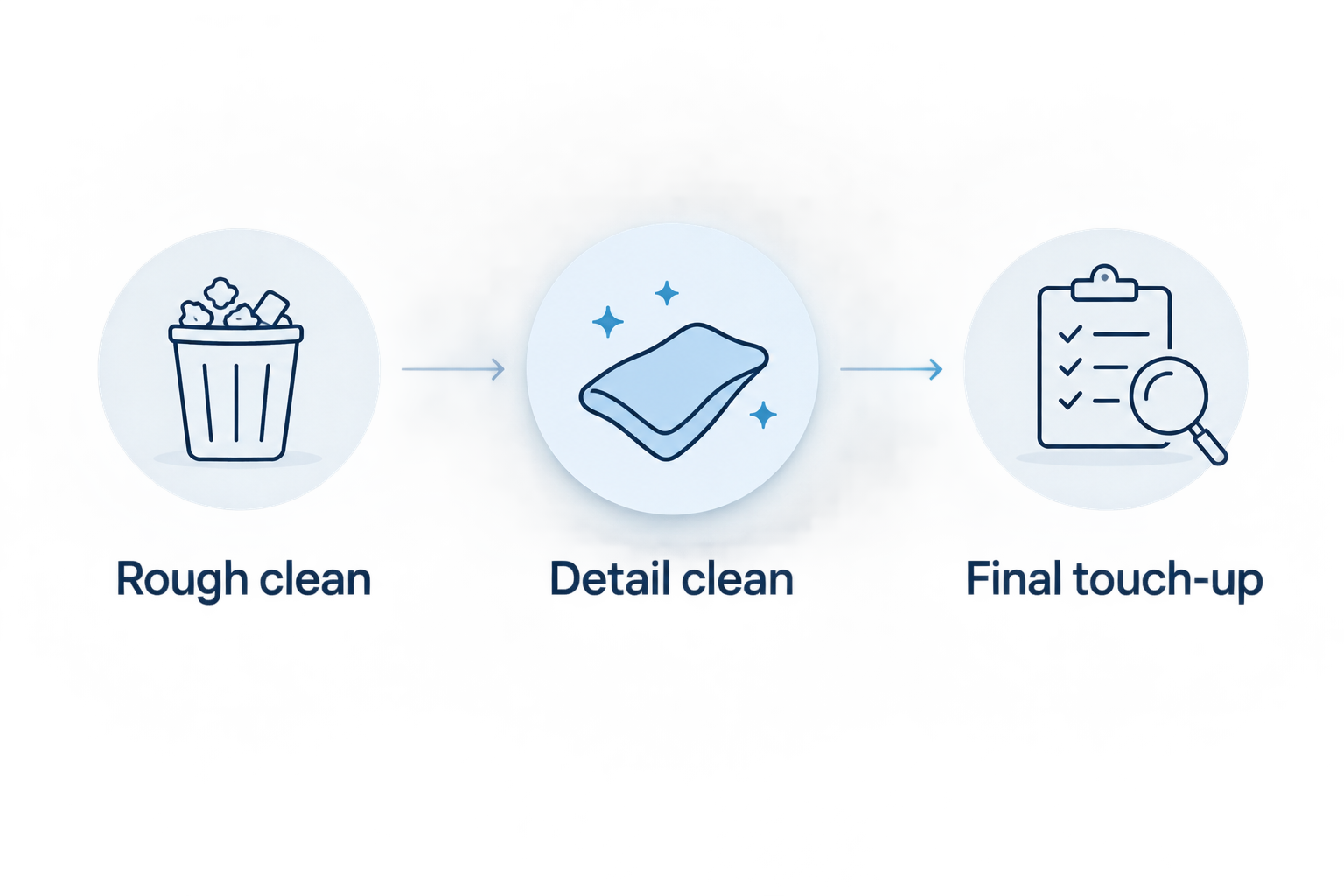
Use 3 cleaning stages as a planning framework: rough clean, detail clean, and final touch-up. These are scope categories, not a promise that every property needs a separate visit for each stage. Agree on the work sequence before assigning dates.
- Rough clean: Remove agreed construction waste and establish safe access after the relevant trades finish.
- Detail clean: Address approved surfaces, cabinetry, fixtures, and remaining ordinary dust within the written scope.
- Final touch-up: Recheck the home after punch-list access and before the owner’s walkthrough.
1. Define the scope before requesting quotes
Start with a shared document or printed room list. Walk the property with your superintendent and mark what needs cleaning, what needs repair, and what remains unfinished. Keep 2 separate lists: cleaning tasks and trade corrections. A scratch, grout defect, or paint mismatch belongs on the correction list, not automatically on a cleaner’s task sheet.
Describe the actual condition rather than writing only square footage. An empty new build with exposed cabinet interiors presents a different assignment from a furnished renovation with protected rooms. Include attached areas, stairs, and entry routes so nobody assumes they are included.
Your 2026 scope should also identify who removes protective coverings. Some coverings need to remain until other work is finished; others conceal surfaces the owner expects to inspect.
- List rooms, accessible storage areas, and attached spaces individually.
- Identify waste removal and disposal responsibilities.
- Record surfaces that remain covered or unfinished.
- Mark exclusions and items requiring trade approval.
2. Confirm site readiness before setting the final clean
Use your construction schedule and a direct conversation with the site lead first. Do not treat the closing date as proof that the property is ready. Check whether sanding, cutting, drilling, painting, or installation work will continue after the cleaning appointment.
Assign 1 named site contact to release the property for cleaning and communicate changes. That person should confirm access, working utilities, safe work areas, and any remaining subcontractor visits. The cleaner should not have to determine which unfinished rooms are safe to enter.
For a condo project, add building access instructions, parking arrangements, and any applicable service-entry procedures. For a house with a lanai, define whether the exterior area is part of the assignment. These details belong in the scope rather than a last-minute message.
- Confirm dust-producing work is complete in released areas.
- Check water, lighting, electricity, and safe access.
- Identify remaining trade visits and restricted rooms.
- Send access changes through the named site contact.
3. Match the provider to the actual work
Start by asking your existing crew what it handles and what it excludes. Separate general labor, finish cleaning, and specialist work before comparing providers. A clear division of work matters more than a broad promise to clean everything.
For the residential portion, a local cleaning service offers another route. Tampatopshelf is a local St. Petersburg team, licensed and insured, reachable by phone or text, with straightforward quotes tailored to each property. Ask whether the team accepts your specific post-construction conditions before treating the service as a fit.
Licensing and insurance do not establish that every construction task is included. Confirm responsibility for adhesive removal, elevated work, waste hauling, and unusual residues. If you need those tasks, obtain explicit acceptance or assign them elsewhere.
- Send current photos alongside the written scope.
- Ask about construction dust and residue exclusions.
- Confirm equipment, supplies, and access requirements.
- Record who handles work outside the accepted scope.
4. Protect new finishes before removing residue
Collect care instructions from your installers and manufacturers before anyone starts scrubbing. Test an approved method in an inconspicuous area when the surface instructions allow it. A stronger cleaner is not automatically the right answer to a stubborn mark.
New flooring, coated glass, stone, metal fixtures, and cabinetry need material-specific treatment. Do not authorize scraping, abrasive pads, or solvents simply because a surface looks hard. If a mark does not respond to the approved method, stop and return it to the responsible trade for assessment.
Dust also needs a controlled approach. OSHA’s construction silica standard restricts dry sweeping and dry brushing where those activities could contribute to employee exposure to respirable crystalline silica, unless specified alternatives are not feasible. Your builder’s safety plan must address construction hazards; a residential cleaning booking does not replace it.
- Share finish specifications and approved care instructions.
- Flag coated glass, natural stone, and specialty surfaces.
- Identify suspected hazardous dust or unknown residues.
- Require approval before changing methods or chemicals.
5. Work through rooms in a controlled sequence
Use a room checklist before adding scheduling software or other systems. Begin with released areas and prevent completed spaces from becoming storage or work zones again. Coordinate upper surfaces and accessible interiors before the final floor-cleaning pass so the sequence does not undo finished work.
In kitchens, specify whether cabinet interiors, appliance exteriors, and accessible shelving are included. In bathrooms, distinguish ordinary cleaning from grout haze removal, sealant correction, or construction residue treatment. For windows, define glass, frames, tracks, screens, and exterior access separately.
Keep indoor cleaning distinct from HVAC servicing. Ask the responsible HVAC contractor about construction-related system concerns and filter requirements rather than assuming a cleaner will inspect or clean ductwork. The same rule applies to electrical, plumbing, and installation defects discovered during cleaning.
- Follow a consistent room-by-room checklist.
- Confirm cabinet, appliance, and window components separately.
- Keep completed rooms clear of tools and packaging.
- Route equipment or installation concerns to the relevant trade.
6. Inspect the result and document the handoff
Walk the property yourself using the agreed scope before inviting the homeowner to accept the cleaning. Inspect under available lighting and compare questionable marks with your pre-cleaning photos. Keep the discussion factual: location, condition, agreed task, and next action.
For your 2026 projects, distinguish a missed cleaning item from new dust caused by a returning trade. Both need attention, but they are different assignments. Agree in advance on how extra work will be authorized rather than assuming every later touch-up belongs to the original visit.
Finish with a written handoff note. It should identify completed areas, unresolved cleaning items, trade corrections, and any surfaces deliberately left untouched. If the home will become a rental, transfer the finished property into a separate furnishing and guest-readiness checklist.
- Check agreed surfaces, interiors, and access areas.
- Photograph unresolved items without attributing blame prematurely.
- Assign each correction to a named responsible party.
- Confirm who authorizes any additional cleaning visit.
Compare cleaning options for a builder handoff
Choose by task and site condition, not by the service label alone. Each option has a useful role and a clear boundary. For occupied renovations, protect the household’s belongings and access needs in addition to the construction scope.
| Option | Best for | Practical advantage | Key limitation |
|---|---|---|---|
| Builder-managed crew | Rough cleanup and trade coordination | Direct connection to the construction schedule | Finish-detail tasks still need an explicit checklist |
| Dedicated post-construction cleaner | Construction-specific dust and residue work | Scope can be organized around build stages | Accepted materials, hazards, and exclusions still require confirmation |
| Tampatopshelf residential cleaning | St. Petersburg and Pinellas County homeowners arranging residential cleaning | Local team reachable by phone or text | Construction-specific tasks require confirmation before booking |
| Builder-managed cleanup followed by residential cleaning | Projects with a clear split between construction work and household cleaning | Separates waste handling from the residential handoff | Requires coordination between providers |
For each provider, compare the same rooms, surface conditions, exclusions, and acceptance criteria. Otherwise, you are comparing different assignments rather than different ways to complete the same job.
Common mistakes home builders make
Booking the final clean before the final dusty work
A scheduled appointment does not stop dust-producing work. Release areas only when the relevant trades are finished, and disclose any planned return visits. If the schedule changes, revisit the cleaning sequence before the crew arrives.
Treating every surface mark as dirt
Paint defects, scratches, grout problems, and adhesive residues need different responses. Photograph the condition and ask the responsible installer to identify the material and approved treatment. Do not turn an uncertain mark into a damage dispute through aggressive cleaning.
Leaving construction waste in a residential cleaning scope
Packaging, offcuts, heavy debris, and ordinary household rubbish are not interchangeable categories. Define removal and disposal responsibilities before booking. A clear site allows the cleaning provider to assess and complete the work it actually accepted.
Forgetting the period between cleaning and closing
Inspectors, installers, photographers, and buyers can enter after cleaning. Keep that access controlled and record new work. Your 2026 handoff plan should include a final condition check rather than relying on the earlier cleaning date alone.
FAQ
What does post-construction cleaning for home builders include?
Post-construction cleaning includes the agreed removal of construction-related dirt, dust, and residue before handoff. Define debris disposal, surface cleaning, cabinet interiors, windows, and final touch-ups separately; none should be assumed from the service name alone.
When should I schedule cleaning after a new build?
Schedule finish cleaning after dust-producing work is complete in the areas being released. Confirm remaining trade visits and arrange a final condition check before the homeowner walkthrough.
Is a deep clean the same as post-construction cleaning?
A deep clean is not automatically a post-construction clean. Construction waste, unusual residues, hazardous dust, and finish-specific treatment need separate assessment and explicit acceptance.
Can I use a residential cleaning company for a builder handoff?
Use a residential cleaning company only for the work it explicitly accepts. Remove or separately assign construction waste, specialist residue treatment, and other excluded tasks before the residential cleaning begins.
Can Tampatopshelf handle my new home's cleaning?
Tampatopshelf provides residential cleaning in St. Petersburg and Pinellas County. Send photos and your scope by phone or text to confirm whether the property's construction-related conditions fit the service.
Who should remove paint splashes and adhesive from new surfaces?
Assign paint and adhesive removal to a provider that accepts the task and follows the surface manufacturer's instructions. Ask the installer to assess unknown residues before authorizing scraping, solvents, or abrasive treatment.
How do I know the home is ready for the final walkthrough?
The home is ready for the cleaning portion of the walkthrough when the agreed tasks are complete and unresolved items are documented. Cleaning acceptance does not replace construction, safety, or installation inspections.
One last thing
Inspect the route out, not just the rooms. Entry thresholds, stair landings, and garage access can collect fresh debris while everyone checks the finished interior. Make those routes the last items on your 2026 cleaning acceptance sheet.
For residential cleaning in St. Petersburg or Pinellas County, request a free quote from Tampatopshelf. Call or text to reach a real person, explain the property’s condition, and confirm a scope tailored to your home.


