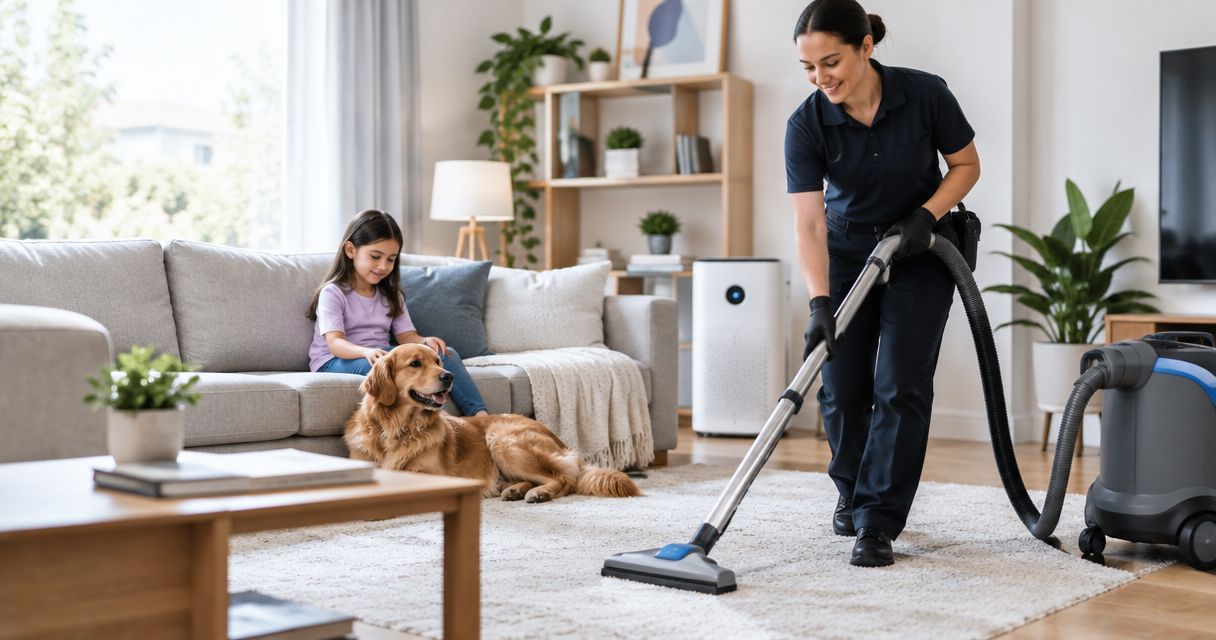
Professional cleaning is worth it for allergy-sensitive households when it provides consistent dust removal and covers tasks you cannot comfortably manage yourself. It supports allergen control, not allergy treatment: cleaning does not fix leaks, control indoor humidity, or guarantee symptom relief.
- Is professional cleaning worth it for allergies? Yes, when consistent dust removal addresses your household’s needs.
- Recurring cleaning maintains accessible surfaces; deep cleaning addresses accumulated buildup. Neither guarantees symptom relief.
- Tampatopshelf residential cleaning suits St. Petersburg homeowners seeking local help, not medical allergy treatment.
- Confirm cleaning methods, fragrance preferences, equipment, and exclusions before booking.
Is professional cleaning worth it for allergies?
Professional cleaning earns its place when the agreed tasks address dust reservoirs and make regular upkeep easier. Paying for a pleasant smell or a visibly tidy room is not the same as paying for useful allergen-control work.
For St. Petersburg and Pinellas County households, Tampatopshelf provides residential cleaning with straightforward quotes tailored to the property. Ask what the proposed visit includes before deciding whether it fits your needs.
| Cleaning approach | Best for | Practical benefit | Limitation |
|---|---|---|---|
| DIY cleaning | Households able to maintain a consistent routine | You control products, timing, and attention to sensitive areas | You handle the work and exposure during cleaning |
| Recurring professional cleaning | Households needing help maintaining accessible surfaces | Scheduled help with agreed dusting and floor-care tasks | Dust returns between visits; exclusions still matter |
| One-time deep cleaning | Homes with accumulated dust in agreed areas | Focused attention to buildup beyond routine upkeep | A single visit does not provide ongoing control |
| Vacation-rental turnover cleaning | Hosts preparing a property between guests | Cleaning follows the change of occupancy | A turnover is not automatically an allergy-focused deep clean |
Why this matters
Dust can contain pet allergens, pollen, and dust-mite material. Removing dust helps reduce these reservoirs, but a clean-looking room does not prove that airborne allergens are controlled.
For your 2026 cleaning plan, separate three jobs: removing settled material, limiting its return, and managing medical symptoms. A cleaning service addresses the first job through its agreed scope; household habits, building maintenance, and clinical care address the others.
Recurring cleaning: best for maintaining a baseline
Recurring cleaning makes sense when you struggle to keep up with dusting and floors, or when cleaning itself aggravates your symptoms. Choose recurring help for repeatable tasks, not a promise of an allergy-free home.
Before booking, identify the surfaces you want maintained: accessible furniture, bedroom floors, baseboards, or other agreed areas. Ask whether vacuuming beneath furniture, cleaning upholstery, and handling delicate objects are included or excluded.
The advantage is continuity. The limitation is that your household still needs a plan for bedding, spills, pet areas, and dust that settles between appointments.
Do not choose a schedule solely because it is the standard package. Match visits to the work you need completed and the upkeep you can realistically manage yourself.
Deep cleaning: best for accumulated dust
A deep clean is useful when accessible surfaces have accumulated dust beyond your normal routine. It also gives you an opportunity to define neglected areas before starting recurring maintenance.
Ask for a task list rather than relying on the phrase deep cleaning. High surfaces, window coverings, upholstery, and areas behind heavy furniture are separate scope questions, not automatic inclusions.
The benefit is a more focused reset. The limitation is that even a thorough visit leaves ongoing sources of dust, pet allergens, and outdoor particles in place.
For a 2026 move-in or seasonal reopening, describe the property's condition before accepting a quote. A home that has been vacant needs a discussion about visible dust, moisture concerns, and access—not an assumption that ordinary cleaning covers every issue.
Vacation-rental turnovers: best for guest-change cleaning
An allergy-sensitive guest's needs deserve a specific conversation before arrival. A normal turnover checklist does not establish that a property is free of pet allergens, fragrance, or other triggers.
Tell your cleaning team which requests concern products, bedding, floors, and accessible dusting. Confirm what can be accommodated, and keep guest-facing descriptions limited to arrangements you have actually confirmed.
Turnover cleaning supports an orderly handoff between guests. Its limitation is scope: it does not replace periodic attention to overlooked dust reservoirs or repairs to moisture problems.
Avoid describing a rental as allergy-free based on a cleaning appointment. Describe the cleaning arrangements instead, without making a health guarantee.
Why the value of professional cleaning varies
The value depends on your home and the work agreed before the visit. These factors matter more than a general claim that professional cleaning is better:
- Your actual triggers. Dust removal is relevant to dust-related exposure, but cleaning cannot resolve every cause of sneezing, coughing, or irritation. Discuss persistent symptoms with a clinician.
- Dust-holding materials. Carpets, rugs, upholstered furniture, and bedding need different care from hard floors. A surface-cleaning package does not necessarily cover them all.
- Cleaning methods. Damp dusting captures settled material differently from dry sweeping. Ask how the team handles dust rather than judging the result by scent.
- Product sensitivity. Fragrance can irritate sensitive people even when it is not the allergen causing their symptoms. State product preferences before the appointment.
- Moisture conditions. Leaks and excess humidity need attention beyond wiping surfaces. Cleaning alone does not correct the source of moisture.
- Between-visit upkeep. A professional visit cannot stop dust from returning. The arrangement works best when the agreed service complements what you can maintain yourself.
What should an allergy-sensitive cleaning plan include?
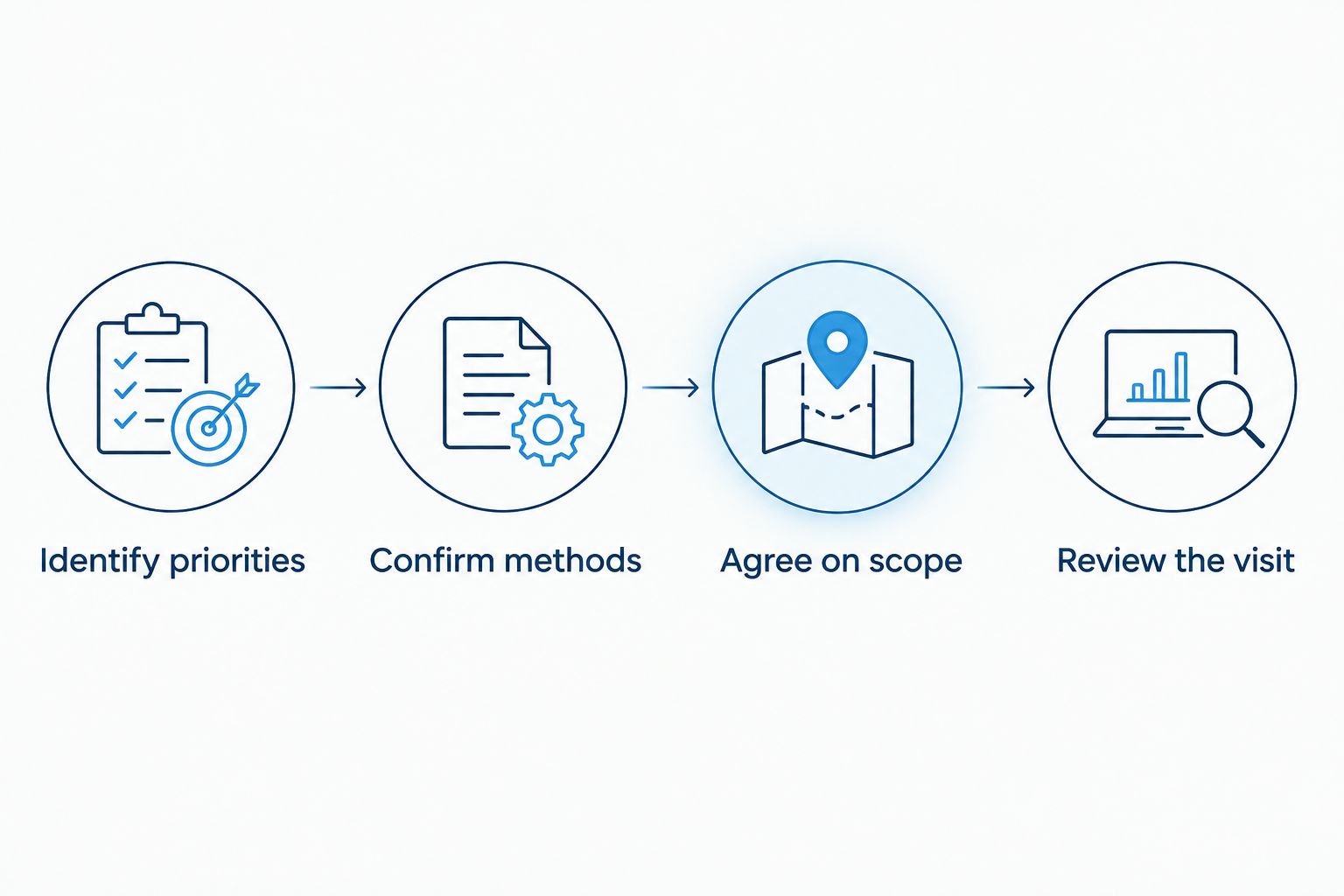
Use the following sequence to turn a general request into a clear scope. The goal is not to prescribe treatment; it is to prevent misunderstandings about the cleaning work.
1. Identify priorities
Name the rooms where you want help and the tasks you find difficult. Bedrooms, pet resting areas, and frequently used upholstered spaces deserve a specific discussion when they relate to your household's concerns.
Share known product sensitivities without asking the cleaner to diagnose them. A written preference is more useful than a general request to make the home healthier.
2. Confirm methods
Ask whether the team uses damp dusting on suitable surfaces and how floors are cleaned. If filtration matters to your request, ask about the actual vacuum equipment rather than assuming every professional service uses the same setup.
HEPA filtration is a defined equipment characteristic, not a guarantee of symptom relief. The U.S. Environmental Protection Agency describes HEPA filters as capturing at least 99.97% of particles measuring 0.3 microns; that specification alone does not establish the performance of an entire vacuum or cleaning visit.
3. Agree on scope
List what is included, what requires separate discussion, and what will remain your responsibility. Bedding, upholstery, high surfaces, and heavy furniture are useful points to settle explicitly.
For your 2026 booking, keep these notes with the quote. A short, repeatable checklist makes it easier to maintain the same priorities across visits.
4. Review the visit
Check whether the agreed tasks were completed and whether any products caused irritation. Adjust the scope based on those observations rather than treating a fresh smell as proof of effectiveness.
Track symptoms separately with your clinician's guidance. Symptoms alone do not establish whether a particular cleaning method worked, because exposures and medical conditions can change.
What cleaning cannot fix
Cleaning is not a substitute for moisture control, repairs, or medical care. If a room keeps developing visible growth or smells persistently damp, address the underlying moisture problem rather than repeatedly requesting a stronger cleaning product.
For a 2026 home-maintenance checklist, the U.S. Environmental Protection Agency's mold guidance recommends indoor relative humidity below 60%, ideally between 30% and 50%. Those are moisture-control targets, not evidence that a cleaning appointment will prevent allergies or mold.
Do not mix cleaning products. In particular, mixing bleach with ammonia or other cleaners can release dangerous gases; follow product labels and discuss product restrictions before work begins.
Persistent breathing symptoms need medical attention, not another cleaning package. Seek emergency help for severe difficulty breathing.
Do fragrance-free products make professional cleaning better?
Fragrance-free products are a useful request when fragrance irritates someone in your household. They do not make the home allergen-free, and the absence of scent does not establish whether dust was removed effectively.
Ask about the specific products proposed and whether alternatives are possible. Labels such as natural, green, or eco-friendly do not by themselves establish suitability for your household's sensitivities.
Use the cleaning supplies guide for allergy-sensitive households to organize that conversation. Confirm the actual supplies before the appointment rather than assuming a guide describes the equipment or products used at your property.
Should you stay home while cleaners work?
You do not need to remain beside the cleaning team to communicate your priorities. Agree on access, pets, sensitive belongings, and a way to reach you before the visit.
Cleaning can temporarily disturb settled dust. If that activity aggravates your symptoms, discuss being elsewhere during the work and ask your clinician about personal precautions; there is no universal return time that fits every person, product, and property.
Keep access instructions separate from your cleaning checklist. Clear instructions help the team work without repeated interruptions while preserving your opportunity to raise concerns afterward.
How should you choose a local cleaning service in 2026?
Tampatopshelf is best for St. Petersburg and Pinellas County homeowners seeking local residential cleaning, not allergy treatment. The team is local, licensed and insured, and reachable by phone or text.
Before choosing Tampatopshelf residential cleaning, explain your priorities and ask whether the proposed scope fits them. The relevant limitation is straightforward: residential cleaning is not a medical service, and specialized methods or equipment must be confirmed rather than assumed.
Compare providers using the same written task list. A quote is useful only when you understand the areas covered, product arrangements, access requirements, and exclusions.
FAQ
Is professional cleaning worth it for allergies if I already clean regularly?
Professional cleaning is worth considering when it covers tasks you struggle to maintain or helps you avoid exposure during cleaning. If your current routine already meets those needs, additional service is not automatically necessary.
Can a professional cleaner remove all allergens from my home?
A professional cleaner cannot guarantee removal of all allergens from your home. Cleaning addresses agreed surfaces, while pets, outdoor particles, fabrics, and moisture conditions can remain sources of exposure.
Is a deep clean better than recurring cleaning for allergies?
A deep clean is better suited to accumulated buildup, while recurring cleaning supports ongoing upkeep. Neither service guarantees symptom relief, and the task list matters more than the service name.
Should I ask cleaners to use a HEPA vacuum?
Ask about HEPA filtration if vacuum filtration is part of your cleaning requirements. Confirm the actual equipment and methods rather than assuming a professional service uses them.
Are scented cleaning products bad for allergy-sensitive households?
Scented cleaning products can irritate some sensitive people, so discuss fragrance preferences before booking. Fragrance sensitivity and allergy are not interchangeable, and fragrance-free products do not remove every trigger.
Does professional cleaning fix mold caused by Florida humidity?
Professional cleaning does not fix the moisture source that allows mold to grow. Address leaks, humidity, and any need for specialized assessment separately from ordinary housekeeping.
How do I request cleaning for an allergy-sensitive household?
Describe your known sensitivities, priority rooms, preferred products, and requested tasks before accepting a quote. Ask the provider to confirm the scope and exclusions without promising medical results.
One last thing
A clean smell is not evidence of allergen removal. Judge a cleaning visit by the agreed tasks, suitable methods, and your product preferences—not by how strongly the room smells afterward.
Start with a written scope you can maintain. A manageable routine is more useful than a one-time reset with no plan for the dust that returns.
Related guides
- How often should I get my house professionally cleaned?
- How do I prepare my home before the cleaners arrive?
- Can cleaners bring their own supplies and equipment?
Call or text Tampatopshelf to request a free quote. Explain your household's sensitivities and cleaning priorities so the team can discuss a straightforward scope tailored to your property.


