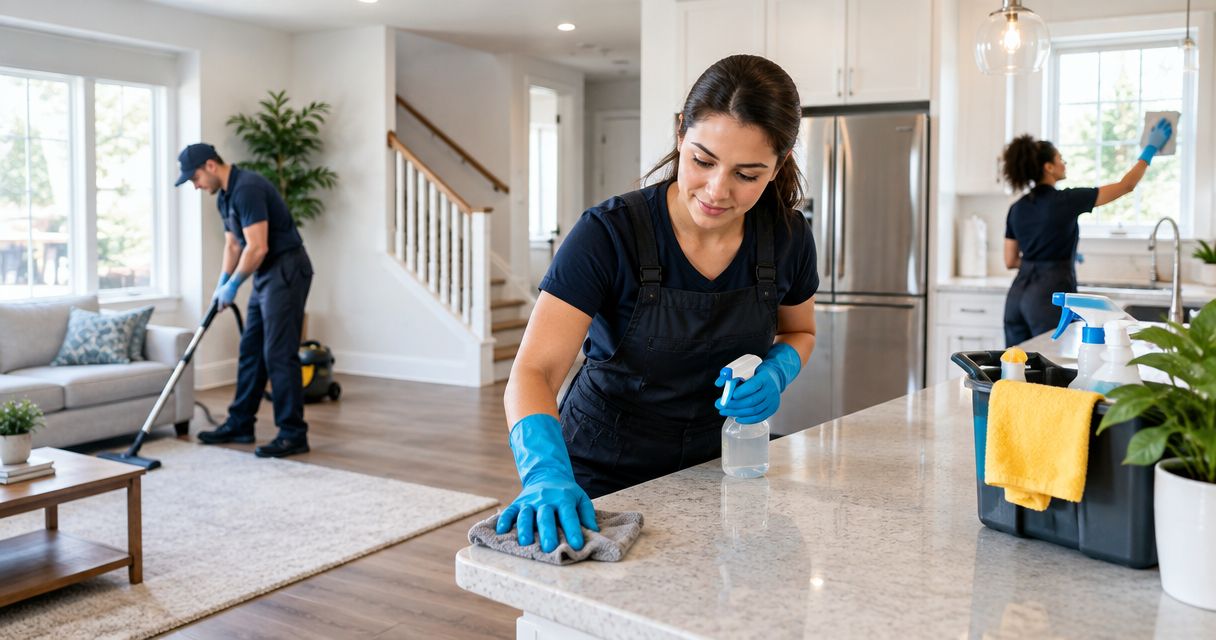
House flippers’ and investors’ deep cleaning is detailed property cleaning aimed at preparing an investment home for listing, leasing, or handoff. For a 2026 project in St. Petersburg or Pinellas County, separate ordinary cleaning from construction cleanup, finish repairs first, and define what ready means before anyone starts.
- Deep cleaning for house flippers and investors belongs after repairs and before listing photography or tenant handoff.
- Tampatopshelf is best for local investors seeking residential deep cleaning with phone-or-text coordination.
- Separate deep cleaning, construction cleanup, and vacation-rental turnover into distinct scopes.
- Approve the work against a room-by-room checklist, not a quick look from the doorway.
Why deep cleaning matters for house flippers and investors
An investment property needs a defined handoff standard, not simply a cleaner appearance. A home headed for sale needs presentation-ready surfaces; a long-term rental needs empty storage areas ready for belongings; a vacation rental also needs an operating turnover plan.
Choose the cleaning scope from the property’s next use, not from the label on a booking form. An empty house can still have greasy cabinet interiors, dirty appliance seals, or debris in closet corners. Fresh paint does not resolve those conditions.
For a rental-bound property, use the deep cleaning checklist before listing your home as a rental to build your handoff list. Keep repairs and maintenance on a separate list so cleaning does not become the catch-all assignment for unfinished work.
How to plan an investor-property deep clean
Define the handoff standard
Start with a free, room-by-room walkthrough. Write down what the buyer, tenant, photographer, or property manager should find when entering each space. Describe observable results rather than asking for everything to be spotless.
Use 1 checklist per property for your 2026 projects. Reusing a template is sensible, but inspect the actual house before assigning tasks. A vacant condo and a furnished vacation rental need different instructions, even when their floor plans look similar.
Record exclusions alongside inclusions. If appliance interiors, window tracks, or a lanai matter to the handoff, ask whether the cleaning scope covers them rather than assuming they do.
- State whether the property is for sale, long-term rent, or vacation-rental use.
- List rooms, closets, cabinets, and appliances requiring attention.
- Mark interior glass, tracks, and outdoor areas for explicit discussion.
- Identify unfinished repairs and keep them outside the cleaning checklist.
- Name the person authorized to inspect and accept the work.
Finish dirty work before final cleaning
Walk the property with your contractor or maintenance contact before setting the final cleaning sequence. Check whether sanding, drilling, painting, fixture installation, or debris removal remains. Schedule those tasks before presentation cleaning wherever possible.
Do not use a residential deep clean as a substitute for construction cleanup. Ask who removes building debris and handles construction residue. Cleaning a finished kitchen is a different assignment from removing hardened material from a newly installed surface.
Avoid treating uncertain staining, persistent dampness, or suspected hazardous material as an ordinary housekeeping task. Identify the condition and arrange the appropriate assessment before asking a cleaner to work around it.
- Remove tools, packaging, and contractor debris before the agreed visit.
- Confirm that plumbing, lighting, and electricity work where needed.
- Check finish-care instructions for new floors, counters, and fixtures.
- Flag paint, grout, adhesive, and cement residue separately.
- Give the cleaning contact an updated completion status after repairs.
Request a property-specific cleaning scope
Prepare your own scope and photographs first; a phone walkthrough or written message gives the cleaning company something concrete to assess. Include the property’s condition, access arrangements, and next scheduled event rather than sending only its bedroom count.
Tampatopshelf provides residential deep and move-in/move-out cleaning in St. Petersburg and Pinellas County. The local team is licensed and insured and reachable by phone or text. Investors who want direct coordination can request a property-specific quote after documenting the work.
The service’s fit depends on the agreed assignment. Residential cleaning does not establish that construction cleanup, exterior work, or specialist treatment is included. Confirm those boundaries before approving the visit.
- Send room photographs showing current condition, not only listing images.
- Describe vacancy, furnishings, recent work, and remaining debris.
- Ask for included tasks and exclusions in writing.
- Identify surface-care restrictions and areas not to enter.
- Confirm access instructions and the person handling questions.
Prioritize rooms by their handoff requirements
Build a manual checklist around kitchens, bathrooms, storage, living areas, and floors. Clean from higher surfaces toward lower surfaces, leaving floor cleaning until work above is complete. Follow product labels and the surface manufacturer’s care instructions.
For a 2026 rental handoff, inspect places the next occupant will use immediately: drawers, cabinet shelves, shower surfaces, appliance handles, and closet floors. For a listing, add a presentation check for visible dust, smudged glass, and streaks under the lighting used for photographs.
Do not promise that cleaning will reverse worn finishes or permanent staining. Record those conditions separately so everyone can distinguish remaining dirt from a repair or replacement decision.
- Kitchens: specify cabinet interiors, appliance interiors, and grease removal where needed.
- Bathrooms: list fixtures, shower surfaces, mirrors, and accessible edges.
- Storage: empty closets and drawers before their scheduled cleaning.
- Living areas: include reachable ledges, baseboards, doors, and switches.
- Floors: identify materials and approve suitable cleaning methods.
Arrange access and protect the finished work
Use a written message to coordinate entry, parking, building rules, and the property’s condition. For a condo, confirm the association’s access requirements before booking the visit. Do not leave the cleaning crew to resolve an entry problem with an unavailable owner.
Set a clear sequence between cleaning, staging, photography, and handoff. If another trade must return afterward, tell the cleaning contact what work remains. A completed deep clean should not be treated as an open-ended commitment to remove later mess.
For a property becoming an Airbnb, establish the initial deep clean separately from ongoing turnovers. The initial clean prepares the home; later turnover visits address the agreed between-guest routine.
- Share entry instructions through an agreed private channel.
- State parking, elevator, gate, and association requirements.
- Keep walkways and work areas clear of stored materials.
- Tell every vendor when final cleaning is scheduled.
- Assign responsibility for any touch-up after later work.
Inspect and document the handoff
Inspect against the original scope rather than adding tasks during the final walkthrough. Open agreed cabinets, look at fixtures under normal lighting, and examine floors from more than one angle. A doorway view does not show the full condition of a room.
Keep 3 handoff records: the agreed checklist, completion photographs, and the outstanding-items list. These are recommended records, not a substitute for an inspection. Use them to distinguish incomplete cleaning from damage, missing supplies, or a maintenance problem.
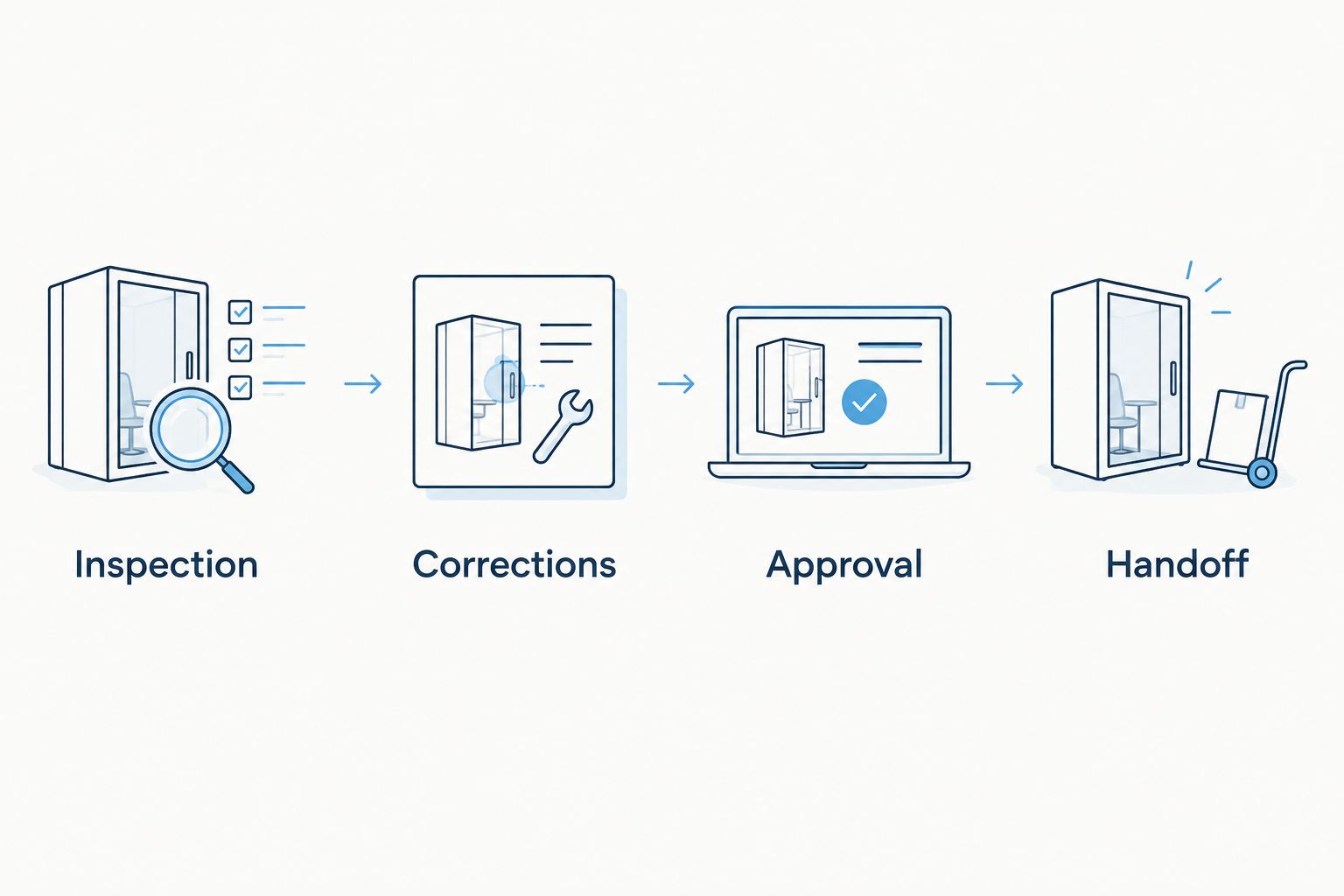
Follow this handoff sequence: Inspection, Corrections, Approval, Handoff. Assign each unresolved item to a named contact before transferring responsibility for the property.
A furnished rental also needs a separate readiness check for linens, consumables, and property instructions. Do not assume a deep-cleaning agreement includes setting up the entire guest experience.
- Compare completed rooms with the approved task list.
- Photograph any item requiring clarification or correction.
- Separate cleaning issues from damaged or unfinished surfaces.
- Record who owns each remaining action.
- Confirm who receives the property after approval.
Compare cleaning options for your investment property
The right option for a 2026 project depends on the property’s condition and your role in managing the work. Keep 2 separate scopes when renovation cleanup and residential cleaning are both needed. Do not assume that booking one automatically includes the other.
| Option | Best for | Main advantage | Key limitation |
|---|---|---|---|
| Owner-managed cleaning | Investors able to perform and inspect the work themselves | Direct control over tasks and sequence | You supply the labor, equipment, and quality checks |
| Residential deep cleaning | Finished homes needing detailed cleaning before listing or occupancy | A defined room-by-room cleaning assignment | Construction residue and specialist work require separate confirmation |
| Move-in/move-out cleaning | Empty properties between occupants | Access to areas normally blocked by belongings | The service name alone does not specify every included task |
| Post-construction cleanup | Properties with renovation debris or construction residue | A scope focused on the aftermath of building work | Requires assessment of materials, hazards, and unfinished work |
| Vacation-rental turnover cleaning | Furnished rentals between guest stays | A repeatable between-guest cleaning routine | Does not replace repairs or an initial condition assessment |
Tampatopshelf offers deep cleaning, move-in/move-out cleaning, and vacation-rental turnovers. That makes the service relevant to investors preparing finished homes for occupancy and hosts arranging ongoing cleaning. Confirm the exact property scope; do not assume post-construction cleanup or specialist remediation is included.
Common mistakes house flippers and investors make
Booking before the last contractor visit
Final cleaning loses its place in the schedule when sanding, cutting, or installation follows it. Ask each trade what remains before confirming the cleaning sequence. If later work is unavoidable, assign the resulting cleanup explicitly.
Treating every vacant property as an easy clean
Vacancy describes occupancy, not condition. Empty cabinets, appliance interiors, and rooms left unused still need inspection. Quote requests should describe actual buildup and recent work, not just the absence of furniture.
Assuming the service name defines the scope
Deep cleaning, move-out cleaning, and turnover cleaning are useful categories, not universal task lists. Confirm appliance interiors, cabinet interiors, glass, and outdoor areas individually. A written exclusion is better than an assumption discovered at handoff.
Asking cleaners to resolve maintenance problems
A stain, odor, or damp area needs identification before anyone promises a cleaning solution. Fix the underlying maintenance issue when one exists. Keep those decisions with the owner or appropriate specialist rather than treating extra wiping as the answer.
Approving the property from photographs alone
Completion photographs help an off-site investor, but they only show selected views. Assign a local walkthrough when you cannot inspect personally. Tell that person which cabinets, fixtures, and floor areas appear on the agreed checklist.
FAQ
What does deep cleaning for house flippers and investors include?
Deep cleaning for house flippers and investors includes the detailed tasks agreed for that property before listing, leasing, or handoff. Specify rooms, surfaces, appliance interiors, cabinet interiors, and exclusions rather than relying on the service name.
Should I book deep cleaning before or after renovation work?
Book final deep cleaning after dust-producing repairs and construction cleanup are complete. If a contractor must return afterward, assign responsibility for the resulting mess before the cleaning visit.
Is move-out cleaning the same as post-construction cleaning?
Move-out cleaning and post-construction cleaning are different assignments. An empty home between occupants needs a different assessment from a property containing building debris, adhesive residue, or unfinished surfaces.
Who is Tampatopshelf deep cleaning best for?
Tampatopshelf deep cleaning is best for St. Petersburg and Pinellas County investors seeking residential cleaning with direct phone-or-text coordination. The local team is licensed and insured; confirm the included work for your property before booking.
How should I prepare a property for cleaning in 2026?
Prepare your property by removing belongings and contractor debris, completing repairs, and confirming access. Send current photographs and a written task list so the cleaning scope reflects the home's actual condition.
Can one deep clean prepare an investment home for Airbnb guests?
A deep clean addresses the agreed cleaning scope, not every requirement for opening a vacation rental. Check furnishings, linens, supplies, maintenance, and guest instructions separately, then arrange an ongoing turnover routine.
How do I check cleaning quality when I live out of town?
Give a local contact the approved checklist and ask for a walkthrough with completion photographs. Record unresolved cleaning items separately from maintenance issues so each task has a clear owner.
One last thing
Inspect empty storage before staging fills it. Once drawers contain utensils and closets hold linens, checking their original condition becomes harder. Make cabinet interiors, drawers, and closet floors an explicit handoff checkpoint while they remain accessible.
Related guides
- How long post-construction cleanup takes before move-in
- Move-in cleaning checklist for new St. Petersburg homeowners
- House cleaning for real estate agents preparing listings
Request a free quote from Tampatopshelf by phone or text. Share the property’s location, condition, and intended handoff so the team can provide a straightforward quote tailored to the work.


