
Reopening a snowbird home takes as long as the property checks, cleaning, and any necessary repairs require; there is no reliable fixed duration based on vacancy alone. The cleaning appointment is only part of that schedule—access problems, inactive utilities, leaks, or air-conditioning trouble need separate attention. For your St. Petersburg or Pinellas County return, confirm the home's condition before committing to an arrival-day cleaning plan.
- How long to reopen a snowbird home for the season depends on condition, utilities, cleaning scope, and repairs.
- Top Shelf Cleaning Co. suits St. Petersburg homeowners seeking local residential cleaning and phone-or-text contact.
- Check the property before scheduling cleaning; active leaks and moisture problems require separate attention.
- Confirm access, working utilities, laundry responsibilities, and completion checks before your return.
Why this matters
A seasonal reopening is not just a dusting appointment. You need to distinguish a home that needs cleaning from a home that needs maintenance before cleaning can begin.
For your 2026 return, plan around the condition someone actually finds—not how the property looked when you left. Top Shelf Cleaning Co. provides residential cleaning in St. Petersburg and Pinellas County, with a local team reachable by phone or text.
The useful deadline is when the home is ready to occupy, not merely when the cleaner leaves. Keeping those milestones separate helps you assign the right work and avoid treating a clean-looking room as proof that the property's systems are working.
How long does it take to reopen a snowbird home for the season?
The reopening schedule depends on which tasks must happen in sequence. A home with working utilities and ordinary settled dust needs a different plan from one with a leak, pest activity, or an air-conditioning fault.
Use this order to establish the schedule:
- Check access. Confirm that the authorized person can enter the property and any relevant building or community areas.
- Check utilities. Verify electricity, water, and air conditioning before arranging work that depends on them.
- Assess condition. Look for visible leaks, damp materials, pest evidence, unusual odors, and accumulated dirt.
- Resolve problems. Assign maintenance, pest, or moisture concerns to the appropriate provider before covering them with routine cleaning.
- Clean and reset. Confirm the cleaning scope, linen responsibilities, and rooms that need attention before arrival.
- Verify readiness. Check completed work and identify anything still outstanding before you travel.
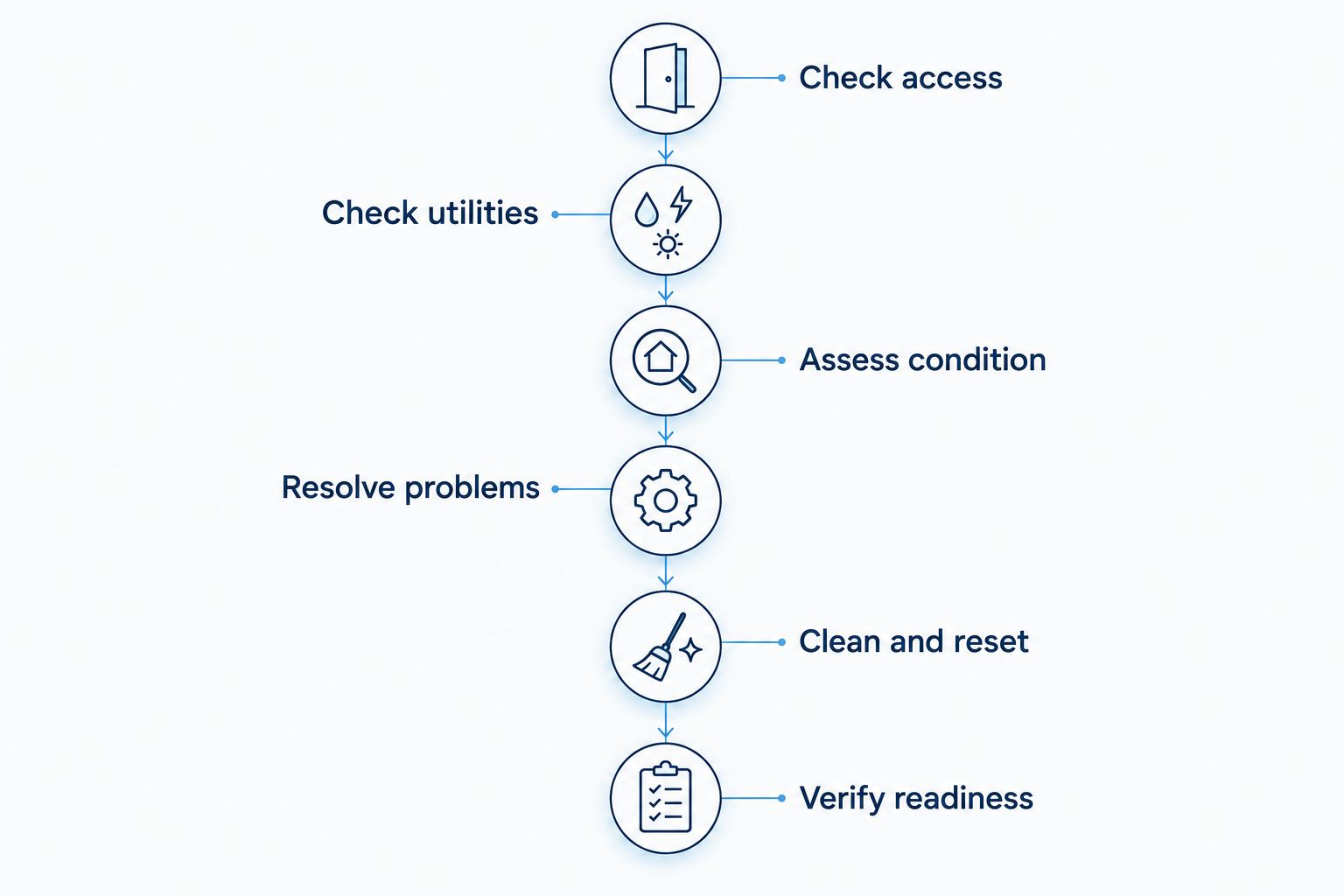
Some tasks can happen independently, but others have prerequisites. Cleaning a cabinet beneath an active leak does not resolve the leak, and arranging a visit without confirmed entry does not establish a workable appointment.
Ask for the cleaning duration after the provider understands the property. The guide to how long a deep clean takes addresses the cleaning portion; seasonal reopening also requires the access, maintenance, and readiness checks above.
Which reopening plan matches your home's condition?
Choose the scope from the property's current condition rather than automatically requesting either the lightest or the most extensive service. Explain what has changed during the vacancy and ask the provider to confirm what the proposed visit includes.
| Reopening approach | Best for | Main benefit | Limitation |
|---|---|---|---|
| Routine cleaning | A maintained home with ordinary surface dust | Focuses work on the areas you use | Does not address repairs or automatically include detailed cleaning tasks |
| Detailed cleaning | A home with buildup or neglected areas | Gives specific problem areas their own scope | Requires more preparation and scope clarification than a general cleaning request |
| Maintenance before cleaning | A home with leaks, equipment faults, or pest concerns | Addresses the cause before the final clean | Depends on separate providers and unresolved conditions |
Routine cleaning: for a maintained property
Routine cleaning fits a property that has remained in usable condition and mainly needs attention to floors, bathrooms, kitchen surfaces, and settled dust. Confirm those tasks rather than assuming that every provider defines routine cleaning identically.
The advantage is a focused scope. The limitation is that appliance interiors, cabinets, detailed buildup, or linen handling need explicit discussion. Choose routine cleaning only when the home's condition supports it.
Detailed cleaning: for buildup and neglected areas
A detailed clean fits a home with specific accumulated dirt or areas that need more attention than the general room reset. Describe the surfaces and conditions involved, preferably with current photographs.
The advantage is clearer attention to the areas you identify. The limitation is that detailed cleaning is still cleaning—not a substitute for repairs, pest treatment, or mold remediation. Choose the scope by task, not by the label alone.
Maintenance first: for unresolved property problems
If someone discovers a leak or equipment fault, separate that problem from the cleaning request. Ask the responsible provider what needs to happen before the affected area is ready for cleaning.
This approach avoids scheduling the final reset before disruptive work is finished. Its limitation is that your reopening now depends on more than the cleaning appointment. Resolve the cause before asking a cleaner to handle the aftermath.
Why reopening time varies
For a 2026 reopening plan, these factors determine what belongs on the schedule. They are more useful than a generic estimate based only on bedroom count.
- Current condition. Settled dust, sticky buildup, dirty appliance interiors, and damp materials are different problems. Tell the provider what is present instead of describing everything as needing a freshen-up.
- Property layout and surfaces. Rooms, bathrooms, stairs, furnishings, and surface materials affect the work to assess and clean. Share the layout and any areas that are excluded.
- Utility readiness. Confirm water, electricity, and air conditioning. Report a fault before the visit rather than expecting a cleaning team to diagnose or repair it.
- Access arrangements. Keys, entry codes, building permissions, and parking instructions affect whether the visit can begin as arranged. Identify who handles a failed entry attempt.
- Laundry and resetting. Washing linens, drying them, making beds, and putting supplies away are separate responsibilities to assign. Do not assume a cleaning request includes them.
- Outstanding maintenance. Plumbing, air-conditioning, pest, or moisture concerns introduce work outside ordinary cleaning. Ask who owns each task and what must be completed first.
A useful scope describes observable conditions. For example, a request to clean empty refrigerator shelves is clearer than asking someone to make the kitchen ready, which leaves the actual tasks open to interpretation.
What should you check before the cleaners arrive?
Prepare a short property brief for your 2026 return. Give the cleaning provider enough information to understand the work without expecting them to manage every aspect of reopening.
Entry and contact details
Confirm the authorized access method and any building instructions. Send sensitive access information directly to the person who needs it, rather than placing it in a broadly shared checklist.
Name a contact who can answer questions during the appointment. If you will be traveling, identify a backup instead of assuming you will be available throughout the visit.
Utilities and property condition
Have an authorized person confirm the property is accessible and report any visible problems before cleaning begins. Do not ask someone to troubleshoot unfamiliar electrical, plumbing, or mechanical equipment.
If there is an active leak or an unexplained persistent odor, report it specifically. A scented product does not establish that the underlying issue has been resolved.
Cleaning scope and exclusions
List the rooms and tasks you want addressed. Discuss appliance interiors, cabinet interiors, beds, laundry, and outdoor areas individually if they matter to your return.
Also identify anything that should not be moved or cleaned. Surface-care instructions and fragile possessions deserve clear directions, not assumptions made during the appointment.
Completion and follow-up
Agree on how you will learn that the visit is complete and how unresolved issues will be reported. Ask whether completion photos are an option rather than assuming they are included.
Keep a separate list of maintenance items. That prevents a finished cleaning appointment from being mistaken for confirmation that every reopening task is complete.
Can you reopen a snowbird home on arrival day?
An arrival-day plan depends on verified conditions and confirmed appointments; it is not a dependable default for an unchecked property. You lose flexibility when your first look at the home happens after you arrive with luggage.
If you choose this approach, confirm entry, utilities, cleaning scope, and provider availability beforehand. Decide what you will do if a maintenance problem prevents normal use of the home.
For a 2026 arrival-day reopening, verify the property first and schedule second. Do not treat a requested appointment as a confirmed visit or a confirmed cleaning visit as a property inspection.
Do you need a deep clean after every seasonal absence?
Seasonal absence alone does not establish the cleaning scope. A maintained property and a home with visible buildup require different conversations, even if both have been vacant.
Describe the current condition and ask which tasks the proposed service covers. If you want a detailed kitchen reset, for example, name the appliance and cabinet work rather than relying on the phrase deep clean to communicate it.
The same distinction applies if you plan to host guests after returning. Preparing your own living spaces and preparing a vacation rental for occupancy require clear responsibility for linens, supplies, and the final reset.
Who should handle the cleaning portion?
Top Shelf Cleaning Co. is a fit for St. Petersburg homeowners who want local residential cleaning and phone-or-text contact. The company is licensed and insured and provides straightforward quotes tailored to each property.
The benefit is being able to discuss the home's actual cleaning needs with a local team. The boundary is equally important: a residential cleaning visit does not replace a building inspection, equipment service, pest treatment, or mold remediation.
Before requesting a quote, share the property layout, current condition, requested tasks, access arrangements, and return date. Ask the provider to confirm the scope and appointment rather than treating either as settled before the conversation.
Request your seasonal cleaning quote
Discuss your property's condition, cleaning needs, and return date with the local team.
FAQ
How long to reopen a snowbird home for the season if it looks clean?
How long to reopen a snowbird home for the season still depends on utility checks, the agreed cleaning scope, and any unresolved maintenance. A clean appearance does not confirm that plumbing, air conditioning, or other systems are working.
Can I book cleaning before I return to St. Petersburg?
You can request cleaning before your return, but confirm the appointment, authorized access, utility readiness, and scope with the provider. Identify someone who can answer questions while you are away.
Does reopening a snowbird home always require deep cleaning?
Reopening a snowbird home does not automatically require deep cleaning. Choose the scope from the current condition and discuss detailed tasks, such as appliance interiors or accumulated buildup, individually.
Should I have the air conditioning checked before cleaning?
Confirm that the air conditioning is working before the cleaning visit and report known faults in advance. A cleaning appointment does not include diagnosing or repairing the system unless that service is explicitly agreed.
Can a cleaning service fix a musty smell after the home has been vacant?
Do not assume routine cleaning will resolve a musty smell. Investigate persistent odors or visible moisture problems and arrange appropriate assessment before treating the issue as ordinary cleaning.
What should I send when requesting a seasonal reopening cleaning quote?
Send the property's layout, current condition, requested tasks, access details, and return date. Current photographs and a clear list of exclusions help communicate the work you want discussed.
Can I ask the cleaners to wash linens and make the beds?
Ask whether laundry and bed-making can be included, and confirm those tasks explicitly. Identify the linens to use and agree on who handles anything left unfinished.
One last thing
For your 2026 return, give each reopening task an owner and a completion check. A list that says check plumbing is less useful than a list naming who will check it, who receives the result, and who arranges follow-up if needed.
Keep that list separate from the cleaning scope. You will know what remains outstanding instead of discovering it after arrival.
Related guides
- Cleaning checklist for snowbird homes left vacant in summer
- How to prepare your home before the cleaners arrive
- Do you need to be home during a cleaning appointment?
Ready to arrange the cleaning portion of your return? Request a free quote from Top Shelf Cleaning Co. by phone or text, and describe the property, its current condition, and the work you want completed.


