Best overall: the room-by-room checklist. Best for limited access: the essentials-first checklist. Best for furnished rentals: the furnishings-and-contact checklist. Best for delegating: a written professional cleaning scope. This 2026 move-in cleaning checklist for renters helps you choose the right approach for your Pinellas County rental before you unpack.
- The best move-in cleaning checklist for renters starts with condition photos, then covers kitchens, bathrooms, storage, and floors.
- Choose the essentials-first checklist when you cannot clean the entire rental before moving belongings inside.
- Tampatopshelf offers local cleaning for Pinellas County renters who want to delegate rather than clean themselves.
- Report leaks, suspected mold, and damaged surfaces to property management instead of treating them as routine cleaning.
Why this matters
An empty rental gives you access to cabinet shelves, closet corners, and floor edges that furniture will cover. Cleaning before unpacking also keeps you from putting dishes and linens into dirty storage.
Document the condition before you change it. Photograph existing damage and send concerns to your property manager through the required reporting channel. If you want help, request a straightforward quote with the property details and the areas you need cleaned.
What makes the best move-in cleaning checklist for renters?
Choose a checklist by what it helps you finish, not by how many tasks it contains. A useful 2026 checklist separates routine cleaning from maintenance and makes the work easy to verify.
- Condition records: It starts with photos and a written list of existing problems.
- Cleaning order: It puts upper surfaces before floors and empty storage before unpacking.
- Surface safety: It calls for label directions and material-compatible products.
- Clear boundaries: It distinguishes cleaning from repairs, pest treatment, and suspected mold assessment.
- Completion checks: It names visible results, such as shelves free of crumbs, rather than vague instructions like “clean thoroughly.”
- Practical access: It accounts for furniture, utility access, building rules, and your moving schedule.
Move-in cleaning approaches at a glance
These are checklist formats, not rankings of cleaning companies. Choose the format that matches the rental you are entering.
| Checklist | Best for | Standout feature | Key limitation |
|---|---|---|---|
| Room-by-room | Empty, unfurnished rentals | Covers storage and living areas before unpacking | Requires access throughout the property |
| Essentials-first | Limited access before move-in | Prioritizes food, bathroom, and sleeping areas | Leaves a follow-up cleaning list |
| Furnishings-and-contact | Furnished rentals | Adds furniture, linens, and supplied items | Cleaning cannot establish an item's full history |
| Written professional scope | Renters delegating cleaning | Converts your priorities into agreed tasks | Unlisted work needs separate confirmation |
1. Room-by-room: best checklist for an empty rental
The room-by-room checklist is the default for an unfurnished apartment, condo, or house. Complete each room's upper surfaces and storage before cleaning its floor, and leave a clear route for movers.
Best for: Renters who can access an empty property before bringing in boxes.
Entry and living areas
- Photograph damaged trim, stained flooring, and marked walls before cleaning.
- Dust reachable ledges, door frames, baseboards, and closet shelves.
- Wipe switches and handles using a method safe for the fixture; do not spray liquid into electrical components.
- Remove loose grit before damp-cleaning compatible floors.
- Let floors dry before placing boxes or rugs.
Kitchen
- Remove crumbs and debris from empty drawers and cabinets.
- Wipe storage surfaces with a compatible cleaner and dry them before unpacking.
- Clean counters, the sink, faucet, and accessible backsplash.
- Check the refrigerator for spills and forgotten food; follow appliance instructions for removable parts.
- Check the oven and microwave, and confirm whether interior cleaning is your task or part of the property's handover.
- Keep food out of storage until shelves are clean and dry.
Bathrooms
- Clean the sink, faucet, counter, toilet, tub, and shower using suitable products.
- Use separate cleaning cloths for toilet surfaces and kitchen surfaces.
- Inspect cabinet interiors before storing toiletries.
- Record persistent staining, damaged caulk, or signs of leakage for management.
- Clean the floor last, including accessible edges around fixtures.
Bedrooms and closets
- Dust reachable shelves, rods, trim, and window ledges.
- Inspect closet corners and photograph existing marks or damage.
- Vacuum or sweep before using the appropriate floor-cleaning method.
- Unpack clothing and bedding only after storage surfaces are dry.
Room-by-room pros:
- Covers areas that become difficult to reach after moving.
- Makes unfinished rooms easy to identify.
- Separates kitchen and bathroom tools and tasks.
Room-by-room cons:
- Becomes harder to follow when movers and boxes occupy several rooms.
- Does not resolve damaged finishes, leaks, or other maintenance problems.
Verdict: Buy into this approach as your default when the rental is empty.
2. Essentials-first: best checklist for limited access
The essentials-first checklist gets your immediate-use spaces ready without pretending the entire property is finished. Use it when you receive keys close to moving time or must work around belongings.
Best for: Renters who need a usable bathroom, food-preparation area, and sleeping space before tackling the rest.
Start by identifying the areas you will use immediately. Keep the remaining work on a written list rather than relying on memory after the move.
- Document existing conditions before wiping or moving anything.
- Clean the toilet, bathroom sink, and shower or tub you will use.
- Clean a kitchen counter, the sink, and storage needed for immediate meals.
- Clean the refrigerator areas needed for your food.
- Clear grit and debris from the route between the entrance, bathroom, and sleeping area.
- Clean the bedroom floor before setting up the bed.
- Reserve an unpacking area so boxes do not spread through unfinished rooms.
For your 2026 move, label unfinished areas by task: “closet shelf,” “drawer interiors,” or “baseboards.” A specific list is easier to complete than “finish cleaning.”
Essentials-first pros:
- Gives immediate-use areas priority.
- Works around a restricted moving window.
- Helps keep unpacking separate from unfinished cleaning.
Essentials-first cons:
- Leaves lower-priority surfaces for another session.
- Requires you to return to the list after the busiest part of moving.
Verdict: Buy into this approach when access is limited; keep the follow-up list visible.
3. Furnishings-and-contact: best checklist for furnished rentals
A furnished rental needs the room-by-room checklist plus checks for supplied furniture and household items. Do not assume a made bed, closed cabinet, or neatly arranged sofa confirms cleanliness.
Best for: Renters moving into a furnished condo, apartment, or longer-stay rental.
Photograph the supplied contents before rearranging them. Report missing items, visible damage, and cleaning concerns separately so property management can distinguish inventory issues from cleaning work.
- Check supplied dishes, utensils, drawers, and storage before use.
- Inspect accessible seating surfaces, cushions, and furniture crevices.
- Follow care labels before cleaning upholstery or laundering removable covers.
- Confirm arrangements for bedding and towels rather than assuming they have been laundered.
- Wipe compatible handles, switches, and remote-control exteriors without saturating electronics.
- Avoid shifting heavy furniture or dismantling supplied items without permission.
For a furnished rental in 2026, ask what the handover cleaning included. “Furnished” describes the contents, not the completed cleaning tasks.
Furnishings-and-contact pros:
- Adds supplied items that an empty-home checklist misses.
- Helps record furniture condition before everyday use.
- Separates washable items from materials needing different care.
Furnishings-and-contact cons:
- Cannot verify hidden conditions or previous cleaning history.
- Depends on care instructions and permission for moving supplied items.
Verdict: Buy into this checklist for furnished rentals; skip unapproved upholstery treatments.
4. Written professional scope: best checklist for delegating
A written scope turns “move-in cleaning” into an agreed list of rooms and tasks. Tampatopshelf provides residential and move-in/move-out cleaning in St. Petersburg and Pinellas County, with a local team reachable by phone or text.
Tampatopshelf move-in cleaning is best for Pinellas County renters who want to delegate cleaning to a local, licensed and insured team. Confirm the property-specific scope before booking rather than assuming every interior, fixture, or difficult-access area is included.
Best for: Renters who want professional help and a clear record of requested work.
Share these details when requesting your quote:
- Whether the rental is empty, partly occupied, or furnished.
- Which rooms and storage areas need attention.
- Whether you want cabinet, drawer, refrigerator, or oven interiors included.
- Any product restrictions, sensitive finishes, pets, or fragrance preferences.
- Building entry instructions and any condo access requirements.
- Your moving schedule and when the property can be accessed.
- Photos of unusual buildup or areas you want assessed before agreement.
Tampatopshelf provides straightforward quotes tailored to each property. Keep maintenance requests with the property manager; a cleaning appointment is not a substitute for repair or specialist assessment.
Written professional scope pros:
- Gives you specific tasks to confirm before the appointment.
- Lets you communicate priorities without being present for every decision.
- Provides a shared reference for checking completed work.
Written professional scope cons:
- Requires clear access arrangements and accurate property details.
- Does not automatically include tasks omitted from the agreement.
Verdict: Buy this service only after the written scope matches your rental and priorities.
Request your move-in cleaning quote
Describe your Pinellas County rental and the cleaning tasks you want included.
Follow this order before unpacking
Whatever checklist you choose, follow the same sequence: Record condition, Report concerns, Clean surfaces, Unpack belongings. This keeps existing problems separate from the work you complete.
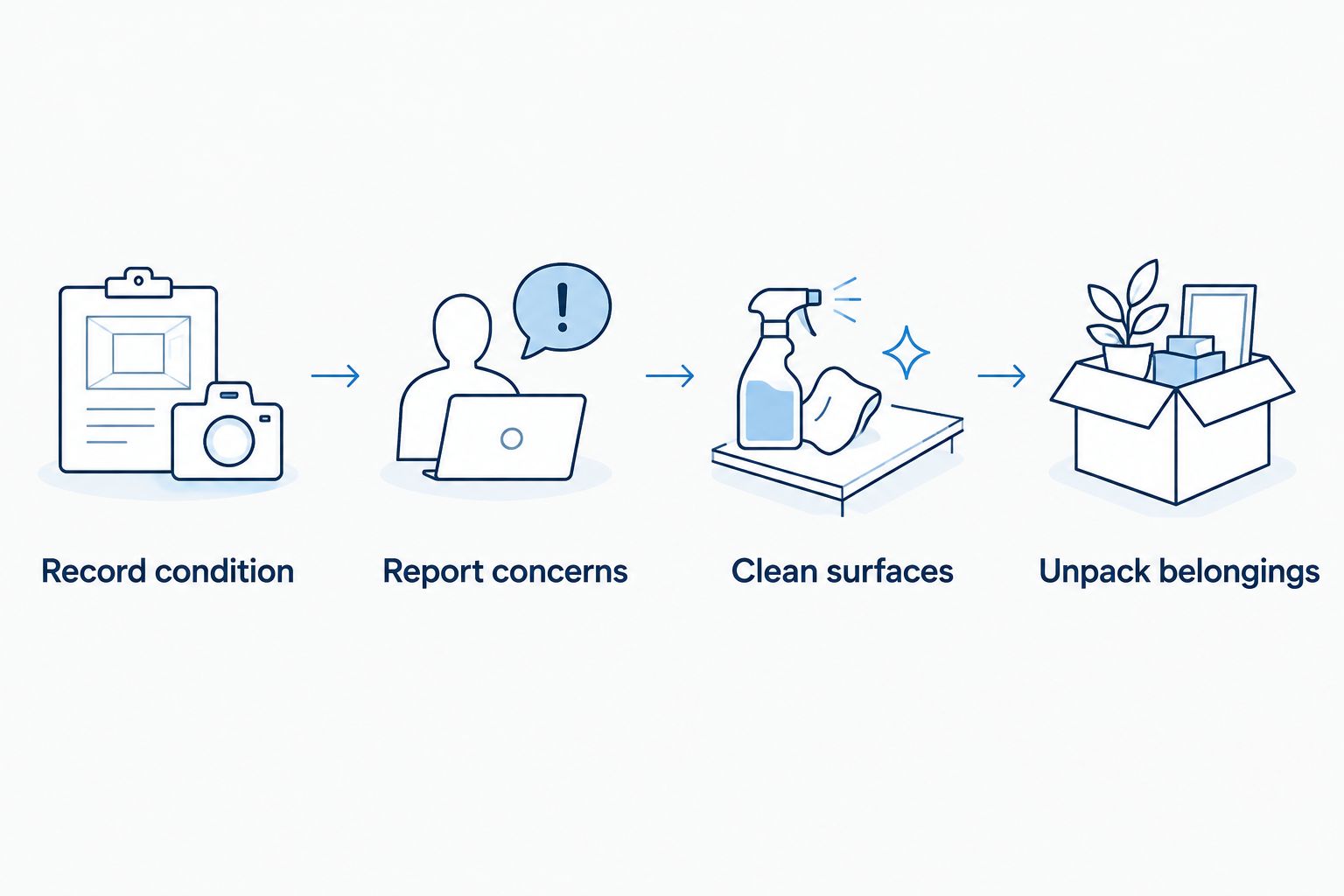
Use these practical checks to keep the process organized:
- Record condition: Take at least 2 photos of each concern: a wider room view and a close-up. Keep original files with your move-in records.
- Report concerns: Make 1 written issue list and send it through your property manager's required channel. Follow your lease's reporting instructions.
- Clean surfaces: Keep at least 2 cloths separate: one for kitchen work and another for bathroom work. Replace dirty cloths as needed.
- Unpack belongings: Open cabinets and drawers for a final look before loading them. Keep unfinished areas accessible.
Never mix cleaning chemicals. Follow the product label for dilution, ventilation, surface compatibility, and any required contact time; there is no single contact time for every product.
Pinellas County checks that belong on your list
Before your 2026 handover, confirm entry arrangements with the landlord or property manager. For a condo, ask about service access, parking, elevator reservations, and any building rules that affect movers or cleaners.
Remove loose sand and grit before damp-cleaning floors. Check accessible under-sink areas and report moisture, active leaks, or musty odors rather than covering them with fragrance.
If you suspect mold, photograph the concern and notify management. Do not scrub an unknown affected area simply to make the move-in checklist look complete.
How these checklists are ranked
The room-by-room checklist ranks first because it covers the broadest range of routine move-in tasks before belongings restrict access. Essentials-first, furnishings-and-contact, and written professional scope each address a different constraint: limited access, supplied contents, or delegated work.
The ranking follows the criteria above: condition records, task order, surface safety, clear boundaries, completion checks, and access. It does not represent property inspections or cleaning-company testing.
Which checklist should you choose?
Choose room-by-room unless your access, furnishings, or need for help calls for a different format. Add the furnished-rental checks when needed, and use the essentials-first list only with a plan to finish the remaining work.
If you delegate, use the same room list to agree on the professional scope. The objective is a clean, documented starting point—not a long checklist with unchecked boxes.
FAQ
What's the best move-in cleaning checklist for renters?
The room-by-room checklist is the best default for an empty rental. Document existing conditions, clean kitchens and bathrooms, wipe empty storage, and finish floors before unpacking.
Should I clean before or after the move-in inspection?
Document the property's existing condition before cleaning. Follow your lease and property manager's inspection process, and report concerns through the required channel.
Do I need to clean a rental that looks clean?
Inspect the surfaces and storage you will use rather than judging only the room's appearance. Check drawer interiors, cabinet shelves, bathrooms, and food-preparation areas before deciding what needs cleaning.
Should I clean inside the refrigerator and oven?
Check their condition and confirm who is responsible before starting. If you hire cleaners, request appliance interiors explicitly and follow the appliance manufacturer's cleaning instructions.
Can move-in cleaners repair leaks or handle suspected mold?
Do not treat leaks or suspected mold as routine cleaning tasks. Photograph the concern, notify property management, and ask what assessment or repair is required.
Is professional move-in cleaning better than doing it myself?
Professional cleaning fits renters who want to delegate; doing it yourself gives you direct control over each task. Either approach needs a clear checklist, suitable products, and access to the areas being cleaned.
How do I arrange move-in cleaning in Pinellas County?
Contact Tampatopshelf by phone or text to request a free quote. Share the property's condition, access arrangements, moving schedule, and the rooms or interiors you want included.
One last thing
An empty cabinet is your easiest chance to check both cleanliness and condition. Before you fill it, look for crumbs, stains, moisture, damaged shelf surfaces, and loose hardware. Record concerns before cleaning or covering them.
For help preparing your rental, contact Tampatopshelf by phone or text and request a free quote tailored to your property.


